Femicide Sparks Protests Across Kosovo
A 49-year-old woman has been brutally murdered in Kosovo, sparking widespread outrage and protests across the country.
A 49-year-old woman has been brutally murdered in Kosovo, sparking widespread outrage and protests across the country. The victim, Arlinda Zekaj, had repeatedly sought protection from the police, but her pleas were dismissed as "exaggerations. This tragic event marks the eighth femicide in Kosovo this year.
Zekaj's husband was arrested on October 25 after she reported him to the authorities for a second time. However, when she also asked for additional protection against her husband's family, her request was again ignored by the police. The authorities drove Zekaj home from the station, but failed to provide adequate security.
The consequences of their inaction were devastating. When officers arrived at Zekaj's house after receiving an emergency call, they found only her lifeless body. A brutal murder had taken place in her bedroom, with a fatal blow inflicted using an axe. By this time, the alleged perpetrator - Zekaj's brother-in-law, Albert Sylaj - was already on the run.
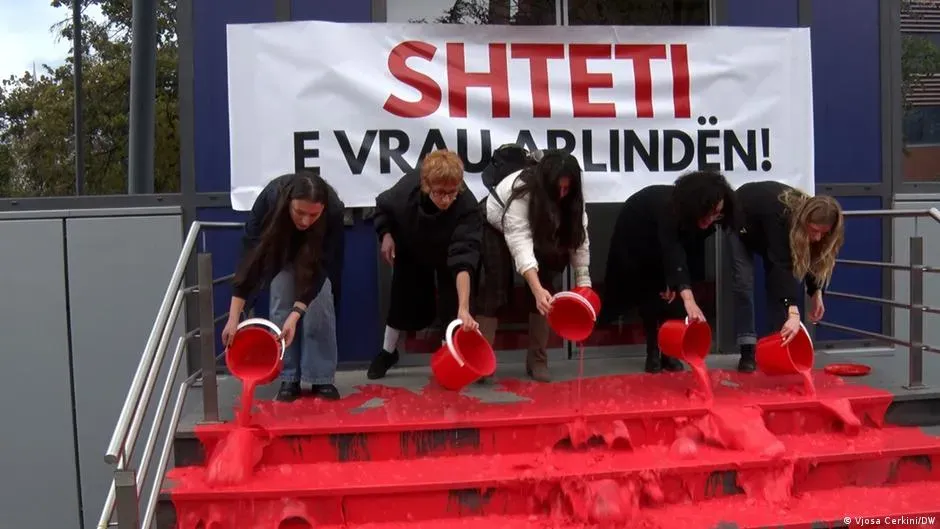
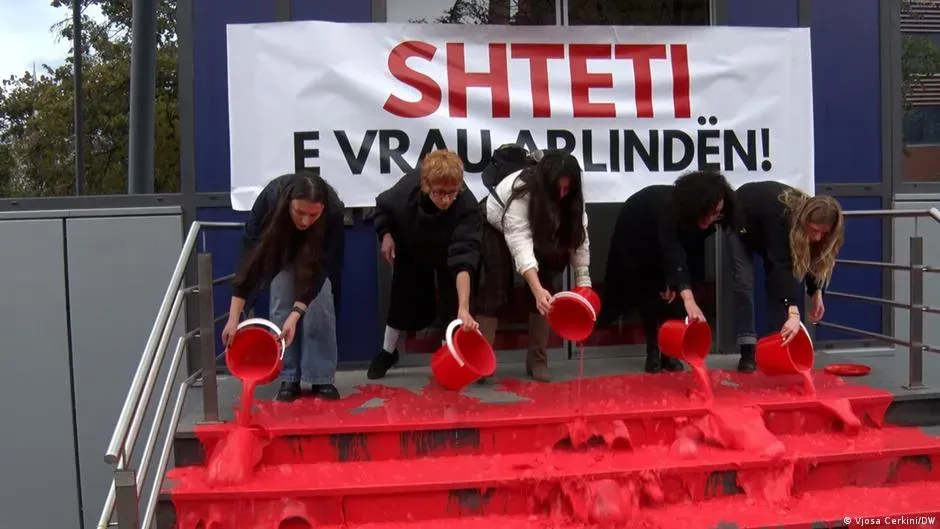
The murder has sent shockwaves through Kosovo, with thousands of people taking to the streets for public protests and demonstrations across the country. This brutal killing is one of the most extreme cases of femicide in recent years in Kosovo, highlighting the urgent need for authorities to take domestic violence seriously.
Protesters in Kosovo are escalating their demands for justice after the brutal murder of Arlinda Zekaj at the hands of her husband.
The streets have been filled with thousands of people carrying photographs of murdered women and holding signs that condemn the government's handling of domestic violence cases. The slogan The government has blood on its hands has become a rallying cry, as protesters call for accountability from state officials.
One of the key demands is that charges be brought against police officers and prosecutors who mishandled Zekaj's case. Protesters are also calling for the resignation of Interior Minister Xhelal Svecla and Justice Minister Donika Gervalla, who was appointed national coordinator for protection against domestic violence by Prime Minister Albin Kurti in March.
Both Svecla and Gervalla have refused to step down despite growing public pressure, while Kurti has acknowledged that certain state institutions had failed" in their duty to protect Zekaj.
The protection order issued to Zekaj's husband came with specific restrictions on his movements around her home. He was allowed to remain in their shared house but had to maintain a distance of at least 2 meters from her at all times.
In addition to this restriction, he was also required to keep a minimum distance of 20 meters from her when outside the house. This order was meant to provide Zekaj with some level of protection from her husband's potential aggression.
Zekaj had initially chosen not to relocate to a shelter, opting instead to continue living in her own home with her child. She had likely wanted to maintain some sense of normalcy and stability for her son despite the ongoing threats she faced.
Her reports to the police about these threats and other incidents were often met with limited action, with some perpetrators even being treated as witnesses rather than suspects.
The implementation of measures aimed at combating femicide in Kosovo has been marred by inconsistent enforcement and coordination among authorities.
These measures include the possibility of life sentences for perpetrators in femicide cases, which activists argue have not been consistently applied. The authorities responsible for enforcing these measures - including police, social services, prosecutors and courts - are accused of failing to work together effectively.
In a scathing critique, lawyer Njomeza Zejnullahu wrote that repeated failures to prevent violence against women do not constitute institutional failure but rather a collapse of the state's and society's commitment to protecting women. He argues that when cases keep recurring and victims have previously sought help from institutions, it is no longer a matter of individual breakdowns but a systemic issue.
Several high-ranking police officers in Peja and its surrounding area have been suspended following Zekaj's killing, as well as a prosecutor who had handled her complaints. However, activists are demanding more drastic action.
The protests in Kosovo demand that all those involved in the chain of responsibility be not only removed from office but also prosecuted for dereliction of duty.
The protests in Kosovo are escalating demands for accountability from top officials down to local authorities. This includes not just law enforcement and judicial personnel but also mayors and government ministers. The protesters want those responsible for dereliction of duty to be removed from office and prosecuted.
Feminist activists are pushing for a dedicated unit within the Interior Ministry that would treat women's safety as a matter of national security, focusing specifically on preventing femicides. They are also calling on the government to prioritize affordable social housing legislation and make it available to women who have experienced domestic violence. This measure is seen as crucial in providing support to those affected by abuse.
The government now faces a critical test of its commitment to addressing violence against women. By responding clearly to protesters' demands, officials can demonstrate whether they truly value the lives and safety of their citizens.
Facts based on reporting originally published by DW English.
You may republish this story, in full or in part, if you credit News Central Site and link to it (licence CC BY 4.0). Photos are not included.