German Civil Society Urged to Support Polish Nazi Persecution Survivors
The appeal highlights the plight of around 50,000 survivors living in Poland today who are struggling with illness and rising costs.
Polish victims' organizations have issued a urgent appeal to German civil society for support, urging them to provide humanitarian aid to survivors of Nazi persecution living in Poland.
The appeal, published on November 5 on the website of the Foundation for Polish–German Reconciliation, highlights the plight of around 50,000 individuals who still live in Poland today. These survivors include former concentration camp inmates, those deported to Germany for forced labor, and people subjected to other forms of Nazi repression.
Many of these survivors are over 90 years old, struggling with illness and rising costs, making their daily lives increasingly difficult. The signatories of the appeal warn that any further delay in providing assistance may render help too late, as they face a critical need for support in their remaining days.
Germany has acknowledged its moral responsibility towards the surviving victims of Nazi persecution, but a decision on possible reparations by the German federal government is still pending.
The legacy of World War II continues to cast a long shadow over German-Polish relations, with one of the most contentious issues being war reparations.
In 1989, following Germany's reunification and the transition to democracy in Central and Eastern Europe, the federal government allocated 500 million deutschmarks to support Holocaust victims in Poland. This move aimed to provide some measure of redress for the atrocities committed during the war, but its impact has been widely debated.
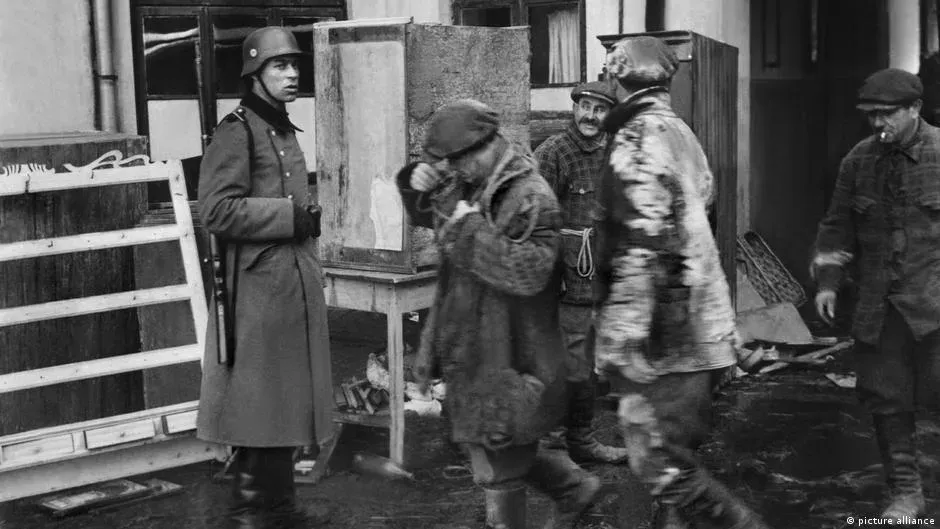
Poland suffered greatly under Nazi occupation, with an estimated 6 million citizens killed, including approximately 3 million Polish Jews. The German occupation policy was marked by systematic crimes against the Polish population, which has left a deep scar on the country's collective memory.
The scale of these atrocities is staggering, with millions displaced, enslaved or murdered as part of the "General Plan East. This plan aimed to uproot and exploit Poland's population, targeting intellectuals, clergy, civil servants and teachers in the Intelligenzaktion from 1939 onwards.
Poland has been seeking compensation from Germany for its losses during World War II. The right-wing conservative government that came to power in Poland in 2015 estimated these losses at a staggering 6.2 trillion zloty.
As part of this effort, Warsaw officially requested €1.3 trillion from Berlin in October 2022. However, the new center-left government led by Donald Tusk has taken a different approach. Since his election victory in December 2023, Tusk's administration has distanced itself from these demands.
Tusk's team is now expecting a more flexible solution from Germany. According to Foreign Minister Radek Sikorski, Poland is looking for a creative arrangement with its German partner. This implies that Warsaw is open to negotiations and alternative forms of compensation.
Germany had previously offered €200 million in support, but this was rejected by Tusk as insufficient. The talks between Berlin and Warsaw have been ongoing since then without producing a solution.
The Greens party has not abandoned its efforts to secure funding for a humanitarian gesture in support of Polish victims of Nazi war crimes.
A request submitted by the parliamentary group to the budget committee was unfortunately rejected, but co-chair Franziska Brantner remains optimistic about the possibility of a change in the coalition's stance. The budget committee is set to hold its final review session this week, which she sees as a last chance for the initiative to move forward.
The issue of reparations for Polish families who suffered during World War II continues to be a significant concern in Polish society, with hardly any family left unaffected by the war. According to a recent survey, over half of respondents felt that Germany does not adequately acknowledge the suffering of the Polish people, while only a minority believed that sufficient efforts have been made.
The appeal for support from victims' associations may now mobilize civil society in Germany, according to Jakub Deka, chairman of the Foundation for Polish-German Reconciliation. Following an initial appeal in May, hundreds of Germans responded with donations ranging from €50 to several hundred euros.
A significant number of respondents in a representative survey believe that Germany has not done enough to acknowledge the suffering of the Polish people during World War II. The ongoing debate highlights the complexities and sensitivities surrounding the issue of reparations for victims of Nazi war crimes in Poland.
More than €35,000 has been collected for the foundation supporting victims of Nazi war crimes in Poland, enabling several individuals to receive one-time aid from this fund.
The chairman of the foundation references Jerzy Tarasiewicz, a prominent figure who led the victims' association in Gdansk for many years. In an interview with Gazeta Wyborcza, Tarasiewicz had warned that Germany was waiting for the Polish victims to pass away before providing any assistance.
Tarasiewicz himself passed away at 84 without seeing this humanitarian gesture" come to fruition, leaving behind a poignant reminder of the need for immediate support.
Facts based on reporting originally published by DW English.
You may republish this story, in full or in part, if you credit News Central Site and link to it (licence CC BY 4.0). Photos are not included.