Elephant Dies in Sri Lanka Due to Gunshot Wound
A prominent male elephant has died in Sri Lanka after being shot by a gun, sparking concerns over human-elephant conflict.
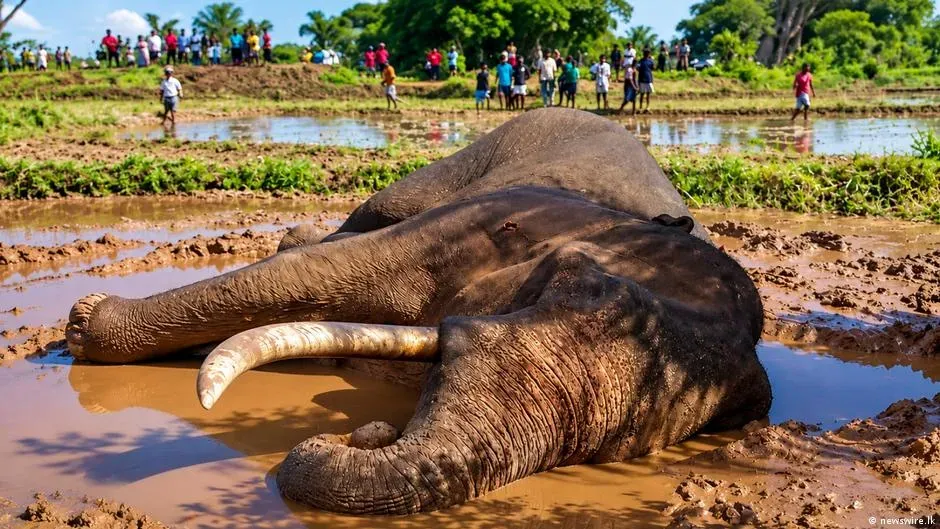
A prominent male elephant in Sri Lanka has died, sparking concerns over the ongoing conflict between humans and these majestic animals whose habitats have been significantly reduced.
The deceased elephant, estimated to be around 45 years old, stood at an impressive height of approximately 3.3 meters (11 feet) tall, making him one of the tallest living males of his species in Sri Lanka. He was widely admired for his towering stature and had become a beloved figure in the northwest region near the village of Galgamuwa.
The elephant's demise was preceded by a period of limping, which led villagers to investigate further. A closer examination revealed a gunshot wound on his right leg, prompting veterinary surgeons to intervene. Unfortunately, their efforts were too late, and the massive animal succumbed to its injuries on October 16.
Sri Lanka has one of the highest rates of elephant deaths in the world due to conflicts with humans. According to official statistics, an average of 370 elephants die annually as a result of interactions between these animals and humans. Moreover, this conflict also claims the lives of around 125 people each year, making Sri Lanka the country with the second-highest number of human fatalities from such incidents globally.
The alarming rate of elephant deaths has severe implications for both their natural habitats and the livelihoods of rural communities. As a country that is home to approximately 10% of the global Asian elephant population and occupies only about 2% of their total natural range, Sri Lanka bears a significant responsibility in addressing this pressing issue.
Sri Lanka has seen significant deforestation in recent decades as its population has grown. The country's rural population has expanded dramatically over this period, increasing from 8.25 million in 1960 to 17.8 million in 2020.
The primary cause of this deforestation is agriculture, which remains the main source of income for many rural communities. As a result, large areas of land are being cleared for farming activities, further shrinking Sri Lanka's already limited forest cover.
According to statistics from the Department of Wildlife Conservation (DWC), an estimated 7,451 wild elephants were recorded in Sri Lanka in 2024. Approximately 70% of these animals live outside protected areas, making them increasingly vulnerable to human-wildlife conflict.
Elephants have a massive daily dietary requirement of about 150 kilograms of green matter, which forces them into farmland in search of food. This has led to hundreds of elephant deaths and over 100 human fatalities annually due to conflicts with humans.
Ravi Corea, President of the Sri Lanka Wildlife Conservation Society, notes that habitat loss and agricultural expansion are driving these conflicts. He points out that rural communities are severely affected by the loss of their crops and livelihoods at the hands of elephants.
The human-elephant conflict in Sri Lanka is a stark reminder that wildlife encounters can have far-reaching consequences for local communities. In contrast to many other countries, where wildlife interactions may be occasional and not life-threatening, Sri Lankan villagers are often forced to confront the devastating impact of elephant raids on their livelihoods.
In an effort to deter wild elephants from encroaching on agricultural lands, some Indian villages have adopted a unique approach by planting lemon trees. While this method has shown promise in reducing human-elephant conflict in certain areas, it is not a foolproof solution and may only provide temporary relief.
The Sri Lankan government's efforts to mitigate the human-elephant conflict have been ongoing, but despite these initiatives, the numbers of elephant-related deaths continue to rise. This escalation of the crisis highlights the need for more effective measures to address this complex issue.
To tackle the problem head-on, the Sri Lankan government drafted a national action plan in 2020 aimed at reducing human-elephant conflict. However, experts argue that the recommendations outlined in this plan must be strengthened through a comprehensive conservation strategy that prioritizes habitat protection and enforcement.
Community-based programs initiated by non-government organizations have proven to be effective in mitigating human-elephant conflict. These initiatives, which include elephant monitoring, scientific research, and community education, are crucial in developing locally appropriate deterrents and promoting sustainable coexistence between humans and elephants.
The iconic elephant in Sri Lanka's Wasgamuwa region has sparked concerns about habitat preservation. To address this issue, organizations have been implementing various initiatives that promote sustainable coexistence between humans and elephants. One such initiative is Project Orange Elephant, which cultivates citrus fruits as a deterrent for elephants to eat.
This project not only reduces crop raiding by elephants but also provides an alternative income source for farmers. Additionally, electric fencing has been installed around settlements and agricultural lands to prevent human-elephant conflicts. These measures aim to promote local responsibility in managing elephant habitats.
Human-elephant confrontations often occur at designated elephant corridors, which are strips of land connecting larger forest patches, allowing elephants to migrate safely between them for food, water, breeding, and seasonal migration. To mitigate this issue, the "EleFriendly" bus service has been introduced in Wasgamuwa, providing safe transportation for schoolchildren through these corridors.
This initiative has significantly reduced human-elephant encounters along its original route by over 90%. According to experts, a sustainable solution requires scientifically informed land-use planning, protection of elephant corridors, and fair compensation for affected families.
Facts based on reporting originally published by DW English.
You may republish this story, in full or in part, if you credit News Central Site and link to it (licence CC BY 4.0). Photos are not included.