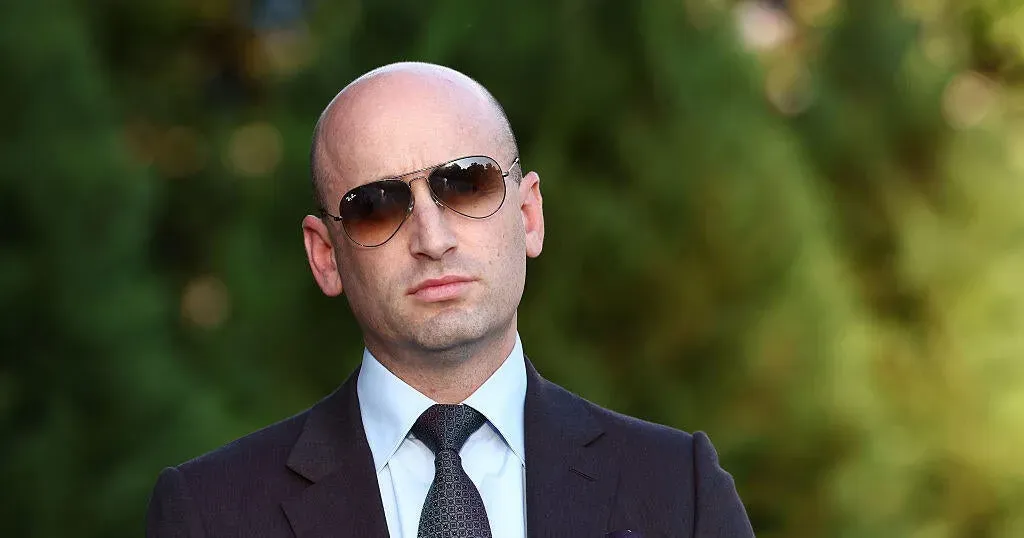
Donald Trump Announces Stephen Miller as New Chief of Staff
President Donald Trump has announced that Stephen Miller will replace Susie Wiles as chief of staff starting Monday, November 9, 2026, following major Republican losses in the midterm elections.
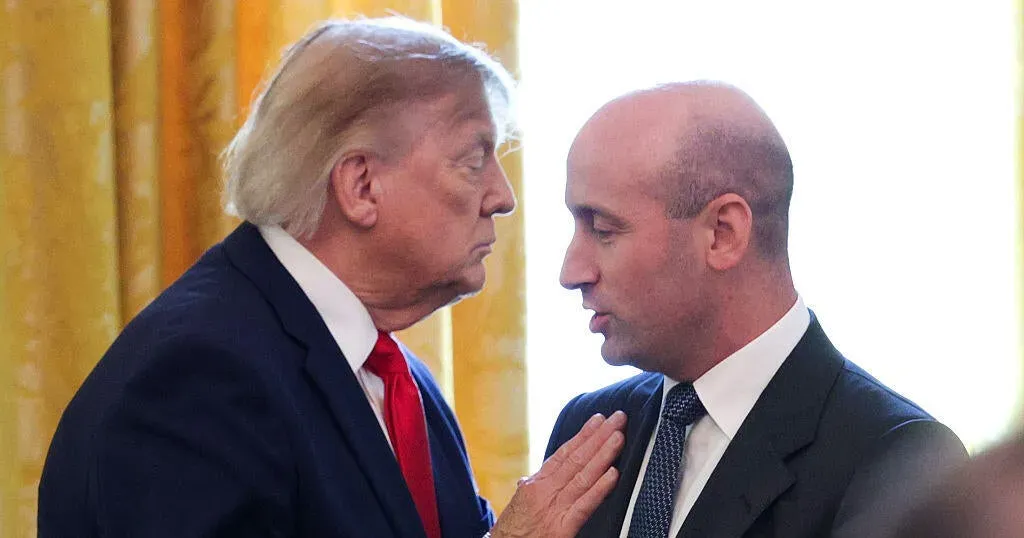
A significant shakeup is underway at the White House as President Donald Trump has announced that Stephen Miller will replace Susie Wiles as chief of staff starting Monday, November 9, 2026.
Miller's promotion comes after Republicans suffered major losses in the midterm elections, which have shifted the balance of power in Congress and set the stage for a Democratic majority. The president made the announcement on his Truth Social platform.
In his first statement on his new role, Miller emphasized the importance of supporting the President and defending the country, stating that "The mission now is more clear than ever: Fight with all of our soul to support our President and defend this magnificent Republic."
Miller is taking over as chief of staff from Susie Wiles, who will be moving to the Trump Political Operation. The president praised Wiles for her outstanding service, thanking her for her hard work.
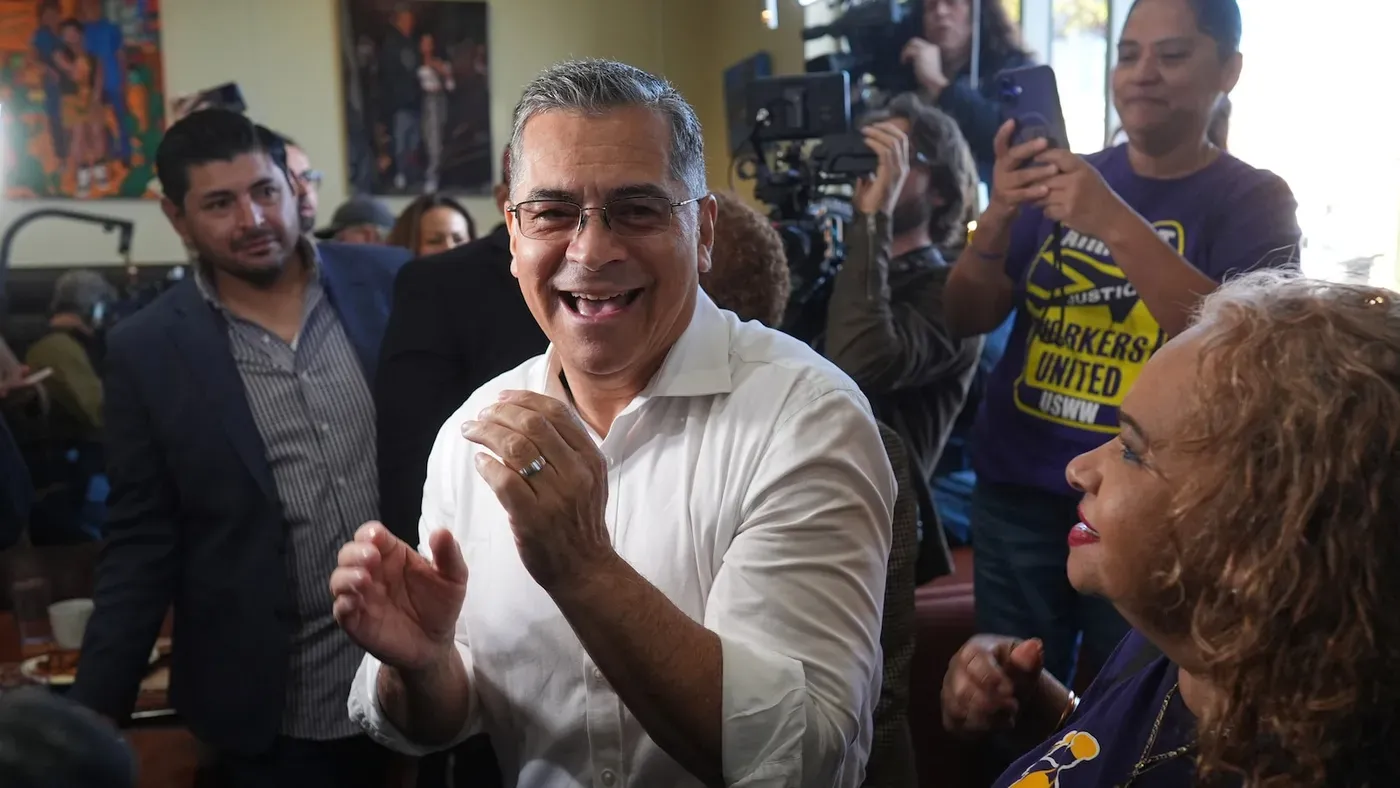
The appointment of Miller has been met with skepticism by Democrats, particularly Rep. Robert Garcia of California, the top Democrat on the House Oversight Committee and soon-to-be chairman. Garcia vowed to launch investigations into Miller's actions in the White House.
Garcia was critical of Miller's role as architect of the ICE raids that have terrorized communities and led to the detention and deportation of American citizens and immigrant families. He warned Miller to "lawyer up in anticipation of Congressional scrutiny.
As the White House undergoes a significant shakeup, President Trump is preparing for his first sit-down interview since the midterm elections on Sunday's 60 Minutes.
The shakeup at the Department of Justice continues as two more senior officials resign, leaving a power vacuum in key positions.
Jon Eisenberg, assistant attorney general for the National Security Division, has stepped down from his role, with Attorney General Todd Blanche thanking him for his service and praising his efforts to address threats to national security.
Blanche's statement on X did not provide a reason for Eisenberg's departure but acknowledged the importance of his work in strengthening the nation's ability to counter both foreign and domestic threats.
Meanwhile, Jason Reding Quiñones has submitted his resignation as the top federal prosecutor in South Florida. His tenure saw significant efforts to tackle violent crime, trafficking, and transnational organized crime groups.
Quiñones was also overseeing a high-profile investigation into alleged intelligence abuses by officials from the Obama and Biden administrations. His departure marks another key loss for the Department of Justice.
In other news, California state Senator Scott Wiener has been projected as the winner in the special election to succeed former House Speaker Nancy Pelosi in Congress.
Wiener's victory was confirmed earlier this week when his opponent, San Francisco Supervisor Connie Chan, conceded the race. He will represent California's 11th Congressional District, which encompasses most of San Francisco.
The district has a rich history, with notable figures like Phil Burton and Sala Burton having previously held the seat. Wiener expressed gratitude to Pelosi for her legacy and service, hailing her as the greatest Speaker in modern American history.
Mississippi is still processing absentee mail-in ballots and verifying affidavit votes, with officials reporting that roughly 80% of processed affidavit ballots have been accepted so far, while about 3,300 absentee mail-in ballots remain uncounted.
The incoming senators who have spoken out against Senator Chuck Schumer's potential role as majority leader are sending a clear message about their expectations from the new Democratic majorities in Congress.
These senators want to see a proactive economic agenda pushed forward by the party, and they're not looking at Schumer for leadership. Instead, some of them are eyeing the 2028 presidential election, where they can shape the direction of the party and the country.
Van Hollen's aide has confirmed that the senator is indeed kicking the tires on a potential presidential run in 2028. This move would allow Van Hollen to influence the party's direction and push for reforms in the economy and politics.
The lack of a clear challenger to Schumer as majority leader suggests that his position may be secure, at least for now. However, with several senators expressing dissent, it remains to be seen whether he will maintain his leadership role.
Ohio's newly elected governor, Amy Acton, has made headlines for her response to her Republican opponent Vivek Ramaswamy's attack ad featuring her estranged mother. The ad was widely criticized as terrible and despicable, according to Acton.
In an interview on CBS Mornings, Acton stated that she had no intention of speaking with Ramaswamy after the election. She emphasized the importance of leaders being accountable for their words and actions.
The attack ad in question featured Donna Arthur, Acton's estranged mother, who called her daughter a liar. However, Acton and her brother were removed from their mother's care at a young age due to allegations of abuse.
As the country waits with bated breath for the outcome of several close Senate and House races, the margins of the Democratic majorities in Congress remain uncertain. With multiple contests still unresolved, it is unclear how many seats will ultimately flip between parties.
A federal court has intervened to block the Justice Department's attempts to force election officials in Washington state to scrutinize ballots from voters suspected of being non-citizens. A temporary restraining order was granted by U.S. District Judge Jamal Whitehead, preventing the department from demanding that workers reject ballots or threaten them with prosecution.
The lawsuit, filed by several groups, argues that the Justice Department has overstepped its authority in requesting election officials to take action against suspected non-citizens. The court's ruling suggests that the list of individuals in question may be unreliable, and therefore, any action taken based on it could potentially disenfranchise legitimate voters.
The Justice Department had previously urged officials in multiple states to crack down on alleged voting by non-citizens before Election Day. In Washington state, federal prosecutors asked the top election official to set aside ballots from over 400 individuals they believed were not citizens. However, state officials responded that many of those on the list were indeed U.S. citizens and a significant number were not even registered to vote in the state.
The Justice Department's actions have raised concerns about voter suppression and potential disenfranchisement of eligible voters. The court's ruling has temporarily blocked these efforts, but it remains to be seen how this will impact the outcome of elections in Washington state.
Meanwhile, President Trump appears to be reassessing his approach to Democrats as the party edges closer to taking control of both the Senate and House of Representatives in January. In a series of contradictory comments, he has vacillated between expressing willingness to work with Democrats and asserting his veto power over their legislative efforts.
The president's comments have been inconsistent and seem to reflect a shifting strategy. Initially, he suggested that he would work with Democrats, but later emphasized the importance of his veto authority in dealing with them. His remarks have left many wondering about the direction of his administration's policy towards the incoming Democratic majority.
As the country waits for the outcome of several unresolved congressional contests, it remains unclear how many seats will ultimately flip between parties.
The outcome of the U.S. Senate election in Mississippi is far from certain as the vote count continues. With incumbent Republican Sen. Cindy Hyde-Smith facing off against Democrat Scott Colom, the margin between them remains narrow.
Colom currently holds a lead of fewer than 2,000 votes, but there are still thousands of outstanding mail ballots to be counted. According to state officials, approximately 3,600 mail ballots remain unprocessed, along with an unknown number of affidavit ballots from voters whose eligibility needs to be confirmed.
The process for counting these ballots is complex and time-sensitive. Absentee ballots must be received within five business days, while affidavit ballots must be processed within a 10-day window that ends on November 13th. This has created a sense of urgency among both parties as they vie for every last vote.
As the count continues, both parties are taking steps to ensure their interests are represented. The Democratic Senatorial Campaign Committee has deployed lawyers and resources to the state to monitor the process, while the National Republican Senatorial Committee and Hyde-Smith campaign have filed a request for all counties to separate and preserve affidavit ballots.
The Colom campaign has responded strongly to this move, calling it a desperate stunt." His counsel also sent a new letter to Mississippi's 82 counties urging them to respect election procedures. The state party chair, Mike Hurst, insisted that the election is far from over and noted that they have attorneys and observers throughout the state to ensure all legally cast ballots are counted.
Hyde-Smith has expressed confidence in her chances of winning, stating on social media that thousands of votes remain to be counted from Republican counties. She believes these votes will reinforce her path to victory, but Colom remains optimistic about his prospects as well.
Mississippi law does not allow for recounts, so the winner will ultimately be determined by a plurality of votes. As the count continues, tensions are running high between the two campaigns and their supporters.
The Democrats have secured their majority in the House of Representatives, thanks to a combination of wins in perennial swing districts and previously Republican-held seats.
A significant number of these victories came from suburban areas in the northeastern United States, where the party's appeal seemed to resonate with voters. In South Texas, which had become increasingly favorable to the GOP, Democrats also managed to pick up several seats that were once considered safe for Republicans.
So far, a total of 43 districts have shifted towards the Democratic Party, while only two have swung in favor of the Republicans. However, many races are still too close to call, with winners yet to be projected.
The Republican Party suffered a significant blow with the loss of Rep. Mike Lawler in New York's Hudson Valley region, who was defeated by Democrat Cait Conley after a highly competitive campaign.
Facts based on reporting originally published by CBS News Politics.
You may republish this story, in full or in part, if you credit News Central Site and link to it (licence CC BY 4.0). Photos are not included.