Democratic Women Focus on Economic Issues in Campaigns
State Rep. Sherry Doran Andrews, Senate Majority Leader Lindsey Graham, Jessica Mackler
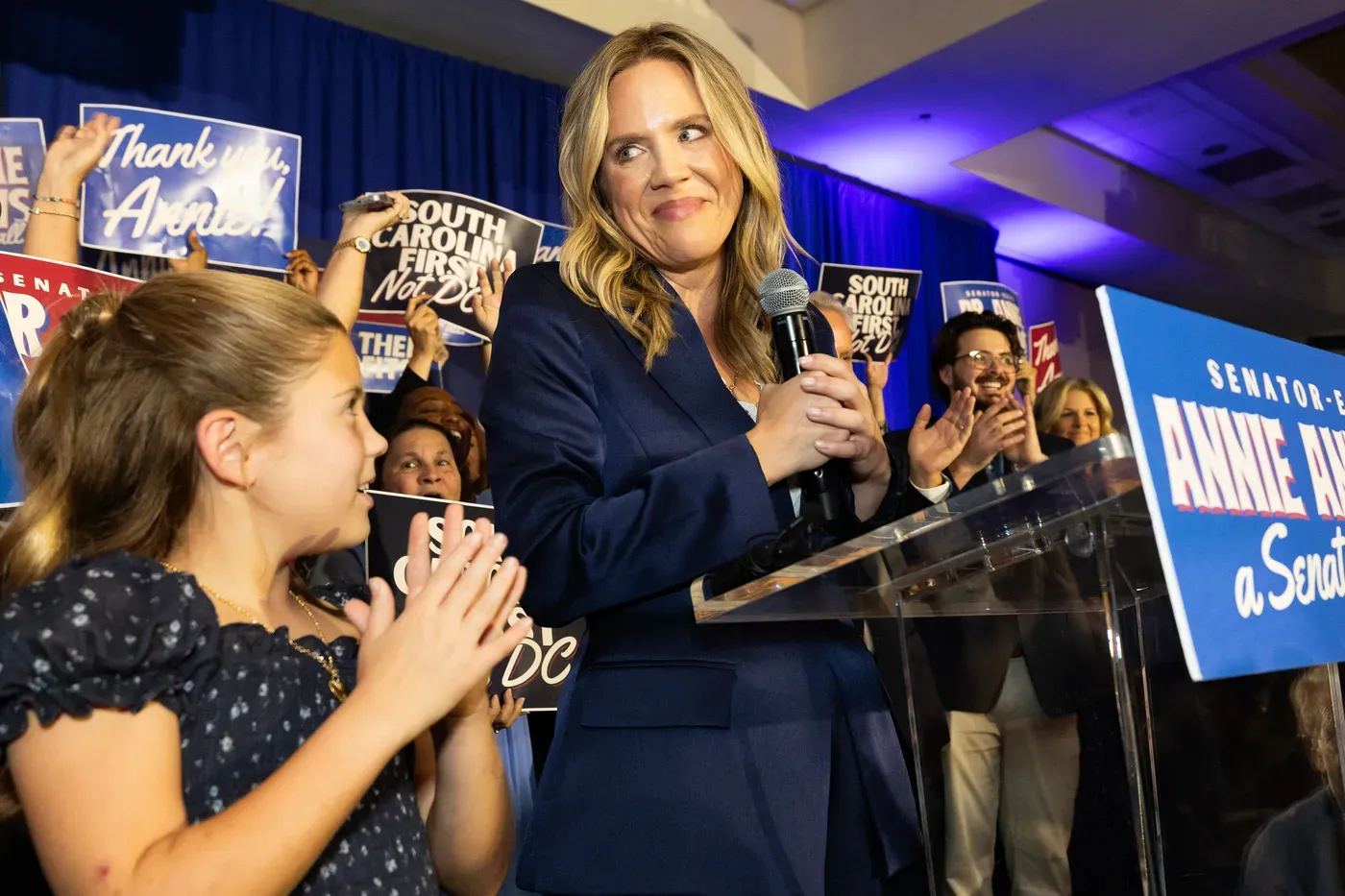
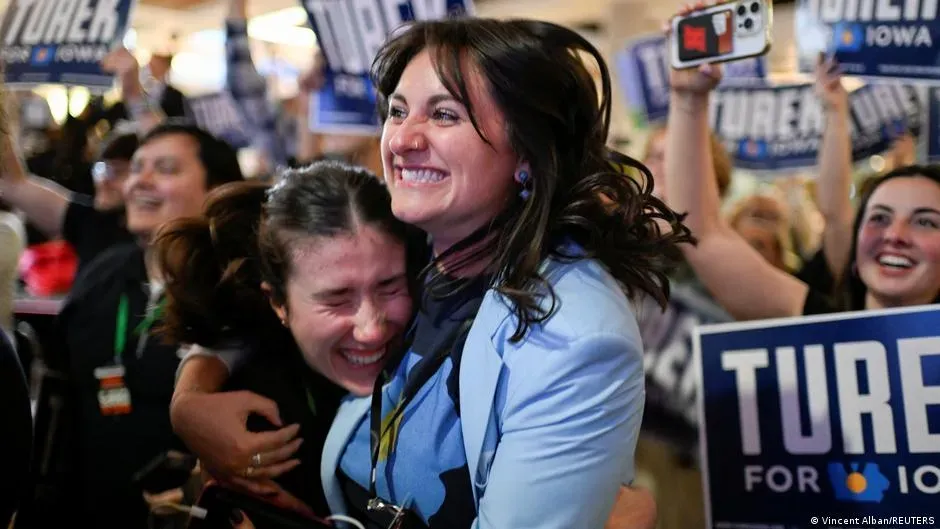
A new breed of Democratic women made history in this year's elections by flipping seats and governorships, but their campaign messages were refreshingly different from those of previous cycles. Unlike before, these candidates focused on economic issues that resonated with voters, rather than touting the historic nature of their bids or getting bogged down in culture war debates.
One such candidate is state Rep. Sherry Doran Andrews, who won her seat with a campaign centered on affordability and parenting. In her launch video, she noted that Senate Majority Leader Lindsey Graham would likely label her as "radical" or "crazy, but instead of being defensive, she chose to own the narrative.
As part of this new trend, several Democratic women campaigned on kitchen table issues like rising costs and family budgeting, which they argued resonated with voters. According to Jessica Mackler, president of EMILY's List, moms are uniquely equipped to understand these economic concerns because they have first-hand experience stretching a paycheck.
This shift in messaging marked a departure from previous election cycles where female candidates often found themselves at the center of culture war debates over electability and gender. This time around, however, their campaigns were more focused on issues that mattered most to voters.
A significant shift was observed in the way Democrats campaigned this cycle, particularly among women who chose to emphasize their roles as mothers. According to data from AdImpact, a total of $72 million was spent on advertisements featuring the words mom" or "mother", marking a 50% increase from 2024 and more than double the spending seen in 2022.
In many campaigns, Democrats used their experiences as parents to deflect culture war attacks that have historically been effective for Republicans. For instance, in one of her final TV ads, Democratic candidate Gina Hinojosa highlighted her role as a mother to counter potential criticism. This approach was likely aimed at resonating with voters who were increasingly concerned about affordability and the cost of living.
The emphasis on mothers' roles was seen as an easy way for Democratic operatives to connect with voters in this particular election environment. As one campaign expert noted, it was a deliberate decision to lean into this aspect of their identity, particularly among women who could use their experiences as parents to address concerns about affordability and the cost of living.
The 120th Congress is set to have a record number of women, with at least 159 expected to take their seats, according to the Center for American Women and Politics. This marks a significant shift in representation, with Democratic women outnumbering Republican women by roughly five-to-one.
Among the newly elected Democrats are many younger mothers who have won seats in battleground districts and states previously considered Republican strongholds. Their victories have been hailed as a blueprint for future success by groups dedicated to electing more women.
Democratic candidates spoke candidly about their families and personal experiences on the campaign trail, a departure from previous years when women with young children were often advised to keep this aspect of their lives private.
The challenges faced by working mothers in politics have been laid bare on the campaign trail this cycle. For JoAnna Mendoza, a single mom who won a seat in the Tucson suburbs, one such challenge was being hospitalized overnight with her 10-year-old son just before election day.
This personal experience is not unique to Mendoza; many parents face difficulties juggling work and family responsibilities. The emotional toll of this balancing act can be significant, as Mendoza emphasized when reflecting on her own situation.
The candid sharing of such personal anecdotes by Democratic candidates has humanized the issue and highlighted the need for more understanding and support in politics.
The conversation around family life has become a key aspect of Republican campaigns in recent months.
In Arkansas, Governor Sarah Huckabee Sanders' re-election campaign focused on her role as a mother and her efforts to reduce grocery taxes and lower living costs for families.
This emphasis on motherhood was also evident at the Republican National Committee's midterm convention in Dallas, Texas, where family life was a prominent theme.
The shift towards highlighting personal aspects of candidates is part of a broader change in how politics is discussed, according to Abby McCloskey, a conservative policy analyst.
Michigan's Democratic governor-elect Jocelyn Benson made a deliberate effort to showcase her personal side during her campaign. Her campaign launch video began with a heartwarming scene of her hugging her son in their family kitchen.
Benson also invited children to join her on stage during her Election Night celebration, highlighting the role that mothers can play as leaders and citizens. She believes this approach offers a fresh perspective on leadership, one that emphasizes compassion and community values.
Facts based on reporting originally published by Politico.
You may republish this story, in full or in part, if you credit News Central Site and link to it (licence CC BY 4.0). Photos are not included.