Conflict-Displaced Families Struggle to Feed Themselves in Kenya
Families fleeing violence in Ethiopia are finding safety in Kenya but struggling to feed their children due to ongoing fighting between Somali and Oromo communities.
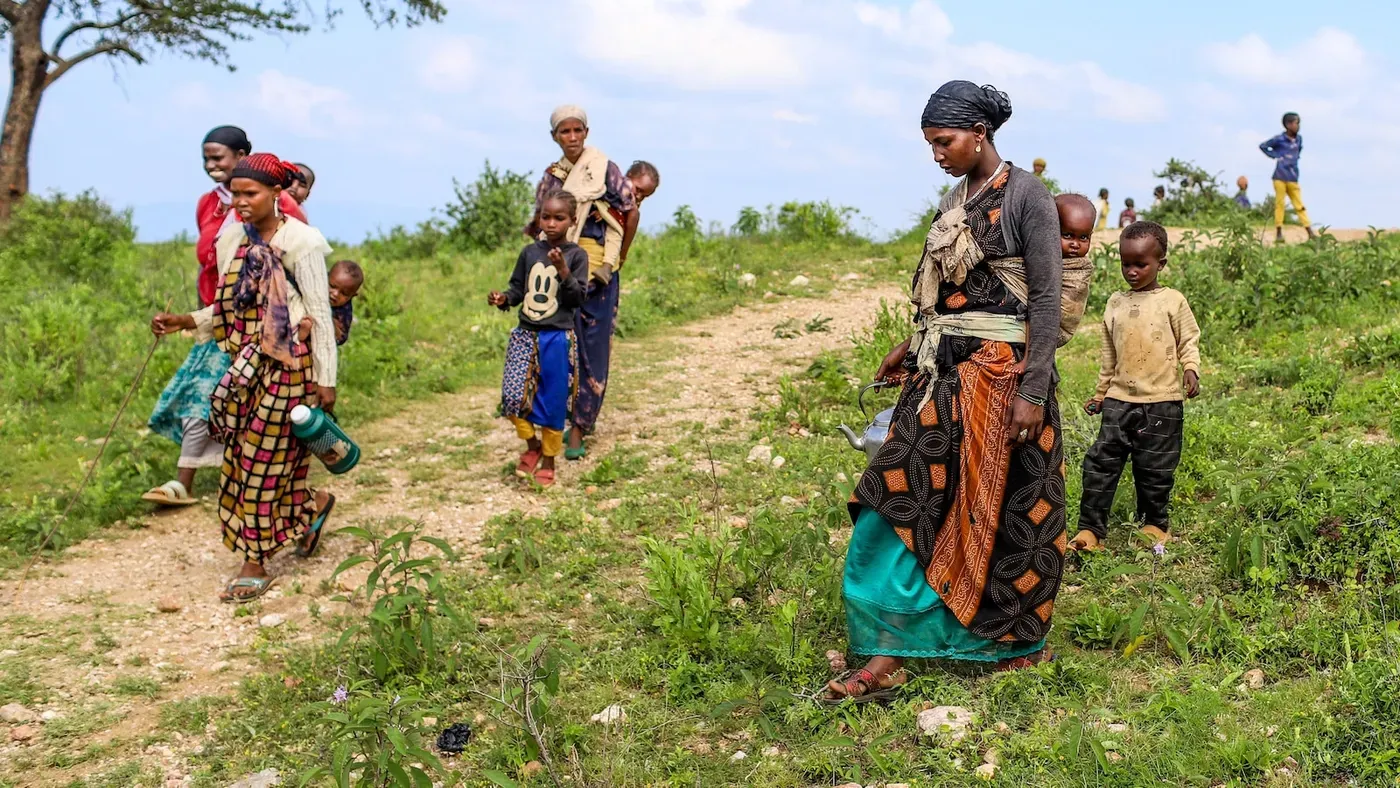
Mothers fleeing violence in Ethiopia are finding safety in Kenya but struggling to feed their children.
The influx of refugees is due to ongoing fighting between Somali and Oromo communities in southern Ethiopia, which stems from a longstanding territorial dispute between Ethiopia's Oromia and Somali regional administrations.
Families such as Shukria Dalacha's have been forced to leave everything behind, arriving in Kenya with little more than the clothes on their backs. We came here on foot late at night, running for our lives, she said.
Dalacha, who gave birth to her daughter Sijra just before crossing into Kenya, is among those struggling to provide for her newborn's basic needs.
The ongoing conflict in northern Tigray has left a trail of devastation in its wake, exacerbating an already dire humanitarian situation in Ethiopia. Researchers at Ghent University have estimated that approximately 500,000 civilians lost their lives between 2020 and 2022 due to violence, famine, and the collapse of essential health services.
The instability is further compounded by the fact that communities are struggling to cope with drought, which has been exacerbated by conflict-related displacement. A recent assessment by regional and federal disaster authorities, as well as humanitarian partners, revealed that 3.9 million people in Tigray would require emergency food assistance through December. Displacement, restricted access to farmland, and disrupted livelihoods have all contributed to the severe impact of poor rains.
Families continue to arrive at reception points in Kenya, where they are met with long lines and crowded registration areas. Hundreds of displaced individuals wait patiently for household rations and basic supplies, a testament to the overwhelming need for assistance. In one Kenyan host's home, 30 displaced people share a single room for sleeping, highlighting the severe shortage of accommodation.
Kerko Mohammed, a 70-year-old woman, fled her home with her family after gunfire struck their walls during fighting between Somali and Oromo communities in Ethiopia. Her story is just one of many that illustrate the devastating effects of conflict on innocent civilians, who are forced to abandon their homes and livelihoods in search of safety.
The influx of Ethiopian mothers seeking refuge in Kenya has brought about a new set of challenges, including finding enough food to feed their children.
A Kenyan host had provided some relief by offering food and water, but the household's limited financial resources meant that the mothers were still struggling to make ends meet.
In Marsabit County, local leaders had already been warning about the strain on resources due to impending food and water shortages, making it even more difficult for communities to accommodate the new arrivals.
At the Al-Huda temporary camp, aid workers are doing their best to provide basic necessities, registering families and distributing supplies such as household rations and blankets.
The number of Ethiopians seeking refuge in Kenya is staggering, with local authorities estimating that up to 50,000 people have crossed into the country since late October.
Registration and verification efforts are ongoing, but aid agencies are struggling to keep pace with the influx of arrivals. The UNHCR has profiled around 14,000 individuals to establish their needs, but this is not a comprehensive count of those seeking assistance.
The agency's limited financial resources mean that it cannot respond to the full extent of the crisis, with only $8.9 million requested in aid so far, although it remains unclear how much of this has been received.
Facts based on reporting originally published by ABC News International.
You may republish this story, in full or in part, if you credit News Central Site and link to it (licence CC BY 4.0). Photos are not included.