Cleaning Products Require Adherence to Manufacturer Guidelines
A recent trend of DIY cleaning has led many individuals to experiment with homemade recipes and unconventional methods for tackling household messes, often overlooking the importance of following manufacturer guidelines.
A recent trend of DIY cleaning has led many individuals to experiment with homemade recipes and unconventional methods for tackling household messes.
However, this approach often overlooks the importance of following manufacturer guidelines for chemical-based cleaning products.
As someone who has occasionally taken a hands-off approach to product instructions, it's easy to see how ignoring labels can lead to costly mistakes or even damage to belongings.
In one notable instance, neglecting proper maintenance led to the premature demise of a high-end vacuum cleaner.
The distinction between cleaning sprays and disinfecting sprays can be crucial in maintaining kitchen hygiene.
Not all kitchen cleaning sprays are created equal, despite some containing naturally occurring disinfecting properties from ingredients like vinegar or essential oils.
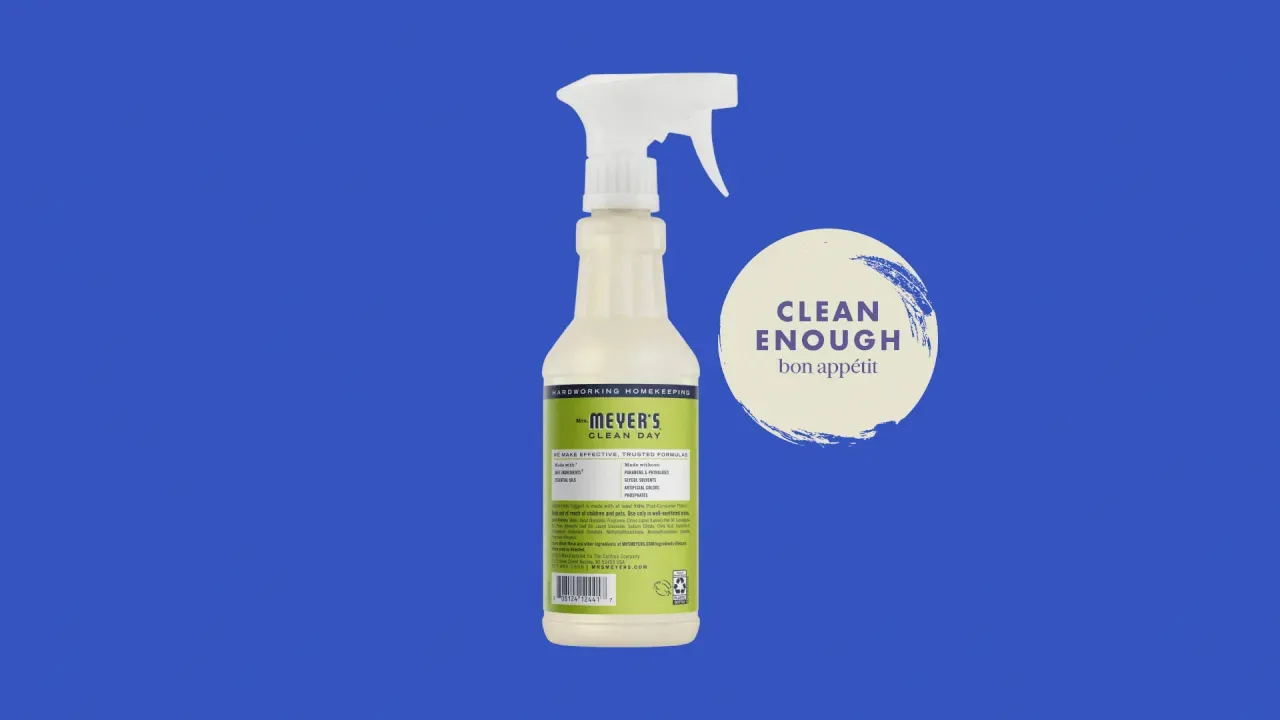
These basic cleaning sprays, found in products such as Mrs. Meyer's and Aunt Fannie's, primarily focus on removing grease and gunk from surfaces using surfactants.
Their purpose is to enable easy wiping away of messes, but they do not guarantee a germ-free environment.
To achieve spotless countertops, it's recommended to use both a disinfecting solution on top of spills and on the entire surface itself.
This approach may seem counterintuitive, as spraying a disinfectant on top of a spill might lead one to believe that the surrounding area is being disinfected. However, in reality, the disinfectant is only sanitizing the surface of whatever is stuck to the countertop.
The effectiveness of any cleaning product depends on its dwell time, the amount of time it needs to sit on the surface before it can kill a certain number of germs as claimed by the label.
For a disinfecting or sanitizing spray to be effective, it must remain visibly wet for at least two to 10 minutes to ensure that the desired level of germ-killing is achieved.
For many cleaning products, it's not just a matter of spraying and wiping down surfaces. In fact, studies have shown that 9% of viruses and bacteria can remain on surfaces even after being sprayed with disinfecting agents.
To ensure effective germ-killing, it's essential to follow the instructions carefully, including allowing the product to remain visibly wet for at least two to 10 minutes. Some products may also specify a dwell time for specific areas, such as kitchens where food-prep surfaces require rinsing off after a 10-minute period.
Ultimately, using cleaning products as directed requires reading and following the fine print on the label, which can be a tedious task. However, it's worth noting that even microfiber cloths, often touted for their effectiveness, may lose their ability to remove contaminants from surfaces with repeated use, according to research dating back to 2010.
Facts based on reporting originally published by Bon Appetit.
You may republish this story, in full or in part, if you credit News Central Site and link to it (licence CC BY 4.0). Photos are not included.