Breakthrough in Osteoarthritis Treatment Using Blood-Thinning Drug
Researchers have made a breakthrough in finding a treatment for osteoarthritis, with a study showing that a blood-thinning drug can limit cartilage damage and relieve pain in mice and monkeys with knee osteoarthritis.
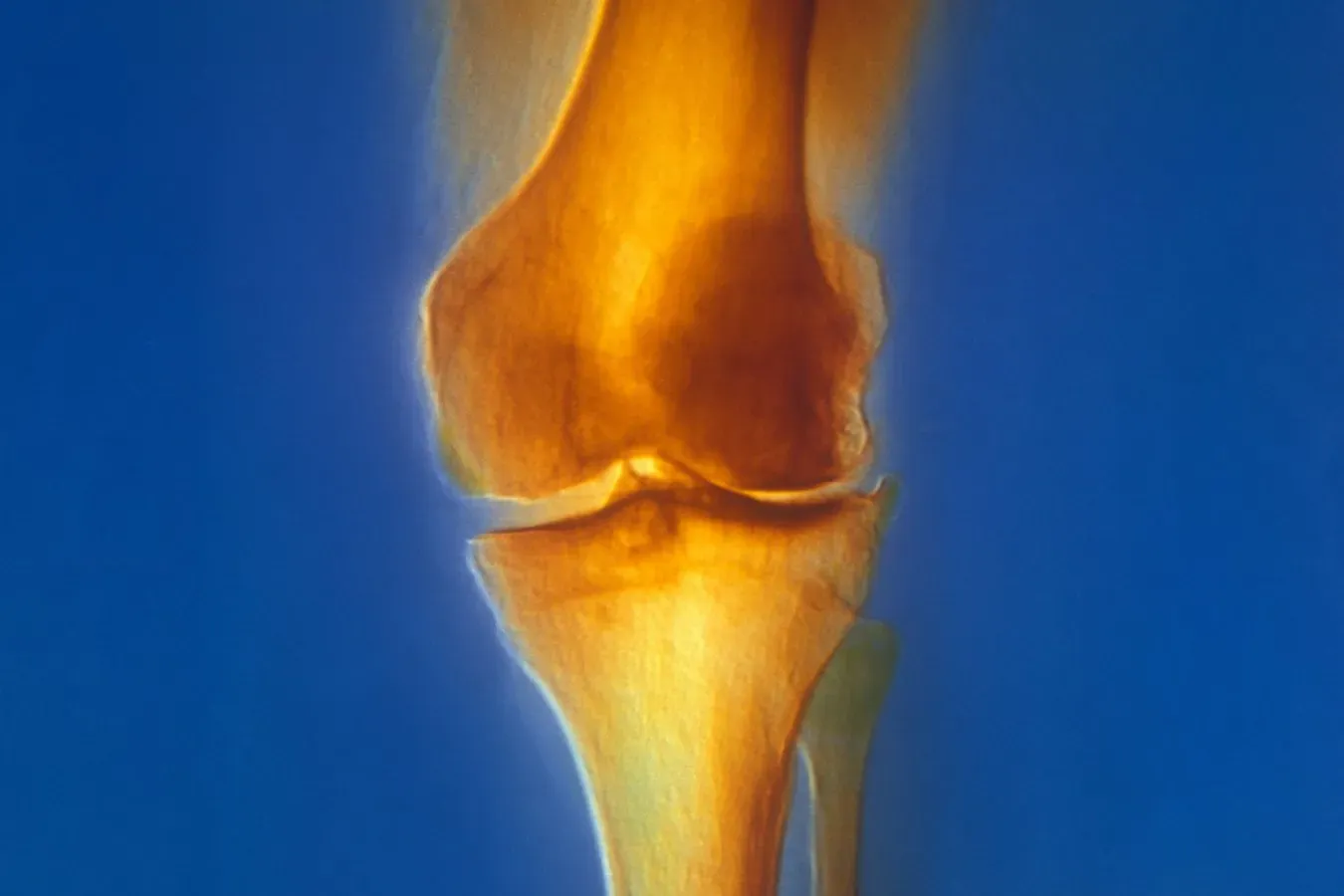
Researchers have made a breakthrough in finding a treatment for osteoarthritis, a condition affecting over 500 million people worldwide. A study has shown that a blood-thinning drug can limit cartilage damage and relieve pain in mice and monkeys with knee osteoarthritis.
The approach behind this discovery targets inflammatory signals that degrade cartilage, which is worn down by the wear and tear of joints, leading to inflammation, pain, and stiffness. Osteoarthritis occurs when the protective cushioning between bones breaks down, causing joint damage and mobility issues.
Currently, patients with osteoarthritis are offered limited treatment options beyond pain relief and anti-inflammatory medication. While these can provide temporary symptom relief, they do not slow or halt the progression of the disease. According to experts, patients are often advised to lose weight or manage their symptoms through medication alone.
The new study investigated whether targeting both TNF-alpha and IL-1-beta molecules could be more effective in treating osteoarthritis. These inflammatory molecules are thought to drive inflammation that worsens the condition. However, previous clinical trials targeting either molecule have been unsuccessful, suggesting a potential compensatory effect when one is blocked.
Eight monkeys were surgically treated with cartilage removal in their left knee joints to mimic the wear and tear that triggers osteoarthritis.
A month after the cartilage removal surgery, a group of monkeys was given daily doses of the blood-thinning medication dabigatran mixed into their food. This drug is commonly used to prevent blood clots in people at high risk of stroke and has been shown to block inflammatory signals.
The remaining four monkeys served as controls and ate their usual food without any medication. After seven months, MRI scans were taken to assess the condition of the left knee cartilage in both groups. The results showed that the cartilage thickness in the group receiving dabigatran had increased by about 60 per cent compared to the control group.
This significant increase in cartilage thickness suggests that dabigatran reduced cartilage damage and slowed the progression of osteoarthritis, according to Liu. In addition to the thicker cartilage, monkeys on dabigatran also showed a greater range of motion in their left knee than those in the control group.
The findings suggest that dabigatran may be effective in slowing the progression of osteoarthritis in people by reducing inflammation and preserving joint health. Further experiments confirmed these results in mice with surgically-induced knee osteoarthritis, revealing that dabigatran reduced inflammation in the knee by about 60 per cent.
Researchers have employed the most accurate animal models of osteoarthritis available to test a novel approach to treating the condition. This involved administering dabigatran, a blood-thinning medication, to mice with artificially induced knee osteoarthritis.
Studies have shown that dabigatran can significantly reduce inflammation in the affected joint by about 60 per cent. However, there are concerns about the potential risks associated with using a drug that affects blood clotting on people who already suffer from the condition.
Facts based on reporting originally published by New Scientist.
You may republish this story, in full or in part, if you credit News Central Site and link to it (licence CC BY 4.0). Photos are not included.