Automatic Enrollment of Children in Trump Accounts Completed
Nearly every child in America now has a Trump Account following an automatic enrollment process that saw over 60 million kids added.
The Trump administration has announced that nearly every child in America now has a Trump Account, following an automatic enrollment process.
The Treasury Department completed its automated enrollment of eligible children on October 1, creating accounts for over 60 million kids who didn't already have one. This brings the total number of accounts to almost 70 million when combined with families who signed up voluntarily.
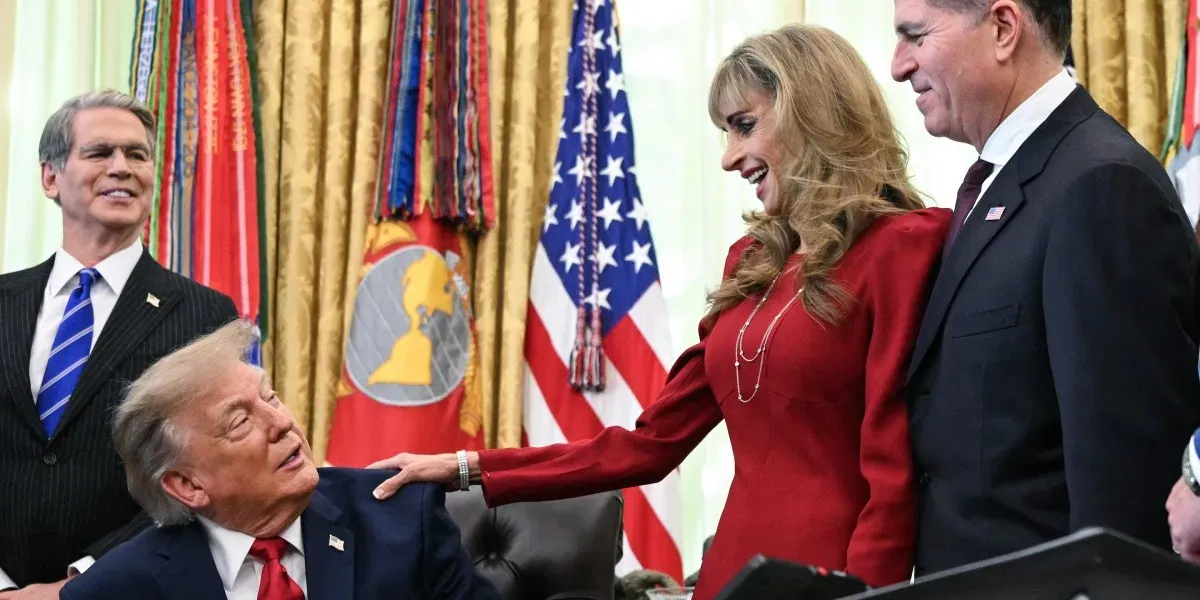
In an Oval Office event on October 7, President Donald Trump expressed his satisfaction with the progress made in enrolling children in the tax-advantaged investment accounts. According to him, every eligible minor child in America has now been automatically enrolled in a Trump Account.
However, having an account doesn't guarantee its readiness for use. Parents or guardians must claim their child's account through the official Trump Accounts app before they can manage it, accept contributions from family and friends, or collect the $1,000 government seed deposit for eligible children.
The shift to automatic enrollment was made in response to slow initial uptake, with the Treasury Department having processed around 5.6 million sign-up forms prior to the change. This represented less than a tenth of the approximately 73.4 million children who are eligible for the accounts.
Over $4.5 billion has been deposited into Trump Accounts since their launch on July 4, with the funds coming from various sources. The White House reports that government seed contributions totalled $1.3 billion, while family and friends contributed more than $600 million. Additionally, philanthropic gifts worth $2.6 billion have been made to the accounts.
A significant portion of these philanthropic donations comes from Michael and Susan Dell's $6.25 billion pledge. This commitment will provide $250 to up to 25 million children under the age of 10 who reside in ZIP codes with median household incomes below $150,000. The White House has also announced that over 70 companies have joined the effort to contribute to employees' children's accounts.
The administration has emphasized the potential for significant wealth growth through these accounts. According to the calculator on TrumpAccounts.gov, a single $1,000 seed could potentially grow to $243,000 by age 55. Furthermore, an account receiving the maximum annual contribution of $5,000 is projected to reach $13 million under the assumption that the S&P 500 returns more than 10% annually for 55 years.
Financial experts have expressed skepticism about these projections, suggesting that a more conservative estimate would be around $1.5 million to $2 million by age 55 for a maxed-out account. This assumes an annual return of 7% without interruption over the same period.
The Treasury Department has expanded its Trump Account program to accept large philanthropic donations of publicly traded stock.
This new option allows companies or charities set up by stockholders to donate shares that will be transferred to Treasury and allocated to eligible children according to donor instructions and Treasury guidance.
The rules governing these stock donations are narrow, requiring the shares to be held for at least five years before they can be sold. Moreover, the donations must come from a qualified source, such as a company or charity set up by stockholders, rather than relatives.
According to reports, SpaceX president Gwynne Shotwell was among the first to utilize this option, pledging one share each to more than 2 million children's accounts through the Trump Account program.
The Trump Account program's impact on low-income families is a topic of debate among economists. According to researchers at The New School, their analysis of 15 years of 529 college savings data suggests that the benefits of the program will largely go to those who can afford to contribute thousands of dollars annually.
However, the White House counters this argument by pointing out that about 80% of Trump Accounts are linked to families with incomes below $200,000 per year. This statistic could suggest that the program is reaching a broader demographic than initially thought.
Every child under 18 with a valid Social Security number now has an account through the Trump Account program. However, not all children will be eligible for the government's one-time $1,000 seed contribution. To receive this benefit, the child must have been born between January 1, 2025, and December 31, 2028.
Parents and guardians can claim their child's account through the Trump Accounts app, available on iOS and Android devices. More information about claiming accounts is also available at TrumpAccounts.gov.
When a child's Trump Account turns 18, it transitions into a traditional IRA-style account. This means that withdrawals from the account will be subject to ordinary income taxes, and may also incur penalties if taken early, unless used for specific purposes like education or purchasing a first home.
Families are advised to review the tax implications before deciding how to use the funds in their Trump Account, now transformed into an IRA-style investment. This change underscores the importance of understanding the long-term financial implications of these accounts.
Facts based on reporting originally published by Fortune.
You may republish this story, in full or in part, if you credit News Central Site and link to it (licence CC BY 4.0). Photos are not included.