Armenia Arrests Opposition Figure Over Facebook Posts Criticizing PM Pashinyan
Adekvad party leader Artur Danielyan was arrested for criticizing Prime Minister Nikol Pashinyan on Facebook, with charges stemming from his online activity.
Armenia has seen a surge in arrests of opposition figures over the past two years, with many charges stemming from their online activity. The latest incident involves Artur Danielyan, leader of the opposition party Adekvad, who was arrested after criticizing Prime Minister Nikol Pashinyan on Facebook.
The grounds for Danielyan's detention were his Facebook posts, which targeted both Pashinyan and Armenia's security services. A key point of contention was Pashinyan's stance on a possible prisoner exchange with Azerbaijan, where an Azerbaijani soldier is accused of breaking into the home of a 39-year-old woman in an Armenian village.
Pashinyan had ruled out swapping the soldier for detained Armenians in Azerbaijan in an interview with Infocom. Danielyan responded to this decision with a scathing attack on Pashinyan, calling him a "scumbag" and accusing him of being unwilling to bring his fellow citizens home.
The conflict between Armenia and Azerbaijan over Nagorno-Karabakh has left a lasting impact on the region. After Azerbaijan's military offensive in 2023, Baku regained control over the territory, forcing over 100,000 Armenians to flee their homes. Currently, there are 19 Armenian individuals being held in detention in Baku.
Armenia's civil society representatives have expressed concern that this wave of arrests signals a worrying turn toward democratic backsliding. They argue that selective justice undermines trust in the rule of law and may have far-reaching consequences for Armenia's relations with the European Union.
Armenian civil society organizations have come out in force against what they see as selective prosecution of critics of the government.
The joint statement from over a dozen organizations describes the charges brought against Adekvad party leader as "patently illegal, disproportionate, and politically motivated.
Critics argue that these actions are not just punitive but also serve to silence dissenting voices and stifle public debate.
Several other activists have faced prosecution for speaking out against the ruling establishment or Prime Minister Pashinyan.
The case of Artur Osipyan is a notable example: he was arrested after a verbal clash with Pashinyan over Nagorno-Karabakh policy, and later charged with disrupting public order and obstructing the ruling party's campaign.
Osipyan was also accused of inciting violence against Pashinyan in a social media post from March.
The Regional Center for Democracy and Security (RCDS) has been monitoring online hate speech targeting Nagorno-Karabakh refugees since 2026.
Their reports reveal a disturbing trend of pro-government bloggers and influential social media users spreading hostile rhetoric towards displaced Karabakh Armenians, using derogatory terms to label them.
Despite these findings, Armenian law enforcement agencies have largely failed to pursue criminal prosecutions against these activists, allowing the hate speech to continue unchecked.
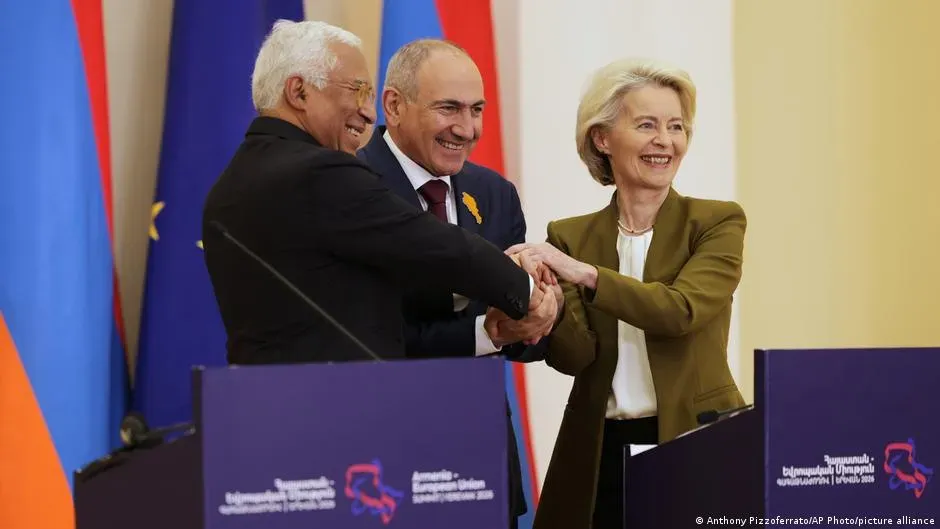
The EU's response to Armenia's efforts to strengthen ties with the bloc has been lukewarm, with Brussels giving no clear indication of its stance on the silencing of opposition voices in Yerevan.
According to observers, the EU is adopting a pragmatic approach driven by geopolitical considerations, prioritizing regional developments over human rights concerns.
The Armenian government has been accused of selectively prosecuting critics of Prime Minister Nikol Pashinyan, with some observers suggesting that this tactic is being used to label internal opponents as Russian proxies.
A closer examination of the situation reveals that not everyone who criticizes Pashinyan holds pro-Russian views, and this nuance seems to be lost in the current geopolitical landscape. The EU's acceptance of the right narrative" surrounding these criticisms has raised concerns about its commitment to democratic values.
The EU-Armenia Comprehensive and Enhanced Partnership Agreement emphasizes the importance of democracy, the rule of law, and fundamental rights in their partnership. In response to questions from DW, an EU spokesperson stressed that it is closely monitoring developments in Armenia, including criminal investigations, which must be conducted independently and impartially, free from political influence.
Facts based on reporting originally published by DW English.
You may republish this story, in full or in part, if you credit News Central Site and link to it (licence CC BY 4.0). Photos are not included.