US Funding Cut Threatens Afghan University's Online Program
The American University of Afghanistan's online program is at risk of being terminated due to loss of US funding.
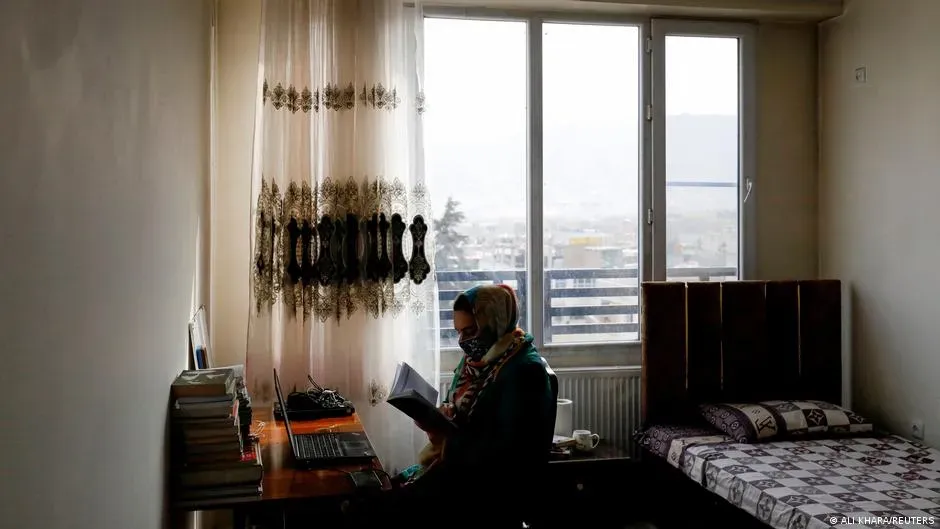
A sudden email has shaken Afghan students like Laila, who had been secretly pursuing their education through the American University of Afghanistan (AUAF) online program after the Taliban banned women from attending universities in person.
The university's funding is set to be cut off by the US, a move that could spell disaster for its 1,000 enrolled students, three-quarters of whom are women. Laila described her initial reaction to the news as one of shock and despair.
For many Afghan girls like Laila, finding ways to study has been a constant challenge since the Taliban took control in August 2021. When the ban on women's education was announced in December that year, Laila was forced to abandon her studies at another university just two exams shy of completing her semester.
The American University of Afghanistan had already fallen under Taliban control, but its online program offered students like Laila a lifeline to continue their education. However, with the loss of US funding looming, these secret learning arrangements are now at risk of being terminated entirely.
Laila's classmates share her fears that the university will shut down without continued financial support from the US, leaving many young women in Afghanistan without access to higher education and a path towards economic independence.
Laila's life has been forever changed by the events of August 14, 2021, when the Taliban retook power in Afghanistan. She recalls sitting in a restaurant in Kabul with a friend, celebrating passing an exam with coffee and cake, when suddenly a man shouted "Allahu Akbar" and declared that the mujahideen would always be victorious.
The takeover marked the end of women's participation in public life, as they were banned from many jobs and from attending school and university. Laila's online studies at AUAF, which she secured with a scholarship, have become a lifeline for her education. However, even this path is uncertain due to concerns that the university may shut down without continued financial support from the US.
To protect herself and others, Laila keeps her online classes private, staying home on most days for remote lectures alongside classmates who use aliases and keep their cameras off for security. Despite the precautions, she has formed a bond with her fellow students, recognizing each other's voices even when they hide behind pseudonyms.
Laila's experience of growing up in Afghanistan is vastly different from that of many of her peers, thanks to an American childhood spent watching cartoons that taught her English with an American accent. As she entered adulthood, she continued to learn about the world outside Afghanistan and study foreign governments, broadening her understanding of global politics.
Laila's memories of the Taliban takeover are etched in her mind, including a moment when she felt numbness in her hands or feet as she pulled money from her purse and slammed it on the table. Her friend later recalled thinking that this might be their last day alive, reflecting the fear and uncertainty that gripped many Afghans at that time.
The fear of persecution has become a constant companion for Laila and her peers. They live in perpetual anxiety, never knowing when they might be targeted by Taliban authorities. The threat is always there, lurking in the shadows.
Laila's phone has been flooded with threatening messages and calls, warning her to drop out of the online program she is pursuing. She worries that if her phone is searched, her emails from work and university will incriminate her. This fear follows her everywhere, even into her own home.
Her home life has become increasingly precarious as well. Laila's family has been subjected to repeated searches by Taliban authorities, who rummage through their belongings looking for evidence of wrongdoing. Despite these risks, she continues to study, driven by the determination to graduate from the online program.
The American University of Afghanistan was once a beacon of hope for women like Laila. Founded in 2006 with millions of dollars in US funding, it was intended to provide women with access to higher education and leadership skills. Former US first lady Laura Bush hailed the university as a symbol of the bond between the American and Afghan people.
The university's mission director at USAID during its inception had doubts about the project's viability. Patrick Fine said that many at USAID considered training elites to be a questionable use of funds, but he acknowledged that the university has made a significant impact on women's education in Afghanistan.
The Bush administration saw opportunities to stabilize Afghanistan after the Taliban's defeat in 2003. With a new interim government in place, US President George W. Bush aimed to foster goodwill towards the US-backed leadership.
Educating women was seen as one of the key facets of this effort. The university provided not only higher education but also training for future politicians and support for the Afghan economy. This multifaceted approach was designed to promote stability and growth in the country.
The university's impact on Afghan youth has been significant, according to Patrick Fine. Thousands of young people have benefited from its programs, including alumni who have gone on to make a difference in their communities. The organization's achievements are all the more remarkable given the challenges it faced.
However, US support for the university began to wane as concerns over financial accountability grew. In 2016, US inspectors launched an investigation into the university's finances, and by 2018, investigators were unable to track how aid money was being spent due to poor accounting practices.
The US State Department's decision to cut off funding for a university in Afghanistan has been met with resistance from its former director, who claims the move is motivated by smear tactics.
According to Fine, past audits had identified some issues with the university's accounting practices, but these were not considered major fraud. He argues that the university remains a valuable investment, particularly given its role in providing education to Afghan women.
The university relies heavily on US funding, which covered nearly 90% of its costs as recently as 2018. However, Fine points out that this does not preclude the institution from seeking alternative sources of support.
Despite this, the university's future is now uncertain due to the loss of a $25 million grant from the State Department. This has left students like Laila feeling anxious and demotivated.
Laila has spoken publicly about her disappointment and sense of hopelessness following the funding cut. She claims that she has lost her appetite and struggles to leave her room, her only motivation now seemingly gone.
The young woman's academic dreams have been put on hold due to the dire situation in Afghanistan. She was meant to graduate years ago and pursue higher studies abroad, but those plans are now uncertain.
She and many others like her will struggle to access education if they don't find an alternative path soon.
Facts based on reporting originally published by DW English.
You may republish this story, in full or in part, if you credit News Central Site and link to it (licence CC BY 4.0). Photos are not included.