US Army Adapts Air Defense Capabilities After Ukraine and Middle East Conflicts
The US Army is updating its training programs to better prepare air defenders for emerging threats after learning from conflicts in Ukraine and the Middle East.
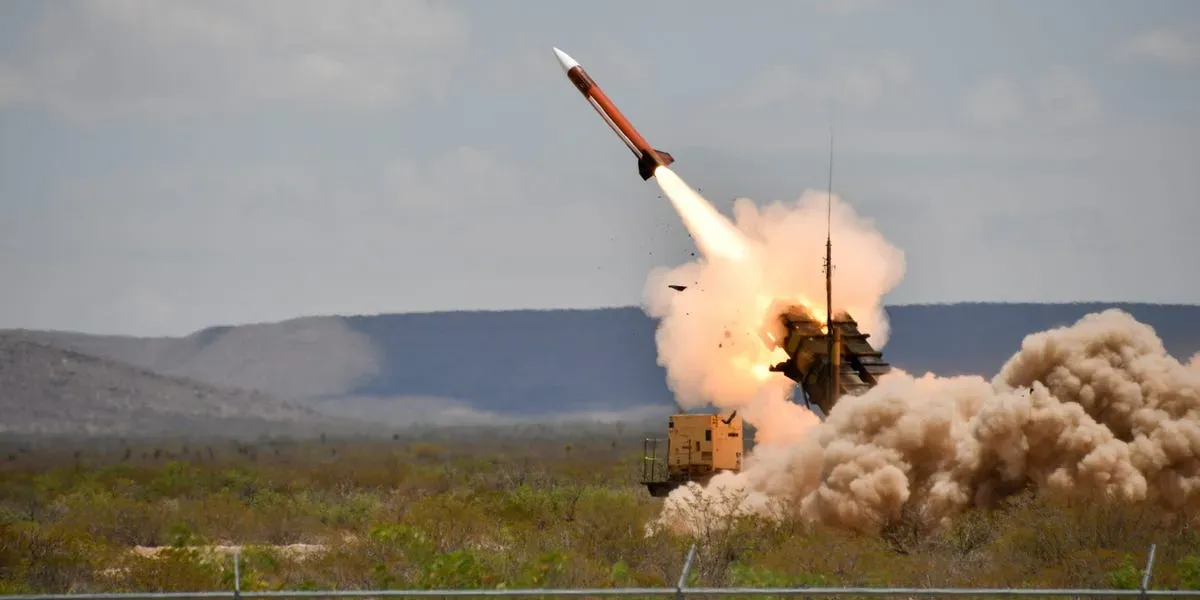
The US Army is taking valuable lessons from global conflicts in Ukraine and the Middle East to improve its air defense capabilities. Intense missile and drone attacks have highlighted the need for better training of air defenders and enhanced protection measures against evolving threats.
One key area of focus is protecting surface-to-air missile systems, such as the MIM-104 Patriot, and their crews from sophisticated attacks. Army officials report that lessons learned are being quickly incorporated into training programs to help troops stay ahead of emerging tactics and technologies.
Russian forces in Ukraine have employed innovative strategies against air-defense systems, including using complex barrages of drones alongside ballistic and cruise missiles. These tactics have forced the US Army to reassess its approach to mobility, concealment, deception, and dispersal in protecting critical assets.
The war with Iran has presented another challenge for American and allied air defenders: managing large-scale drone and missile bombardments while conserving interceptor stocks. The Army is studying these experiences to refine its defense strategies and ensure the protection of personnel and equipment.
Lt. Gen. John Rafferty, head of Army Space and Missile Defense Command, has acknowledged the importance of learning from global conflicts in Ukraine and elsewhere. He noted that air defenders have been particularly proactive in seeking lessons from these battles, with a focus on survivability and safeguarding critical assets.
The US Army's 32nd Army Air and Missile Defense Command is disseminating valuable insights gleaned from its observations of Ukraine and the Middle East to its headquarters at Fort Bliss, Texas. This information is then incorporated into updated training materials for air defense soldiers, enabling them to better prepare for combat scenarios.
The command, which has recently transitioned to Army Space and Missile Defense Command, plays a crucial role in missile defense planning across various regions. Its responsibilities encompass both active defenses, such as intercepting incoming missiles, and passive measures like camouflage and dispersal, as well as coordinating intelligence and command-and-control efforts.
A significant portion of the 32nd Army Air and Missile Defense Command's forces are currently deployed to the Middle East, with roughly 2,500 soldiers from this command serving in the region. These troops include air defense formations and space specialists, with approximately 25% to 30% of the command's air defense units deployed.
The US war with Iran has provided a unique opportunity for the 32nd Army Air and Missile Defense Command to gather valuable data on air defense. This information is being fed back to other brigades within the formation, allowing them to refine their strategies and improve their ability to protect against incoming threats.
The US Army's training programs are being revamped to reflect the lessons learned from conflicts in Ukraine and the Middle East. These conflicts have presented a range of challenges that the Army is incorporating into its training regimens. This includes not just the types of threats but also the scale, scope, and complexity of what they're seeing.
To address these complexities, new formations are being trained using combat simulations that reflect the insights gained from Ukraine and the Middle East. These simulations enable soldiers to quickly adapt to emerging threats and tactics. The goal is for individual soldiers joining an air defense unit to be able to rapidly get up to speed on the latest strategies.
The Army's training programs also recognize the importance of dispersal, camouflage, and mobility in protecting air defenders from enemy forces. As conflicts have shown, air defenses are crucial for intercepting missiles and drones, as well as protecting critical assets and challenging aircraft. However, the heavy expenditure of air-defense interceptors has raised concerns about stockpiling for future fights.
The Army's training programs aim to equip soldiers with the skills and knowledge needed to counter new threats and employ innovative tactics. By incorporating lessons from Ukraine and the Middle East into its training regimens, the US military is positioning itself to adapt to emerging challenges in the air defense domain.
Facts based on reporting originally published by Business Insider.
You may republish this story, in full or in part, if you credit News Central Site and link to it (licence CC BY 4.0). Photos are not included.