US Airlines See Surge in Premium Cabin Revenue
The aviation industry has witnessed a significant shift in recent years, with premium cabins becoming an integral part of airline revenue architecture in the US.

The aviation industry has witnessed a significant shift in recent years, with premium cabins becoming an integral part of airline revenue architecture in the US. According to latest figures, premium cabins generated $188 billion, accounting for 24% of global passenger revenue in 2024.
This trend is expected to continue, with US premium capacity increasing by 33% since 2020, outpacing economy capacity growth of 16%. However, the industry's focus has shifted from meeting demand to managing yields, as carriers scale up their premium offerings simultaneously.
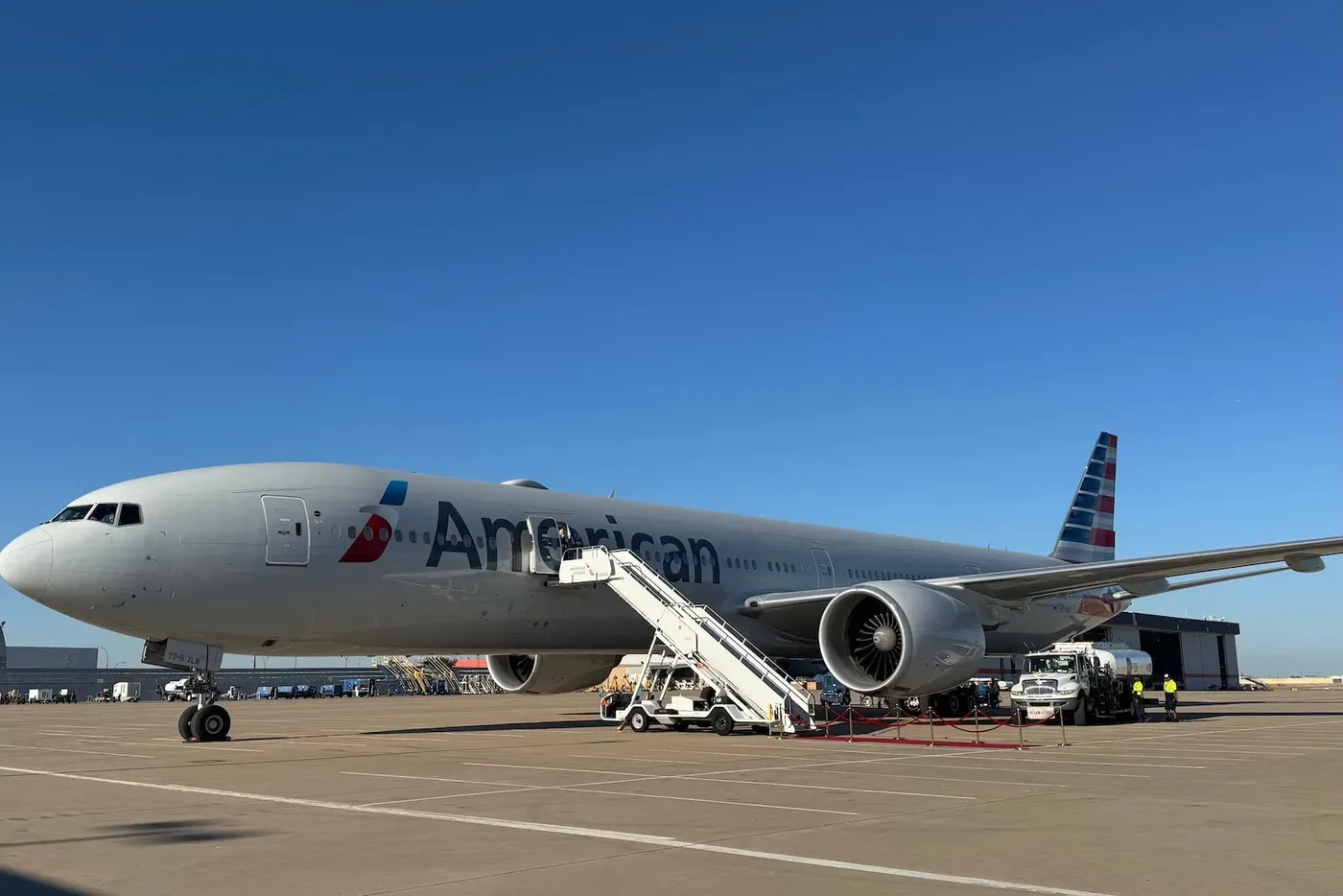
Several major airlines have invested heavily in expanding their premium cabins. United Airlines has ordered over 250 aircraft with increased business class and premium economy seating, while Delta Air Lines is spending $1 billion on new Delta One suites set to debut in early 2027. American Airlines is retrofitting its 777-300ERs with upgraded amenities, and Alaska Airlines is introducing business class on select narrowbodies and widebodies.
These investments are paying off, as carriers report significant revenue increases from their premium cabins. Delta's premium revenue surged by about 57% over the past two quarters, reaching $6.9 billion in Q2 2026.
Delta's operating margin also benefited from its premium strategy, holding steady at 9.5% despite fuel price shocks. The airline's ability to maintain profitability underscores the importance of a well-balanced revenue mix, including premium cabins and non-flying revenue streams.
The trend towards unbundling premium services is another indication that these offerings have become mainstream. United Airlines now sells domestic First and Business as tiered fares, rather than standalone products.
This segmentation allows carriers to cater to price-sensitive buyers without discounting the full premium experience, which helps protect yields as capacity increases.
The airline industry is facing a perfect storm of rising fuel costs and stagnant demand, making it increasingly difficult for carriers to maintain profitability.
Jet fuel prices have hit record highs, averaging $4.50 per gallon in recent months, while domestic fares have risen by approximately 32% year-over-year.
This surge in fuel costs has put pressure on airlines without a premium or loyalty program to rely on, leaving them exposed and vulnerable to financial losses.
According to Deutsche Bank's projections, American Airlines, Alaska Airlines, JetBlue Airways, and Frontier Airlines are expected to lose money in 2026 due to their inability to offset rising expenses with revenue gains.
The demand for premium travel is a structural aspect of the US market, driven by self-funded leisure travelers who are willing to pay more for comfort and convenience.
This trend is not solely dependent on corporate accounts, but rather reflects a broader shift towards premium travel as a status symbol and a way to differentiate oneself from others.
However, the return on investment in premium seating is cyclical, meaning it can fluctuate depending on various market factors, including supply and demand dynamics.
The US market currently supports two fully funded premium airlines, Delta Air Lines and United Airlines, with American Airlines, Alaska Airlines, and JetBlue Airways vying for a third spot.
Despite the growing demand for premium travel, Skift Research warns that oversupply is a major risk in the industry, particularly if multiple carriers attempt to scale their premium offerings simultaneously.
The financials of airlines are complex, with multiple streams of income that don't always add up to a clear picture. On one hand, the cash from banks and credit card companies is substantial and well-documented, but on the other hand, the net profit behind these transactions remains opaque.
United Airlines CEO Scott Kirby pushed back against the notion that his airline is just a credit card company with wings, arguing that analysts tend to focus on the revenue generated by miles earned through partnerships without considering the costs associated with carrying large numbers of award passengers. This perspective highlights the need for a more nuanced understanding of an airline's financials.
American Airlines has collected $6.2 billion from its partners, including credit card companies and other organizations, over the past few years. Meanwhile, United doesn't disclose its total bank cash revenue, and MileagePlus award flights have become increasingly popular, rising to 10.3% of passenger miles in 2025 from 7.2% in 2019.
The trend towards premium air travel is clear, with a growing number of passengers willing to pay more for upgraded amenities and services. Skift Research has identified this as a peaking trend that airlines should capitalize on now, particularly since over 70% of travelers say they would trade up if given the opportunity.
American Airlines' Chief Commercial Officer Nat Pieper emphasized the importance of integrating multiple aspects of an airline's business to drive growth. He noted that network, customer experience, premium revenue, and loyalty all need to work together in harmony to achieve success.
The pressure on airlines to prioritize their loyalty programs is coming from several directions at once. Disclosure requirements, regulation, and technological advancements are forcing companies to be more transparent about the costs associated with award flights and other perks.
Despite its progress in closing product gaps, American Airlines still has a significant financial gap to bridge. Its premium seat mix is already high, accounting for around 30% of seats and generating roughly 50% of revenue, but Delta Air Lines continues to outperform in this area.
American's CEO Robert Isom has rebranded the airline as a "premium global carrier, a label that reflects its focus on upgrading its offerings. Meanwhile, Delta expects premium revenue to surpass main cabin revenue by 2027, driven largely by the success of its premium products.
To achieve its goals, American Airlines needs to generate returns from its premium spending that can fund future investments and pay down debt. As Nat Pieper noted, all aspects of an airline's business need to work together in harmony to drive growth, a condition that American hasn't yet met.
The growth of premium air travel has led to a surge in demand for upgraded cabins on long-haul flights.
American Airlines' efforts to close the product gap are paying off, but it's still behind Delta when it comes to loyalty and margins.
Airlines like United, Alaska, and major international carriers are expanding their premium cabins at an alarming rate, which could lead to a crowded market with diminishing yields.
The risk of oversupply is real, as airlines compete for a finite pool of travelers willing to pay top dollar for upgraded amenities.
Skift Research has classified premium air travel as peaking," meaning its growth is now driven by supply rather than demand.
The revenue generated by premium cabins in 2024 was $188 billion, accounting for 24% of global airline passenger revenue.
Delta's premium cabins have reached a remarkable 50% of passenger revenue in Q2 2026, up from 45% just two years prior.
Air Canada has also seen significant growth, with its premium share increasing from around 20% a decade ago to approximately 30%, and aiming for 35% by 2030.
The trend of unbundling front cabins is proving successful for airlines, allowing them to increase yields without adding seats.
United Airlines is among those adopting this strategy, offering domestic First and Business fares in three tiers: Base, Standard, and Flexible. This move follows similar decisions by several other major carriers.
Delta, JetBlue, Etihad, Air France, KLM, and Qatar have also unbundled business and premium economy classes, with some selling legroom upgrades in economy.
The benefits of this approach are clear, as seen in the example of $20 added to a $100 room night, resulting in a 20% revenue gain that largely falls to the bottom line.
This shift is particularly significant for mid-scale and low-cost brands, which can reap substantial rewards from unbundling premium services.
The question now is not whether premium seating will continue to be a profitable option but who will be squeezed when all airlines retrofit their cabins at once.
To address this concern, American Airlines' Chief Commercial Officer Nat Pieper was asked about the airline's strategy for segmenting inside every cabin rather than just adding seats at the front.
American has already made significant changes to its fleet, removing international first class from some of its 777-300ERs and replacing it with 70 Flagship Suites per aircraft.
American Airlines' decision to eliminate international first class from some of its 777-300ERs has been part of a broader strategy to scale up business class offerings. By doing so, the airline can invest in more premium seats and cabins, which are expected to generate significant revenue.
The industry trend is clear: carriers are shifting their focus towards premium cabins to boost revenue. British Airways, for instance, is reconfiguring its A380s to increase premium seating from 35% to 48%, while reducing the number of first-class suites from 14 to 12. Virgin Atlantic, on the other hand, is replacing onboard bars with more premium seats.
The success of this strategy will depend on American's ability to invest in premium cabins and compete with Delta and United for high-yield traffic in key markets like New York, Los Angeles, and Chicago.
Facts based on reporting originally published by Skift.
You may republish this story, in full or in part, if you credit News Central Site and link to it (licence CC BY 4.0). Photos are not included.