Travel Industry Faces Challenges in Adopting AI Technology
The travel industry is struggling to adopt artificial intelligence technology while addressing fundamental questions of trust, coordination, and commercial returns.
The travel industry is facing significant challenges as it rushes to adopt artificial intelligence (AI) technology, but struggles to address fundamental questions of trust, coordination, and commercial returns.
Hospitality brands are finding themselves at a crossroads, prioritizing premium demand while grappling with affordability concerns. Meanwhile, travel companies are experimenting with new revenue models in an effort to stay ahead of the curve. This shift is exposing weaknesses in the industry's response to disruption.
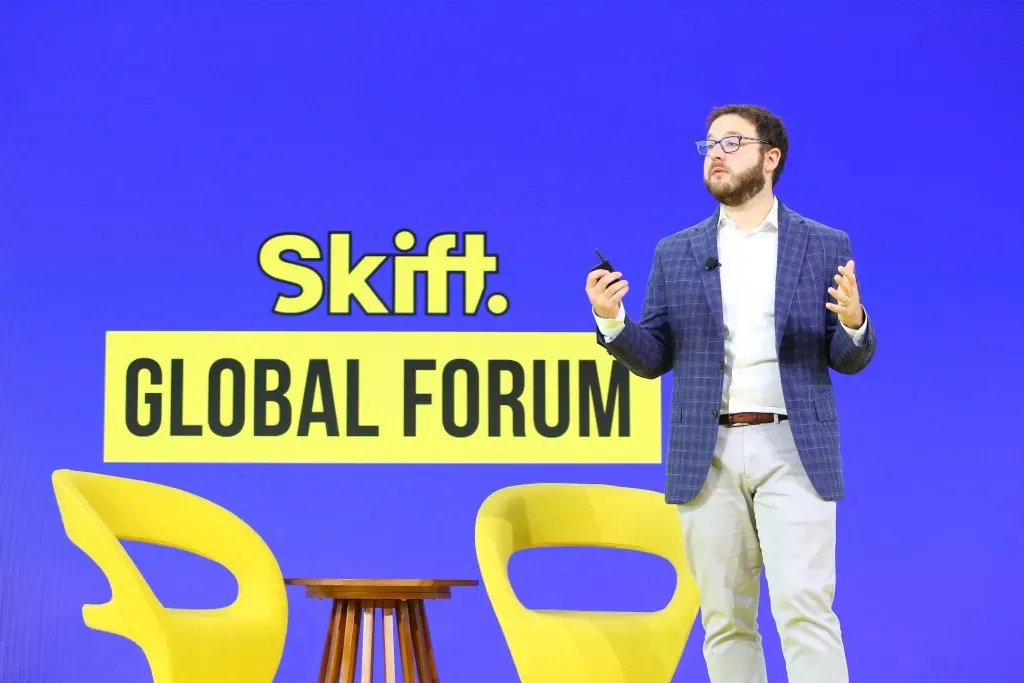
A recent survey conducted at Skift Global Forum 2026 revealed that over 1,000 travel industry decision-makers have weighed in on some of the sector's most pressing challenges. The results are telling and provide insight into where leaders see opportunities and where they remain divided.
The impact of a single event can be far-reaching, disrupting not just one company but an entire network of stakeholders. A canceled flight, for instance, can have ripple effects on hotel bookings, ground transportation, and itineraries alike. However, the companies responsible often struggle to coordinate their response effectively.
Travel industry decision-makers are grappling with how to adapt to these complex challenges, and the results of the survey highlight the divisions within the sector. As the industry navigates this period of growth, one thing is clear: effective coordination will be key to success.
Effective coordination across the travel ecosystem is a major concern for industry leaders. According to recent findings, over half of respondents (53%) identified this area as where the industry is least prepared for the next major disruption. This highlights a significant weakness in the industry's resilience.
Travel companies are improving their ability to handle disruptions on an individual basis but struggle with collaboration among airlines, hotels, and other providers. The next major test of travel resilience will likely rely on cooperation between businesses rather than just individual contingency plans. As such, coordination is crucial for success.
Artificial intelligence (AI) agents are revolutionizing the way travelers discover and book trips, altering the relationship between suppliers, intermediaries, and customers. This shift has left businesses with a dilemma: whether to control certain capabilities or leave them to technology partners.
The audience showed a clear preference for maintaining direct relationships with travelers as AI agents become more prevalent in distribution. Around 61% of respondents prioritized owning the traveler relationship and trust above all else. In contrast, only 12% favored controlling the underlying technology stack and AI infrastructure.
Travel brands seem willing to rely on external technology providers if they can retain control over customer relationships. This suggests that businesses are placing more emphasis on direct connections with travelers rather than owning the technology behind them.
As travelers increasingly rely on artificial intelligence (AI) for researching and comparing travel options, the next hurdle is convincing them to hand over control when it's time to book their trip.
Travel industry leaders believe that closing the trust gap with AI is crucial in converting customers into bookings, with 60% of respondents pinpointing this as the biggest opportunity. In contrast, only a small minority see the greatest potential in using AI for inspiration and discovery, even if bookings are made elsewhere.
The findings suggest that travel companies are eager to leverage AI's capabilities, but first need to reassure travelers that they can trust the technology to make decisions and complete transactions. This is a critical step towards harnessing AI's full potential in driving revenue growth.
Hospitality brands are already exploring various applications of AI across operations, marketing, and customer service, but the financial benefits appear to be concentrated in areas such as operational efficiency and cost reduction.
According to industry leaders, the most tangible return on investment for hotel brands today is in streamlining operations and lowering costs, with 46% of respondents citing this benefit. Conversion rates are also seen as a significant advantage, although they trail behind operational efficiencies in terms of impact.
The travel industry's enthusiasm for AI-driven efficiency has not led to a complete dismissal of human service in guest interactions. In fact, when asked what should determine whether a guest interaction remains human-led or moves to AI, an overwhelming majority of executives prioritized guest expectations and creating a better experience.
This emphasis on guest-centricity is evident in the poll results, where 94% of respondents chose to prioritize guest expectations over cost considerations. Only a small minority, at 6%, believed that the decision should be based on whether the interaction increases loyalty or spending.
The focus on human service suggests that executives recognize the financial benefits of automation but are hesitant to make cost reduction the deciding factor in how they serve guests. This approach highlights a nuanced understanding of the industry's needs and priorities.
As hotels invest heavily in luxury and premium properties, questions arise about the market's ability to support further growth. The poll revealed little consensus on this issue, with 34% of respondents believing that the answer depends entirely on the market, while 31% thought premium demand still has room to grow without hitting a ceiling.
However, there are also concerns that hospitality has gone too far in prioritizing high-end development, pricing mid-market guests out of the market. This view was shared by 23% of respondents, who warned that overinvestment in premium properties could leave businesses exposed during the next downturn.
Hospitality companies must carefully assess their expansion plans, ensuring that demand at the top of the market can sustain growth across all segments. Leaders need to strike a balance between investing in premium properties and maintaining a broader customer base for greater resilience.
The cruise industry is also grappling with revenue growth strategies that don't alienate price-sensitive customers. Operators are caught between upgrading experiences and new amenities while keeping fares accessible to support high passenger volumes. This balancing act requires careful consideration of how to add value without becoming a premium product.
To address this challenge, 56% of respondents favored offering paid upgrades and onboard spending as a way for passengers to enhance their experience without affecting base fares. Another 33% suggested segmenting fleets, with some ships catering to high-end travelers while others focus on budget-conscious customers.
The most effective approach appears to be one that keeps base fares affordable while giving passengers the option to spend more through various means. This strategy can help maintain a balance between revenue growth and customer affordability.
As the travel industry continues to evolve, companies are seeking practical solutions to their biggest strategic decisions. The need for coordination across the ecosystem remains a major vulnerability, with AI starting to deliver real business value but consumer confidence still lagging behind.
Travel companies face significant challenges in navigating the rapidly changing industry landscape. To overcome these obstacles, they must carefully consider which relationships to prioritize and where automation can enhance the customer experience.
In order to build resilient business models, travel companies will need to adapt to fluctuating demand and disruption by investing in new technologies and strategies that foster trust with consumers.
Facts based on reporting originally published by Skift.
You may republish this story, in full or in part, if you credit News Central Site and link to it (licence CC BY 4.0). Photos are not included.