South Africa's Cederberg Region Hosts Stargazing Retreats
Guests at Bliss & Stars retreat experience profound transformation during Orion's Odyssey program.

The sun's descent behind craggy peaks in South Africa's Cederberg region marked the beginning of a profound transformation for me. The heat-baked sandstone transformed into a deep twilight, enveloping the valley in an eerie silence that seemed to thicken with each passing moment.
I had arrived at Bliss & Stars, a secluded retreat perched above the Doring River, specifically for Orion's Odyssey, a program carefully timed to coincide with the new moon. At this time of the month, the sky is at its darkest, and the universe reveals its secrets in breathtaking clarity.
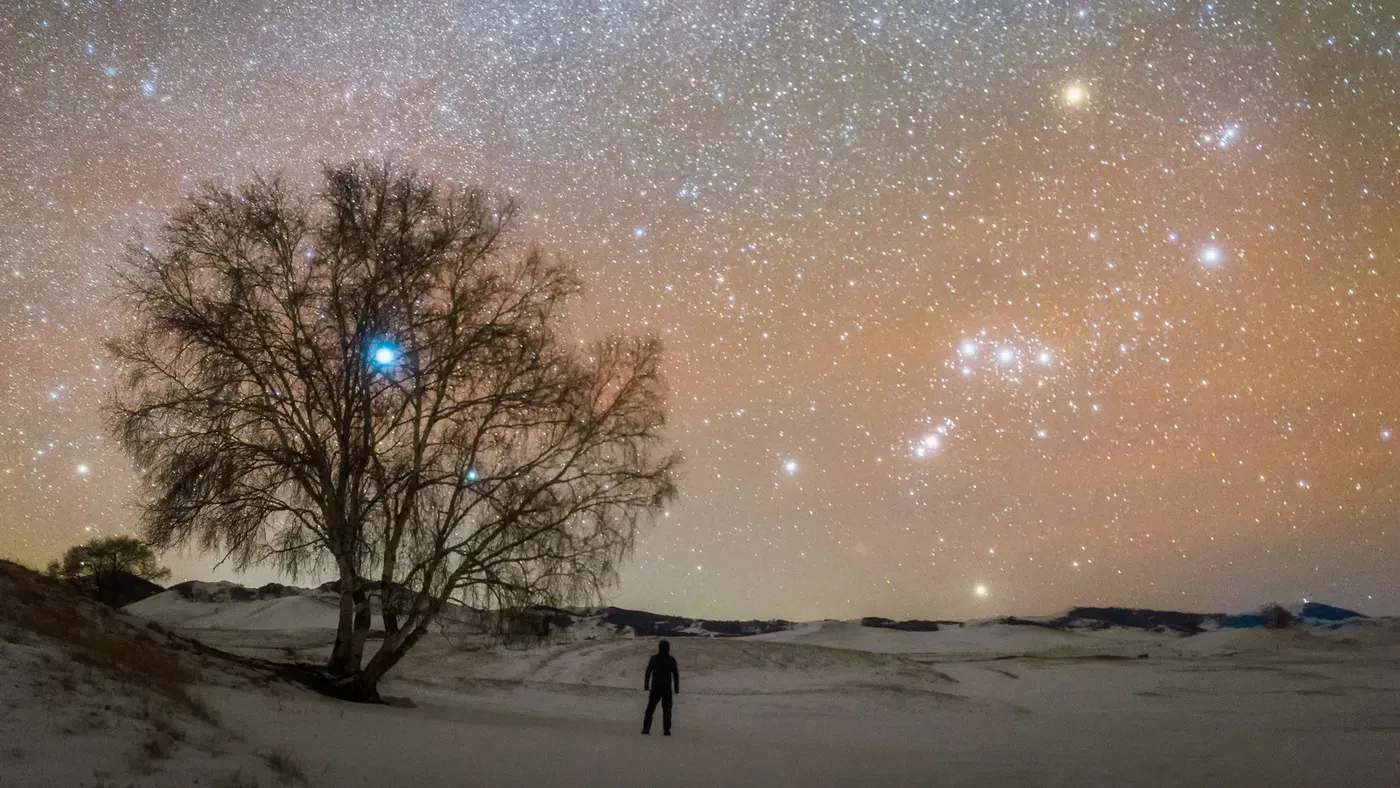
The Milky Way's galactic core rose majestically above the ridge as we approached midnight, casting an ethereal glow over the landscape. Its luminous, textured beauty seemed to mirror the flowing reflection of the river below, creating a sense of harmony between the celestial and terrestrial worlds.
My phone had lost signal hours earlier on the winding drive into this 3,300-acre private reserve, located deep in the heart of South Africa's Cederberg region. Without a constant stream of notifications and distractions, I was forced to confront my own relationship with technology, a confrontation that initially felt daunting but ultimately rewarding.
As I wandered through the darkness, my eyes slowly began to adjust to the absence of artificial light. It takes approximately 20 minutes for our vision to fully adapt to true darkness, and even a single glance at a bright screen can undo this progress.
The remote retreat is located on virtually untouched land that was acquired by the owners in 2019. To make the lodge accessible, they first had to construct a rudimentary access road before building could begin. The construction process required transporting materials by pickup truck and trailer, which were then carried by hand for the final stretch.
The chalets are strategically positioned between boulders or nestled into the rock face above the river, offering guests an immersive experience with nature. In recent years, a villa was added to the existing units, increasing the total number of accommodations to six and allowing up to 10 guests at a time.
Each evening, participants in the stargazing retreats gather on a circular viewing deck in front of the observatory for dinner and some relaxation before gazing at the stars. Heine takes charge of these nighttime sessions, using them as an opportunity to lead his guests on guided star meditations.
These meditations are designed to dislodge rather than ground participants, taking them on what Heine calls a "little mental space walk." During this exercise, he invites listeners to release stress and anxiety by breathing in the night air through their noses and exhaling slowly. As the meditation progresses, gravity seems to lose its hold, leaving guests feeling as if they might float.
At the 20-inch telescope, one of the largest privately owned in South Africa, Heine offers a guided tour of the night sky without using technical jargon. He finds a nebula and walks his small group through it, allowing them to take turns peering into the eyepiece for a closer look at the celestial wonder.
The lodge's guest list is a diverse one, comprising individuals from all walks of life who share a common goal: to disconnect from the world and reconnect with themselves. They come seeking purpose, looking for answers, or simply wanting to escape the chaos they left behind.
Heine delves into the concept of time, revealing that moonlight takes approximately one second to reach us after leaving the moon's surface. In contrast, sunlight takes around eight minutes to travel from the sun and reach our planet. This seemingly trivial detail sparks a deeper exploration of the universe's vastness.
The evening sky is filled with celestial wonders, including two satellite galaxies, the Magellanic Clouds, which are visible in the southern hemisphere. Their light has been traveling through space for over 160,000 years, a testament to the age and history of our galaxy. This astronomical fact serves as a reminder that our existence is but a small part of the universe's grand tapestry.
During one of the morning sessions, Daria introduces the group to ceremonial cacao, a rich and warm beverage designed to prepare the nervous system for what lies ahead. While it may not be a substitute for coffee, this traditional medicine has its own unique properties that help guests transition into their day.
The Cederberg landscape is a reminder that even the most profound concerns can be put into perspective by the sheer vastness of nature.
To allow oneself to feel and process emotions, one must first make room for them in their daily life, Daria emphasizes during morning breathwork sessions.
Stress manifests itself in various ways, including shallow breathing and clenched jaws, as observed by Daria in her work with guests like myself.
The shared experience of releasing pent-up emotions brought unexpected moments of catharsis to our small group, ranging from laughter to tears.
As we ventured out after brunch, the landscape revealed its secrets: Cape mountain leopard tracks pressed into the sand and raptors soaring overhead in search of thermal currents.
The meals at this retreat were surprisingly indulgent despite adhering to a strict diet of vegetables, fruit, and whole grains.
Buddha bowls and ancient grain salads made up a significant portion of our dining experience, while roasted vegetables added a satisfying crunch to each meal.
One evening, after a hike into the sunset and a surprise dinner in a cave, we were treated to an introduction to astrophotography by Heine, one of the retreat's facilitators.
The process of capturing light involved holding a shutter open long enough for it to gather photons that had been traveling through space for centuries.
Standing still in complete darkness with only a torch under my chin, I managed to take a portrait of myself against thousands of stars, with the camera collecting and recording these ancient photons.
On our final night at the retreat, the telescope and dinner were perfectly synchronized, allowing us to gaze up at the stars while enjoying a six-course meal.
The nights at Bliss & Stars were long and dark, perfect for stargazing during our summer visit. The sky turned inky black after midnight, making it an ideal time to gaze up at the stars. This was a deliberate choice by the retreat's hosts, who catered to the natural rhythms of their guests.
As I settled into my chalet's bed, I sipped on a soothing drink made from locally grown rooibos tea and wildflower honey from a flask. The unique mattress, filled with horsehair, seaweed, and coconut fiber, proved to be a comfortable resting place for the night. The floor-to-ceiling windows, without curtains, allowed the morning light to flood in and gently wake me up.
The absence of curtains was a deliberate design choice, meant to reset one's circadian rhythm in harmony with nature. As I opened my eyes during the small hours, I was met with an unforgettable sight: the night sky framed by the glass windows. It was a breathtaking view that left a lasting impression on me.
Facts based on reporting originally published by Conde Nast Traveler.
You may republish this story, in full or in part, if you credit News Central Site and link to it (licence CC BY 4.0). Photos are not included.