Robert Louis Stevenson's First Draft of Dr Jekyll and Mr Hyde Destroyed
A previously unknown letter from Fanny Stevenson has shed new light on the mysterious destruction of Robert Louis Stevenson's first draft of "Dr. Jekyll and Mr. Hyde".
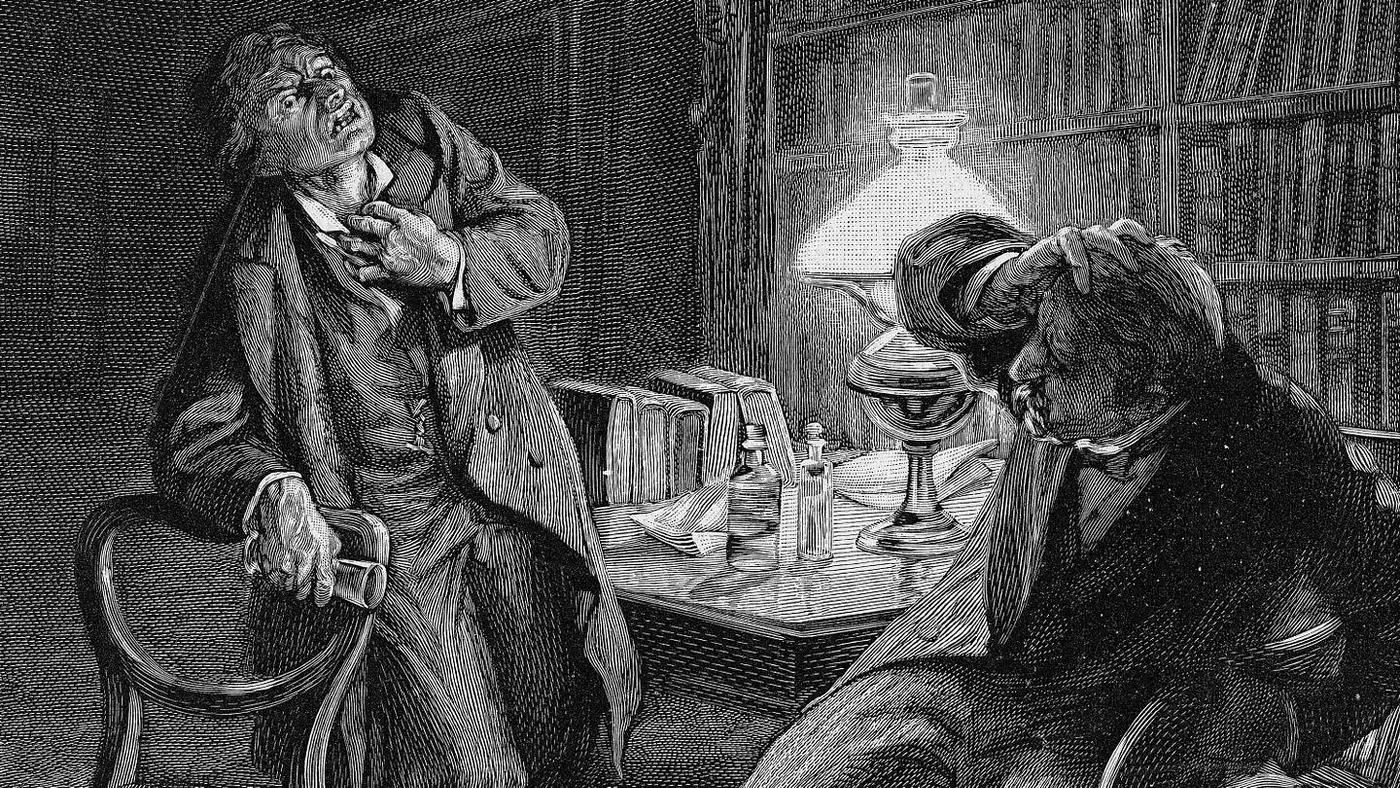
Robert Louis Stevenson's household in Bournemouth, England was a scene of great turmoil in the autumn of 1885. The author was confined to bed for much of his time due to illness and financial strain, struggling to make ends meet.
His wife Fanny Stevenson often had to intervene when her husband would cry out in distress during his sleep. One such episode occurred on a particular night when he suddenly sat up and exclaimed that he was dreaming a fine bogey tale.
The experience seemed to have a profound effect on Robert Louis Stevenson, as he began writing down the story by daybreak. Over the next three days, he produced a first draft of what would eventually become Strange Case of Dr. Jekyll and Mr. Hyde.
Fanny Stevenson witnessed her husband's feverish creativity firsthand, but she had no idea that this early draft was soon to meet its demise. The manuscript was burned in the fireplace, leaving behind only fragments of what once existed.
The exact circumstances surrounding the destruction of the first draft are still shrouded in mystery. However, there exist multiple accounts from eyewitnesses who attempted to recount the events, each with their own version of how it happened.
Despite the loss of the original manuscript, Robert Louis Stevenson's perseverance paid off as he went on to produce one of his most enduring works. But what exactly led to the destruction of that first draft remains a tale worth exploring further in this story.
A previously unknown letter from Fanny Stevenson to her friend W.E. Henley surfaced ahead of an auction at Phillips in London, shedding new light on the mysterious first draft of Robert Louis Stevenson's "Dr. Jekyll and Mr. Hyde. The letter, which made headlines in October 2000, revealed that Fanny had dismissed the draft as worthless, saying it was a quire full of utter nonsense.
Fanny's scathing assessment of her husband's work came despite his claims that it was his greatest achievement. She even went so far as to threaten to burn the draft after showing it to Henley, indicating a deep-seated frustration with Stevenson's writing. The auction house had estimated the letter would sell for around £1,500, but its contents were of greater interest than its monetary value.
Liz Merry, head of Phillips' book department, speculated that Fanny may have been put off by the themes of duality and darkness in Dr. Jekyll and Mr. Hyde. However, Fanny's concerns went beyond mere aesthetics. In an earlier letter quoted by The Guardian, she expressed her fear that Stevenson was wasting his energy on a story that would never amount to anything.
Fanny's anxieties were not unfounded, given the couple's financial struggles. They were deeply in debt, and Stevenson's writing career had yet to yield significant returns. Fanny's words suggest that she saw her husband's obsession with Dr. Jekyll and Mr. Hyde as a luxury they could ill afford.
The letter raises more questions than it answers about the fate of the first draft. What exactly led to its destruction remains a mystery, and one that continues to fascinate literary scholars and enthusiasts alike.
The auction house's book department head, Liz Merry, has offered a theory about Fanny Stevenson's motivations for destroying her husband's first draft of 'Dr. Jekyll and Mr. Hyde'. According to Merry, Fanny may have found the story's theme of duality distasteful, suggesting that she was uneasy with Robert Louis Stevenson's writing for a popular shilling shocker market.
Fanny had valid reasons to worry about her husband's writing beyond personal taste. The couple was deeply in debt, and it seems likely that Fanny saw his literary endeavors as a costly distraction from their financial troubles. In an earlier letter quoted by a reputable publication, she expressed concern that Stevenson's latest work would be energy wasted, echoing the failure of his previous projects.
In a preface written for a 1905 edition of her husband's collected works, Fanny shared a different account of the destroyed first draft. According to this version, the initial thirty-thousand-word manuscript was completed in just three days but ultimately deemed unsatisfactory due to its failure to convey the allegory that would become the heart of 'Dr. Jekyll and Mr. Hyde'.
Fanny attributed the draft's shortcomings to haste and the influence of a dream, suggesting that her husband had been driven by an external force rather than his own creative vision. While this explanation may seem vague, it highlights the complex interplay between Stevenson's artistic impulses and the pressures he faced in his personal life.
Fanny's account raises more questions than answers about the destruction of the first draft. Who was responsible for its demise? Was Fanny herself involved, or did she simply acquiesce to her husband's decision to start anew? The mystery surrounding this pivotal moment in literary history continues to fascinate scholars and enthusiasts alike.
The debate over the destroyed draft is further complicated by Fanny's ambiguous portrayal of events. While she does not directly implicate herself in the destruction, her account implies a level of involvement that leaves room for interpretation. As a result, readers are left to ponder the motivations behind this pivotal moment in literary history and its lasting impact on the development of 'Dr. Jekyll and Mr. Hyde'.
Lloyd Osbourne's account provides a vivid glimpse into Stevenson's creative process during that autumn at Skerryvore.
Stevenson had been reading his draft aloud to Lloyd and his mother Fanny, who was not impressed by what she heard. She criticized the work, saying that Stevenson had missed the allegory" and made it "merely a story. This criticism clearly struck a nerve with Stevenson, as he became furious.
Lloyd Osbourne chose to leave the room rather than continue listening to the argument between his stepfather and mother. However, when he returned to the scene, Stevenson was already coming downstairs, having apparently conceded Fanny's point.
Stevenson's concession was followed by a dramatic gesture: he took the manuscript of his draft and threw it into the fire. This act was not entirely unopposed, as Fanny made an attempt to prevent him from doing so, but her efforts were ultimately unsuccessful.
Fanny's son Lloyd later recalled Stevenson's statement when throwing away the manuscript: I have absolutely missed the allegory, which, after all, is the whole point of it.
The debate surrounding the destruction of Stevenson's first draft of Dr. Jekyll and Mr. Hyde continues to this day, with multiple accounts from those present at the scene offering conflicting details.
According to Lloyd, Stevenson explained his decision to destroy the manuscript by stating that it was all wrong", implying that he had lost sight of the story's central theme. This led him to conclude that the only way forward was to start anew and put temptation beyond his reach.
The accounts of who actually destroyed the manuscript are unclear, with different versions placing blame on various individuals. Fanny recalled that Stevenson wrote the new version in just three days, while Lloyd estimated it took a bit longer.
Despite their differences, all accounts agree on one thing: the first draft was gone for good. The second version, however, proved to be a resounding success, with Strange Case of Dr. Jekyll and Mr. Hyde being published in 1886 to great acclaim.
Fanny later noted that the book's popularity extended far beyond literary circles, with it being pirated across America and even used as a text for clergymen's sermons. Whatever was lost in the original draft remains a mystery, known only through the recollections of those who were there.
The fire that destroyed the manuscript may have been a tragic event, but it ultimately proved to be a blessing in disguise. The destruction of the first draft allowed Stevenson to create something truly remarkable, and Dr. Jekyll and Mr. Hyde has since become a classic of Gothic horror literature, continuing to captivate readers to this day.
Facts based on reporting originally published by Mental Floss.
You may republish this story, in full or in part, if you credit News Central Site and link to it (licence CC BY 4.0). Photos are not included.