Quentin Tarantino's Unique Cinematic Language Recognizable in His Films
Quentin Tarantino's unique cinematic language is instantly recognizable, born from his deep love for the movies he grew up watching. His films are a celebration of genres that often fell...
Quentin Tarantino's unique cinematic language is instantly recognizable, born from his deep love for the movies he grew up watching. His films are a celebration of genres that often fell under the radar of mainstream critics - spaghetti Westerns, kung fu epics, exploitation cinema, and pulpy genre films.
Tarantino's ability to repurpose familiar elements into something distinctly his own is undeniable. He takes genre conventions and uses them to explore the mythology of Hollywood in innovative ways. His films are not just homages to his influences but also clever reimaginings of classic tropes.
One of Tarantino's greatest strengths as a filmmaker is his ability to elevate seemingly minor conversations into pivotal moments that rival action sequences. At the same time, he knows exactly when to drop in a song to make it an integral part of the narrative.
Tarantino's use of music in his films adds another layer of depth and emotion, often elevating key scenes into unforgettable events. His skill at crafting memorable set pieces is matched only by his talent for creating characters that linger long after the credits roll.
Despite growing controversy surrounding Tarantino's opinions on modern cinema, his filmography remains an impressive body of work. With a self-imposed limit of ten films, it's likely several years will pass before he releases his final effort.
Tarantino's influence on popular culture cannot be overstated, and his films continue to captivate audiences worldwide with their unique blend of style, wit, and irreverence. Each new release is met with anticipation and excitement from fans eager to experience the latest iteration of his signature filmmaking style.
The debate over Tarantino's ranking among filmmakers is ongoing, but one thing is certain: his impact on modern cinema is undeniable. With so many iconic films under his belt, it's high time to revisit each one and reassess their place in the Tarantino canon.
Tarantino's dedication to exploring the darker corners of human nature through genre filmmaking has yielded some truly unforgettable experiences for audiences. From the graphic violence of Reservoir Dogs to the nostalgic charm of Pulp Fiction, every film offers a glimpse into his fascination with the complexities of the human condition.
Death Proof is a film that showcases Tarantino's ability to recreate the rough edges of exploitation cinema. Made as part of the double feature Grindhouse alongside Robert Rodriguez's Planet Terror , it features scratched prints, missing reels, and abrupt edits to create a deliberately "trashy" atmosphere.
This deliberate attempt at recreating a bygone era is both part of its appeal and maybe one of its limitations. The film's aesthetic is a nod to the low-budget exploitation films of the 1970s, complete with grainy images and distorted sound effects.
The movie lures viewers into expecting a familiar rhythm, reminiscent of classic slasher films from the 1970s. Mike (Kurt Russell) preys on a group of unsuspecting women, creating tension and suspense in the first half of the film.
However, just when viewers think they know what to expect, the second half subverts the trope by introducing a new group of women who are not helpless victims. Instead, they're physically capable and more than willing to turn the tables on Mike.
This twist adds a layer of complexity to the story, making it more than just a straightforward slasher film. It's a deliberate attempt to challenge the expectations of the audience and create a more nuanced viewing experience.
Despite its attempts at subverting genre conventions, Death Proof is probably the least good film in Tarantino's filmography. However, even then, it remains a very solid movie that is worth watching.
Tarantino's other films have received widespread critical acclaim, but his vision for Kill Bill is somewhat divisive. He considers the two chapters to be one movie, which may not sit well with fans who prefer to treat them as separate entities.
The fact that both chapters are excellent in their own right makes it easier to understand Tarantino's perspective. Volume 1 has a slight edge due to the narrative excitement of the Bride's revenge missions, but overall, the film is a masterclass in storytelling and style.
The influence of various film genres can be seen in Quentin Tarantino's work, particularly in his non-linear storytelling style and eclectic mix of influences. Shaw Brothers' kung fu movies are a notable inspiration for one of his films, which takes cues from Japanese samurai films as well.
This particular film also draws on the style of spaghetti Westerns and incorporates elements of anime into its narrative. The influence of the Japanese revenge classic Lady Snowblood is especially evident in certain scenes, showcasing Tarantino's appreciation for the genre.
In another of his films, Tarantino takes a different approach by slowing down the pace and incorporating more of a spaghetti Western vibe. This film features a mix of martial arts and action sequences that are reminiscent of its predecessors.
The tone and style of this particular film set it apart from other Tarantino movies, which often focus on elaborate criminal schemes and complex storylines. Instead, this one focuses on the everyday lives of its characters and their struggles with crime.
One of Tarantino's lesser-known films is arguably his most underrated work, partly due to its release after Pulp Fiction and the high expectations that came with it. Despite receiving less attention than some of his other works, this film has a lot to offer in terms of storytelling and character development.
The film in question was adapted from Elmore Leonard's novel Rum Punch, which provided the basis for its narrative. The story follows a flight attendant as she tries to outsmart a dangerous gunrunner while being watched by law enforcement agents.
Tarantino's homage to 1970s blaxploitation cinema is also evident in this film, with an exceptional ensemble cast that brings the story to life. One standout performance comes from Robert De Niro, who plays a miserable and increasingly frustrated ex-convict with great conviction.
Tarantino's next Western was a far cry from the grand adventure of Django Unchained. The Hateful Eight took place in a Wyoming haberdashery during a blizzard, trapping a diverse group of characters inside.
The film's atmosphere is tense and foreboding, with characters rarely to be trusted. Even those who are supposed to be the protagonists can't be relied upon to act honourably. This cynicism makes for an aggressively unpleasant viewing experience.
To bring this bleak world to life, Tarantino employed Ultra Panavision 70mm, a wide film format that had largely fallen out of favour in mainstream cinema. The expansive landscapes shot using this format are breathtakingly beautiful, but the wide frame also serves to heighten the claustrophobia felt by the characters trapped inside.
The cramped interior scenes are visually striking thanks to the Ultra Panavision 70mm format. Several characters can fit into a single composition, adding to the sense of chaos and disorder that pervades the film. This visual style perfectly captures the tension and unease of the situation.
Ennio Morricone's score was a key element in creating this atmosphere of dread and isolation. His music added to the overall sense of foreboding, making The Hateful Eight a deeply unsettling experience for viewers. Morricone's work on the film paid off at the Academy Awards, where he won his first competitive award for a film score.
While the third act of the film may have some issues, with plot threads being revealed too quickly, the performances from the cast are still impressive. The cinematography and music also hold up well to scrutiny, making The Hateful Eight a highly entertaining Western despite its flaws.
The technical achievements of The Hateful Eight were notable, not just for Tarantino's use of Ultra Panavision 70mm but also for the attention paid to sound design. The blizzard raging outside the haberdashery is a key element in creating tension and isolation within the film.
The blizzard raging outside the haberdashery is a key element in creating tension and isolation within the film.
Reservoir Dogs' use of non-linear storytelling is a hallmark of Tarantino's style, but it was not his first foray into this technique. The film takes its time to reveal how the diamond heist went wrong, instead focusing on the aftermath and the relationships between the surviving characters.
The warehouse hideout serves as a microcosm for the larger story, where the tension and suspicion simmer just below the surface. Tarantino's use of close-ups and camera angles adds to the sense of claustrophobia, making it feel like the characters are trapped in their own little world.
As the film progresses, the conversations between the characters become more intense and revealing. The dialogue is crisp and snappy, with each line building on the last to create a sense of anticipation and unease.
The opening scene of Reservoir Dogs sets the tone for the rest of the film, introducing the viewer to Tarantino's unique approach to storytelling. The way the characters interact with each other, their banter and camaraderie, creates a sense of familiarity and intimacy.
Tarantino's use of everyday dialogue is what makes his films so compelling. He doesn't shy away from exploring the mundane, but instead uses it to create a sense of realism that draws the viewer in.
The film's structure, with its non-linear storytelling and multiple plot threads, is a testament to Tarantino's skill as a writer and director. He weaves together seemingly disparate elements to create a cohesive and engaging narrative that rewards close attention and repeated viewings.
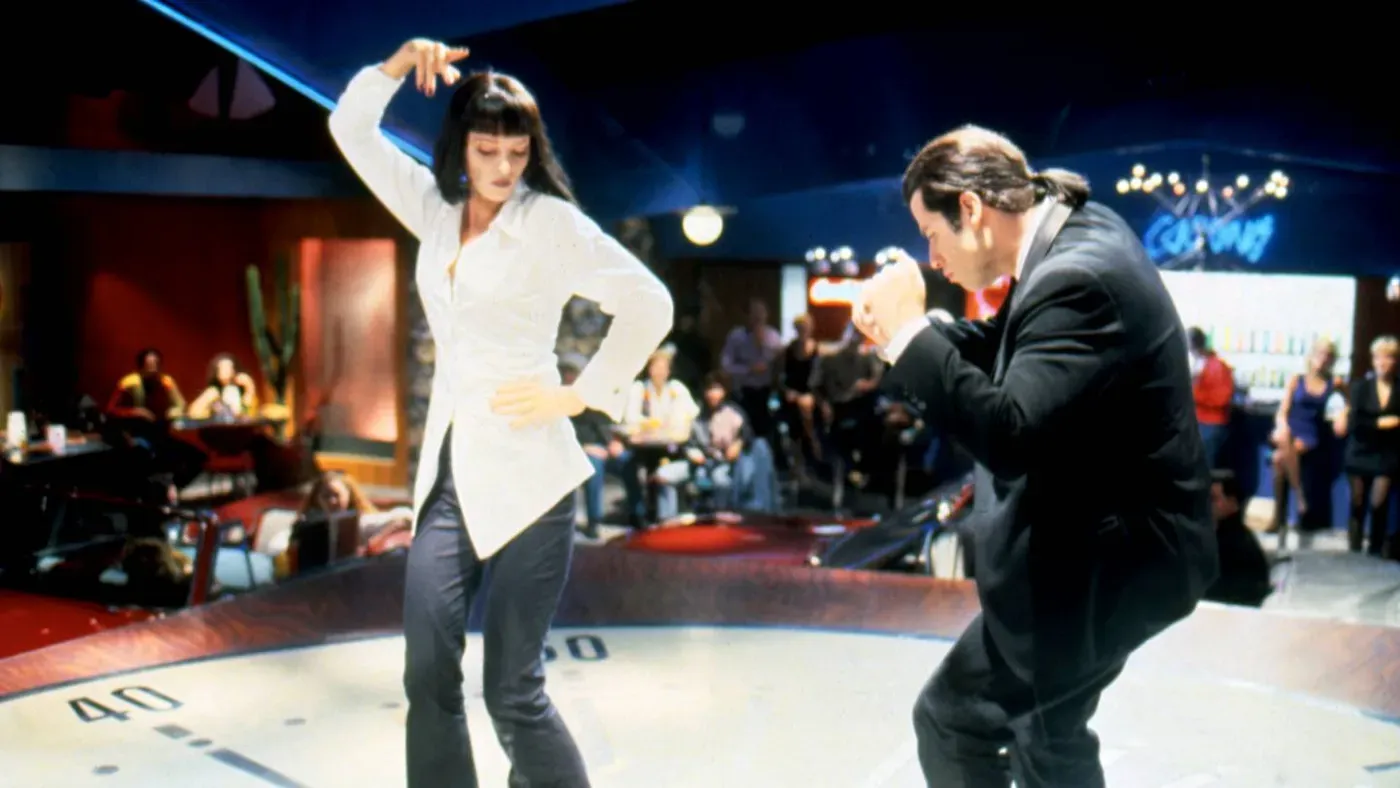
Tarantino's Pulp Fiction is widely regarded as his masterpiece, and its cult following is well-deserved. The film takes fragmented Los Angeles crime stories and reassembles them into a non-linear puzzle, allowing characters to vanish from the narrative before making unexpected returns.
The structure of Pulp Fiction is no easy feat to achieve, but Tarantino pulls it off with remarkable skill. This allows for moments like Vincent Vega's abrupt death in the middle of the story, which can be followed by an encounter in a diner that becomes the film's final scene.
The cast of Pulp Fiction understands the film's rhythm instinctively, bringing their characters to life with memorable performances. John Travolta, Samuel L. Jackson, Uma Thurman, and Bruce Willis all deliver standout performances that have become iconic in popular culture.
Tarantino's ability to weave together disparate elements into a cohesive narrative is a hallmark of his filmmaking style, and Pulp Fiction stands as one of the greatest examples of this skill.
Facts based on reporting originally published by Mental Floss.
You may republish this story, in full or in part, if you credit News Central Site and link to it (licence CC BY 4.0). Photos are not included.