Makeable Co-Founder Raymond Loong Ng Shares Unconventional Background
Raymond Loong Ng co-founded Makeable after developing AI-powered tools and communities in Singapore.
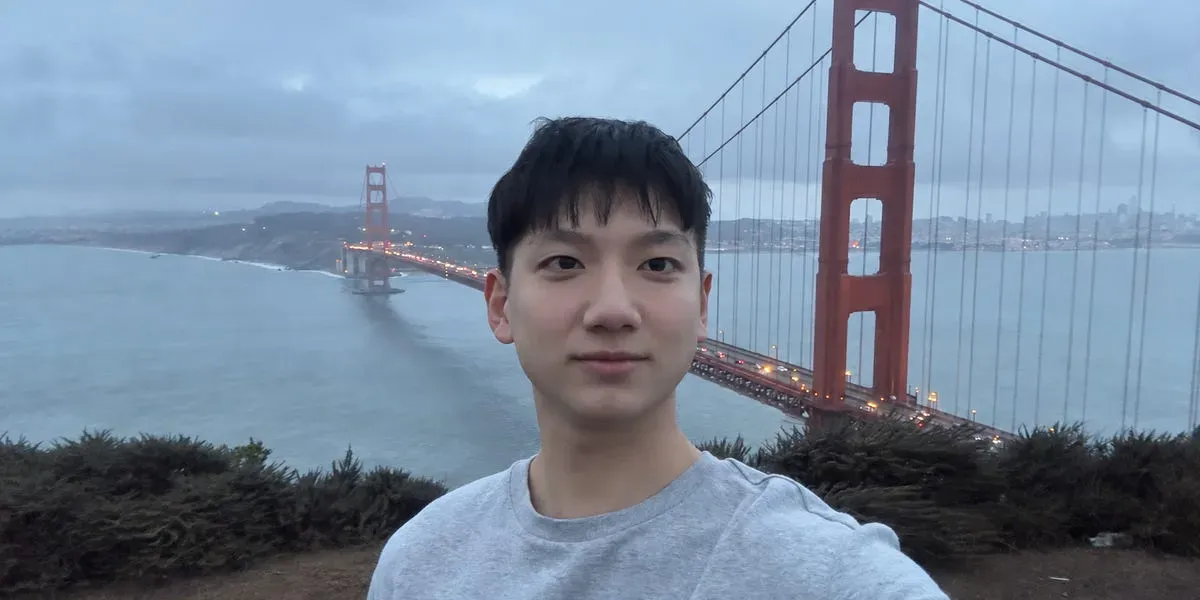
Raymond Loong Ng, co-founder of San Francisco-based startup Makeable, has an unconventional background that has prepared him for a life in entrepreneurship.
Ng was born in Vietnam and moved to Singapore at the age of nine. This international upbringing had a significant impact on his early life, as he quickly learned to adapt to new surroundings.
Growing up, Ng always sought ways to earn extra money, often turning to entrepreneurial ventures as a teenager. He sold various items to his classmates, including toys, snacks, in-game currency, and sneakers, demonstrating an early aptitude for business.
After completing secondary school, Ng pursued a diploma in applied AI and analytics at a polytechnic, where he gained valuable experience in the field of technology.
I had always envisioned myself as the catalyst for change, identifying problems and rallying talented individuals to bring innovative ideas to life.
This mindset drove me to create my own projects, including an AI-powered tool designed to assist ex-offenders in crafting resumes and securing employment opportunities.
In addition, I established a community of young AI enthusiasts that organized workshops for students across Singapore, providing them with hands-on experience and skills in the field.
Through these initiatives, I aimed to bridge the gap between theoretical knowledge and real-world application, enabling individuals to develop practical solutions.
Our startup's journey into hardware was driven by a desire to bring AI into the real world. We recognized that theoretical knowledge alone wasn't enough; we needed practical solutions to make a tangible impact. This led us to develop innovative products that could be applied in various fields.
At a medical technology hackathon, our team built a device that enabled paralyzed patients to communicate through brainwaves and eye blinks. The project gained significant attention, and it eventually became the foundation of our startup, Neural Drive. Our product is set to undergo a clinical trial at a local hospital, marking an important milestone for the company.
As I pursued my entrepreneurial dreams, I found myself drawn to Silicon Valley's vibrant tech scene. Growing up, I was fascinated by the stories of innovators who had built life-changing companies from scratch. Films like "Jobs" and "The Social Network" sparked my interest in creating something that could make a global impact. However, getting accepted into top US colleges proved challenging.
I applied to several institutions while serving my mandatory military service, but all rejections led me to consider alternative paths. Eventually, I was accepted into the computer science program at the National University of Singapore. Despite this opportunity, I continued to explore options in the US, reaching out to venture capital firms and networking with potential partners.
As we immersed ourselves in Silicon Valley, I had to put college plans on hold. My enrollment was due to begin in August, so I deferred my classes before they started, giving us a chance to focus on Neural Drive. Similarly, my cofounder requested a leave of absence from school, taking a risk on our startup.
We joined Afore Capital's Founders-in-Residence program, which provided valuable support and resources as we worked in San Francisco for two months. The timing was crucial, allowing us to accelerate our progress without the constraints of college schedules. Despite the uncertainty, we chose to prioritize Neural Drive over further education.
Our living situation in the Tenderloin neighborhood reflected our frugal approach. We scrimped on rent, opting for a hacker house that became our temporary home during those intense and rewarding two months. The experience was transformative, with us making significant strides in a short period, more than we might have achieved in two years back in Singapore.
The pace of life in San Francisco was a culture shock, but it suited me perfectly. Everyone seemed to be driven by their work, creating an environment that I felt at home in. The city's atmosphere was infectious, and I found myself embracing the same level of dedication and focus that characterized its residents.
The startup's technology is impressive, as it can generate a wide range of products, from 3D models to electronics and code, all based on a simple prompt provided by users.
This innovative approach allows Makeable to send its customers a kit that they can assemble themselves, much like building with Lego blocks. The company has made significant progress since joining the accelerator program, having secured an additional investment of $1 million from Afore Capital, bringing its total funding to date to $1 million.
The startup's founders are now focused on navigating the next stage of their business, which includes applying for O-1 visas in Singapore and potentially extending their stay in the US.
Facts based on reporting originally published by Business Insider.
You may republish this story, in full or in part, if you credit News Central Site and link to it (licence CC BY 4.0). Photos are not included.