Lee Krasner's first solo show in Paris opens after nearly seven decades
The exhibition features works from the 1960s, a pivotal decade in Lee Krasner's career.
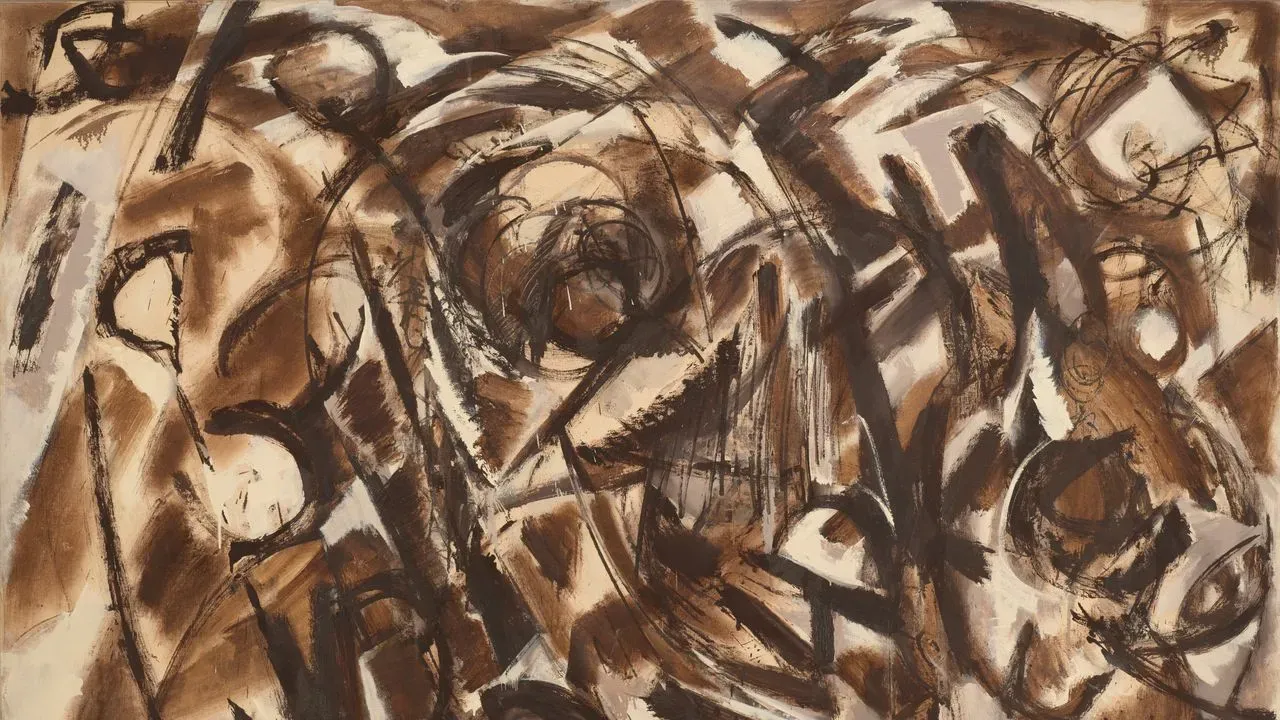
Lee Krasner's first solo show in Paris has finally opened, nearly seven decades after she first set foot in the city. The exhibition, "Lee Krasner: Works from the 1960s," is a collaborative effort between Gagosian, Olney Gleason, and the Pollock-Krasner Foundation.
In July 1956, Lee Krasner visited Paris for the first time on her own, leaving her husband Jackson Pollock behind in Springs, New York. During her stay, she resided at a hotel on the Quai Voltaire and made time to visit the iconic Louvre Museum, where she was particularly drawn to the works of Old Masters like Uccello, Mantegna, and Goya.
Krasner's Parisian sojourn took an unexpected turn when, just weeks later, she received devastating news: Jackson Pollock had passed away in a car accident. She immediately returned to New York, but her time in Paris would prove pivotal in shaping her future artistic endeavors.
The "Lee Krasner: Works from the 1960s" exhibition is set against the backdrop of another major art event: the Metropolitan Museum's "Krasner and Pollock: Past Continuous," a comprehensive survey of both artists' work that also highlights the remarkable continuity of Krasner's career, which continued for over three decades after Pollock's untimely death.
The "Lee Krasner: Works from the 1960s" exhibition is set against the backdrop of another major art event, but it's clear that Krasner was not unknown in Paris. She received a prestigious honor, the Knight of the Order of Arts and Letters distinction, in 1983, just before her passing at the age of 75.
The show offers a condensed immersion into American abstraction, showcasing Krasner's unique approach to art-making. Her work is marked by propulsive energy and a willingness to experiment with new techniques. This exhibition provides a glimpse into her creative process during a pivotal decade in her career.
Guiding me through the exhibition was Eric Gleason, whose gallery represents both Krasner and Pollock worldwide. He was joined by Caroline Black, executive director of the Pollock-Krasner Foundation, which was established in 1985, and Kara Vander Weg, a senior director at Gagosian, New York.
Under the large skylight, which highlighted Krasner's bold use of color, we discussed how the 1960s were a transformative period for her art. According to Gleason, she was "a restless experimenter, pivoter, editor" who continually pushed the boundaries of her craft.
Lee Krasner's extensive body of work includes approximately 600 pieces, but only around 210 paintings remain today due to her habit of reusing old canvases and experimenting with different techniques.
Of these, roughly one-third are currently on display in the exhibition at Gagosian, a testament to the artist's innovative spirit. The gallery features 16 paintings and works on paper from Krasner's oeuvre, showcasing her unique style and creative expression.
Two notable pieces from her Umber series, Seeded and Uncaged, created in 1960, are among the earliest works on display. These somber-toned paintings convey a sense of urgency, despite their subdued palette, and can be seen opposite each other in the main gallery space.
The exhibition also highlights Krasner's bold and expressive brushwork, evident in canvases such as Chrysalis and Icarus, which were painted with her broken right wrist.
The Pollock-Krasner Foundation's work extends beyond preserving the legacies of its namesakes, focusing primarily on supporting emerging artists and arts organizations worldwide.
Through grants, the foundation has provided financial assistance to over 5,200 artists across 80 countries, totaling upwards of $96 million in funding. This support enables these creatives to pursue their artistic endeavors without undue financial burden.
The foundation's commitment to giving back is evident in its approach, with all funds allocated directly towards supporting artists, arts communities, and organizations. This dedication has earned the Pollock-Krasner Foundation a reputation for responsible stewardship of its resources.
As part of this broader trend of recognizing underrepresented female artists in Parisian exhibitions, several notable institutions have dedicated recent seasons to showcasing exceptional women from various eras.
The complexities of Lee Krasner's life and art are a reminder that her legacy cannot be reduced to a single aspect. Her multifaceted identity is reflected in the various names she used throughout her career, which has sometimes led to confusion about her artistic contributions.
In an effort to rectify this imbalance, the Foundation has preserved items that reveal Krasner's personal tastes and habits, including two Gucci handbags donated by her niece and granddaughter. These possessions provide a glimpse into her daily life and interests outside of her art, such as her shopping habits and loyalty to certain brands.
The exhibition "Lee Krasner: Works from the 1960s" at Gagosian on rue de Ponthieu in Paris offers a comprehensive look at Krasner's artistic achievements during this pivotal decade. The show runs through December 18, 2026, providing an opportunity for visitors to appreciate her unique style and contribution to modern art.
Facts based on reporting originally published by Vogue.
You may republish this story, in full or in part, if you credit News Central Site and link to it (licence CC BY 4.0). Photos are not included.