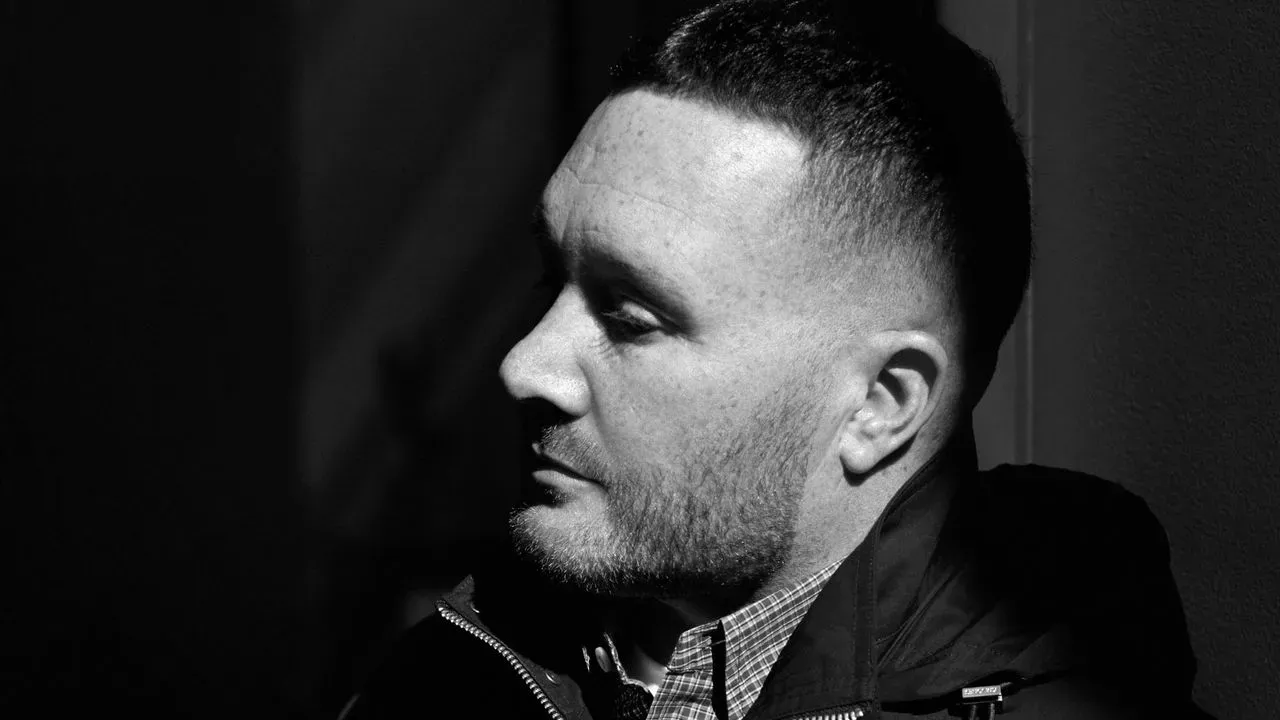
Jordan Firstman's directorial debut earns standing ovation at Cannes Film Festival
Jordan Firstman's film Club Kid has made a strong impression at the festival with its portrayal of New York City's nightlife scene.
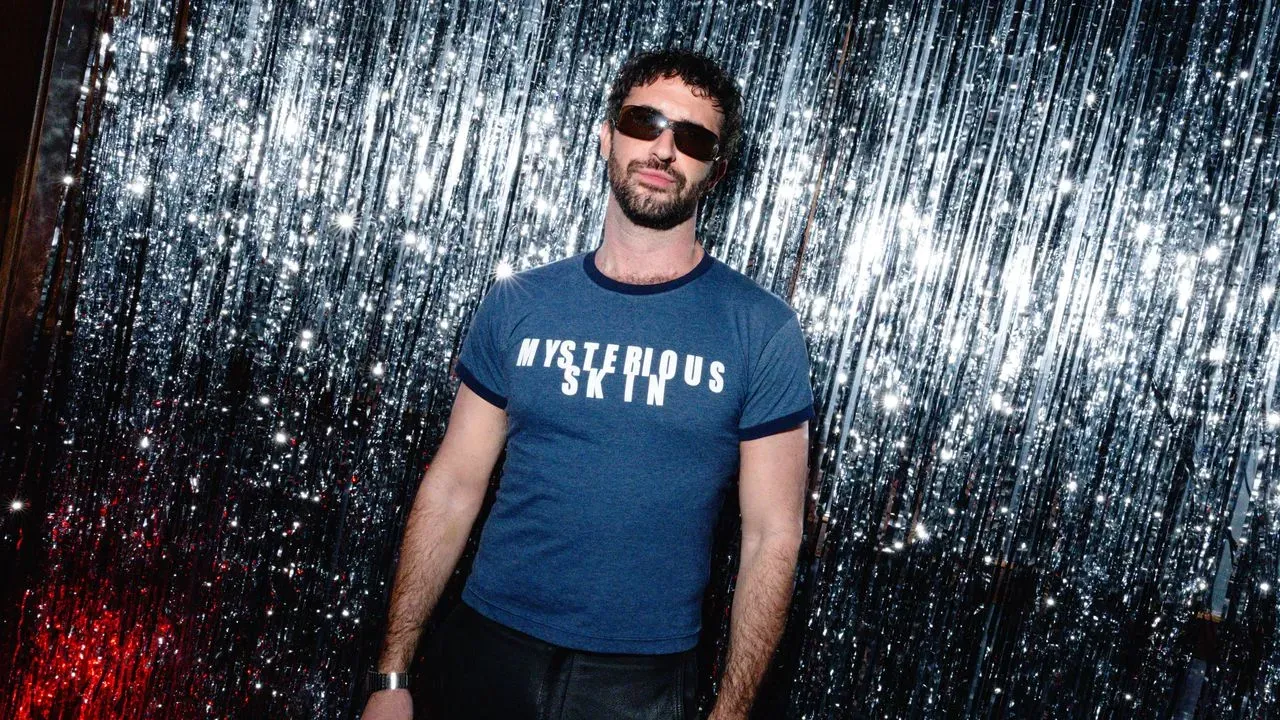
Jordan Firstman's directorial debut, Club Kid, has made waves at this year's Cannes Film Festival, earning a standing ovation and sparking a bidding war among distributors.
The film, set for release on Friday, features an ensemble cast including Cara Delevigne and Saturn Risin9, as well as extras recruited from the local nightlife scene and Grindr.
A standout performance in the movie is delivered by newcomer Reggie Absoholm, who plays Arlo, the long-lost son of Peter (played by Firstman), a character whose life is turned upside down by this unexpected revelation.
Firstman has said that he chose to center New York City for his story about friendship and club culture because it's where he feels most at home. He also shares some insight into his approach to directing, admitting that he often puts his actors on the spot with improvisational exercises.
The film's setting is a key element of its charm, capturing the energy and excitement of New York City's nightlife scene. Firstman has said that he spent hours scouting locations and observing the behavior of club-goers to get a sense of the city's rhythms.
Firstman's conversation with Chloe also touches on his personal life, including his new relationship. He seems thrilled to be in love and is enjoying the experience of being part of a couple again.
The conversation with Chloe also covers Firstman's background in fashion, which may come as a surprise to fans who know him primarily for his work in film.
The conversation between Jordan Firstman and Chloe delves into the making of his film, which he describes as a whirlwind experience that left audiences eager for more despite its tight two-hour runtime. In fact, viewers were so invested in the story that some felt shortchanged by its brevity.
Firstman shares an anecdote about watching the film with a 23-year-old colleague who had to translate the language and cultural nuances for him. The experience was akin to watching a foreign film, highlighting the differences between Firstman's LA upbringing and the New York club culture he chose to portray in his movie.
The production process involved sending out mass texts and emails to partygoers, resulting in an unexpected turnout of people eager to participate as extras. This grassroots approach allowed the community to come together in support of creativity, a moment that moved Firstman deeply.
Firstman's connection to club culture is rooted in his LA background, which he thinks of as distinct from New York's rich history. He views New York's club scene as having a unique lineage, from Studio 54 to the Club Kids days of the '90s, and believes that marathon partying has become a defining aspect of this culture.
The conversation turns to why Firstman chose to set his film in New York rather than LA. He cites the city's rich cultural heritage and its reputation for marathon-style partying, which he sees as a relatively new phenomenon compared to other cities.
Firstman's background in fashion may come as a surprise to fans who know him primarily for his work in film. However, this unexpected aspect of his career is a testament to his versatility and willingness to explore different creative outlets.
The conversation with Chloe continues to delve into the intricacies of Firstman's film and its connections to club culture, providing insight into the making of the movie and the inspirations behind it.
The city's nightlife has become a defining feature of urban culture, but for some individuals, it can be a never-ending cycle of partying. The pressure to keep up appearances and maintain a certain lifestyle can take a toll on both physical and mental health.
In New York City, the club scene is particularly vibrant, with people often staying out all night and attending multiple parties in one evening. However, this relentless pace can create a sense of burnout and exhaustion. The city's unique energy is undeniable, but it also has its downsides, including a grueling work ethic that can be overwhelming.
The contrast between the city's fast-paced lifestyle and its quieter moments is striking. When Jordan Firstman decided to set his film in New York, he drew inspiration from classic movies like Kramer vs. Kramer and Big Daddy. These films evoke a sense of warmth and coziness, qualities that Firstman aimed to replicate in his own story.
Firstman cites several iconic movies as visual references for his film, including One Fine Day and Uptown Girls. He wanted his movie to be part of this cinematic canon, particularly one that tells the stories of gay men in a way that is both authentic and relatable. The delayed coming-of-age experience faced by many gay men can lead to a prolonged period of partying, which may eventually become unsustainable.
The pressure to conform to societal expectations is a common theme in Firstman's story, where the protagonist struggles with the consequences of his actions. As he navigates the challenges of adulthood, he must confront the reality of his choices and their impact on his well-being.
Firstman's own experiences as a writer have influenced his approach to storytelling. He notes that novelists often draw from their own lives when writing their first novels, creating stories that feel authentic and true. In this case, Firstman was inspired by a chance encounter with friends who had an eight-year-old son.
The germ of inspiration for the story came from a simple yet revealing moment: Firstman's own behavior at a dinner party, where he made inappropriate jokes in front of a child. The reactions of the parents and the child himself sparked a realization about the consequences of one's actions and the importance of being mindful of others' perspectives.
As a creative person, I find that I often relate to children in terms of my own personality and behavior.
This connection has been a driving force behind some of my ideas, including one project that started taking shape during my time in Berlin.
The city was an exciting place for me, with its vibrant party scene, but the aftermath of these nights could be difficult to deal with.
Looking back, I think this experience had a significant impact on my creative work from 2021 to 2024.
During this period, I wrote the first draft of a project that would eventually become a breakup movie in many ways.
The themes of love and heartbreak that emerged in this work were deeply personal for me, drawing from the emotions I felt during a difficult time in my life.
This experience was so intense that I've even referred to it as an "Adele breakup album, reflecting on how my own emotions can be channeled into creative expression.
The love and memories of my ex-boyfriend are woven throughout this project, making it feel like a love letter to him, even though we haven't spoken in years.
The conversation takes a turn into the world of club culture, where Jordan Firstman shares some unexpected insights on substances commonly used in nightclubs. He advises against trying GHB, a powerful sedative that can have severe consequences if not handled properly.
In a candid moment, he reveals his personal opinions about certain drugs, stating that molly is generally considered safe by many users. However, he warns that club etiquette demands respect for others' boundaries and caution when it comes to substance use. The atmosphere in Berlin's clubs, he notes, can be particularly intense.
As the conversation continues, Jordan starts listing various substances with nicknames like mundle" for molly, "thrundle" for 3-MMC, and "frundle" for 4-MMC. This is done in an attempt to simplify complex chemical names into easier-to-remember terms. He also touches on ayahuasca, a powerful psychedelic brew made from plants.
Jordan then shares a story about experimenting with fake cocaine during filming. He set up a scenario where people were given powdered lactose or other substances that looked like the real thing. The reactions of those who thought they had taken actual cocaine were quite revealing, with one woman becoming irate when she realized it was just powdered sugar.
The props team, led by Diego, played a crucial role in creating the fake substances used in this experiment. Jordan acknowledges their contribution and ponders the importance of club etiquette. He believes that losing control at a club is not only unacceptable but also unbecoming, especially in a city like Berlin where nightlife is deeply ingrained.
In a lighter moment, he recalls his own experience as a newcomer to Berlin's club scene. A friend was DJing behind the decks when Jordan tried to get their attention, but someone intervened, enforcing the importance of personal space and boundaries within the club environment.
The conversation on club etiquette highlights the delicate balance between freedom and respect in nightlife settings. As Jordan navigates this world with a camera crew capturing every moment, he is acutely aware of the power dynamics at play, not just between individuals but also between the audience and the performers.
Navigating the world of Club Slang is not for the faint of heart, especially when it comes to interacting with DJs. There are unwritten rules that govern behavior in these spaces, and Jordan has learned them firsthand.
At a club, having a good attitude is crucial, as is being respectful of others' space. One misstep can lead to being shunned by the DJ or worse. It's essential to be aware of one's surroundings and adapt accordingly.
In an ideal scenario, club-goers should be open to meeting new people, but also mindful of personal boundaries. If someone declines a conversation, it's best not to push the issue. Jordan emphasizes that these rules are essential for having a positive experience at the club.
When casting his film about Club Slang, Jordan prioritized individuals who were familiar with the club scene. He sought out people who had a natural presence and could bring authenticity to their roles. This approach allowed him to tap into the world of Club Slang in a way that felt genuine.
Working with non-actors presented its own set of challenges for Jordan. However, he found that many of his friends and acquaintances were eager to be involved in the project. Their willingness to participate made the process smoother than expected.
The film's portrayal of family dynamics is nuanced and thought-provoking. One character, Saffron, embodies a unique blend of maternal warmth and confidence. Jordan aimed to capture this essence on screen, recognizing that it was an important aspect of Club Slang culture.
Ultimately, Jordan's experience directing his friends and acquaintances at Club Slang was a baptism by fire, but one that ultimately yielded a rich and authentic portrayal of the club scene.
Facts based on reporting originally published by Vogue.
You may republish this story, in full or in part, if you credit News Central Site and link to it (licence CC BY 4.0). Photos are not included.