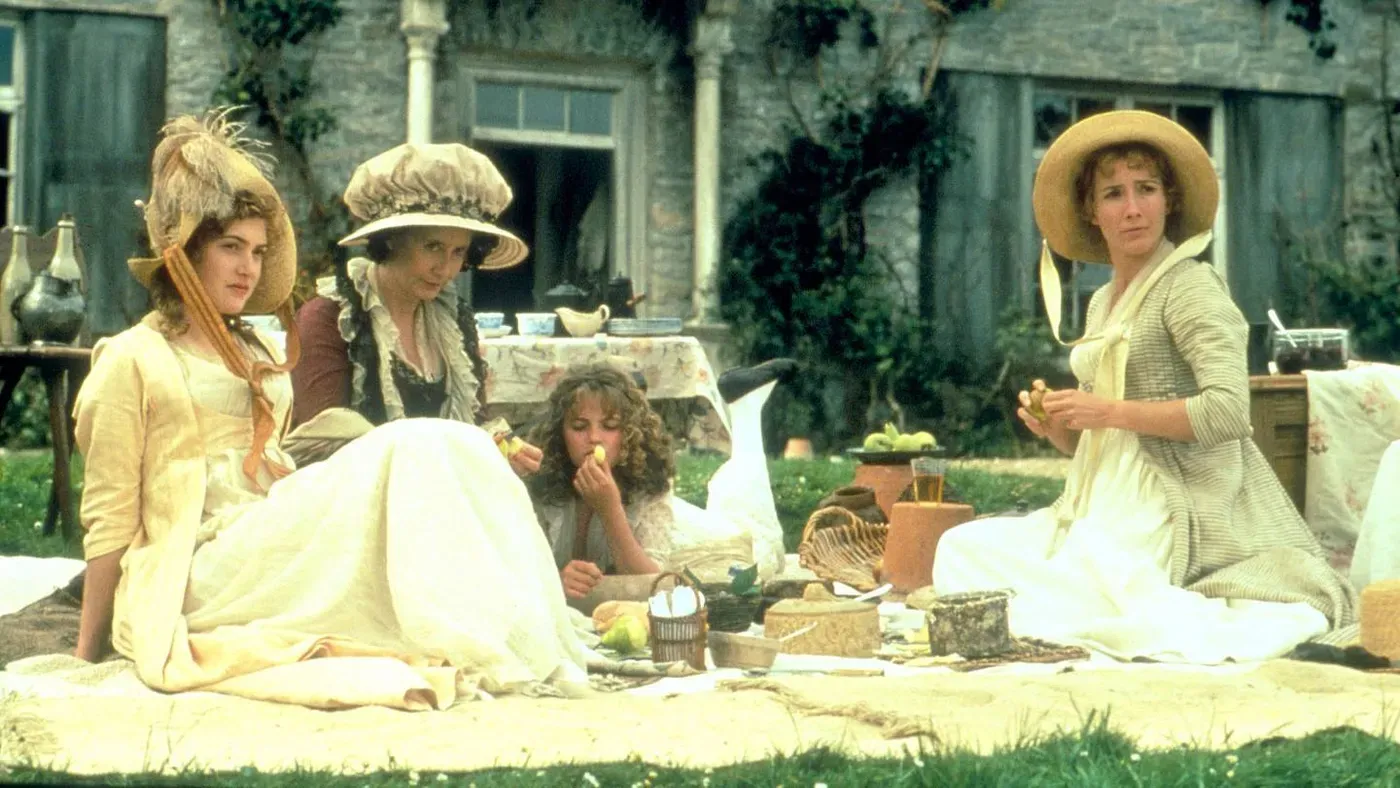
Jane Austen's Novels Critique Georgian England's Social Hierarchy
Jane Austen's novels offer a scathing critique of Georgian England's societal norms, presenting women as intelligent and educated individuals who refuse to settle for less than what they deserve.

The social hierarchy of Georgian England was a complex web of class, status, manners, and estate, where every move was calculated to maintain or improve one's standing. Women, in particular, were expected to marry for convenience and financial security, with little control over their own lives.
Jane Austen's novels offer a scathing critique of this societal norm, presenting women as intelligent, educated, and discerning individuals who refuse to settle for less than what they deserve. Her satire is biting, yet cleverly disguised behind a veneer of propriety, making her works both entertaining and thought-provoking.
Austen's writing career spanned over two decades, during which she produced six novels that have become cornerstones of English literature. These works were published between 1811 and 1817, showcasing the author's mastery of the genre and her ability to craft engaging stories that continue to captivate readers today.
The first novel in Austen's oeuvre is often considered one of her greatest achievements: Sense and Sensibility. Published in 1811, it tells the story of two sisters navigating love, heartbreak, and social expectations in a world governed by strict rules and conventions.
Austen's other notable works include Pride and Prejudice, Northanger Abbey, Mansfield Park, Emma, and Persuasion. Each novel offers a unique perspective on the society she observed, from the absurdities of high society to the quiet struggles of those living on the fringes.
The impact of Austen's writing extends far beyond her own time period, as her novels continue to be widely read and studied today. Her influence can be seen in many areas of popular culture, where phrases and concepts from her works have become an integral part of our shared language and understanding of the world.
Throughout her works, Jane Austen explored a wide range of themes that remain relevant today, including love, sisterhood, and moral integrity. Her novels are known for their nuanced portrayals of characters navigating complex social situations, often with humorous and insightful commentary.
Austen's writing is characterized by its wit and satire, which she used to critique the social norms and conventions of her time. From the Bennet sisters' struggles with marriage and financial security in Pride and Prejudice to the absurdities of society in Emma, Austen's novels offer a sharp-eyed view of life in 19th-century England.
Some of Austen's most enduring contributions to popular culture can be seen in the phrases and concepts that have been borrowed from her works. These idioms and expressions have become an integral part of our shared language, used to describe everything from relationships and social status to personal growth and self-awareness.
One of the most iconic examples of Austen's influence is her use of the phrase "proud as an Englishman in Pride and Prejudice. This expression has since been adapted into a more general phrase, proud as a peacock, which is still used today to describe someone who is excessively proud or arrogant.
Austen's novels are also notable for their exploration of social class and the complexities of relationships between people from different backgrounds. In Pride and Prejudice, the characters' interactions with each other are shaped by their respective positions within society, highlighting the tensions and contradictions that arise when people from different walks of life come into contact.
The enduring popularity of Austen's novels can be seen in their continued relevance to modern audiences. Despite being written over two centuries ago, her works remain a rich source of insight into human nature, relationships, and the social conventions that shape our lives.
The lives of people in England during Jane Austen's time are still reflected in the language we use today.
One phrase that has stood the test of time is sallad, which was used by Austen to describe a salad. This word choice highlights how food and dining were viewed differently back then, with a greater emphasis on presentation and social standing.
The term sentinel was also commonly used during this period, referring to someone who guards or watches over a particular area. In the context of Austen's writing, it is likely that the sentinel in question is a soldier or military officer.
Austen's works often featured doorbells, which were not as common in homes at the time. The sound of the doorbell was often seen as a significant event, and could be cause for excitement or anxiety depending on who might be visiting.
The novel Emma, written by Austen in 1814, offers insights into life during this period. At its center is Emma Woodhouse, a young woman from a relatively wealthy family living in the fictional town of Highbury.
Emma's experiences are marked by her attempts to play matchmaker for those around her, often with mixed results. Through these efforts, Austen sheds light on social class and relationships during this time.
The influence of social status is evident in Emma's interactions with people from lower backgrounds, including a suitor who will eventually win her heart.
Social status plays a significant role in shaping relationships in Jane Austen's novels. This is evident in Emma, where the protagonist is often at odds with those from lower backgrounds. Her interactions with these individuals are frequently strained and awkward.
The influence of social status is also reflected in the way characters perceive each other. In one instance, a suitor who will eventually win Emma's heart struggles to gain her attention due to his humble background. Despite this, he proves himself to be a worthy partner.
Austen's novels often explore the complexities of relationships and social hierarchies. The nuances of these interactions are skillfully woven throughout her writing, providing insight into the societal norms of her time. This is particularly evident in Emma, where characters from different backgrounds navigate their relationships with varying degrees of success.
The societal pressures that Austen portrays in her novels are still relevant today. Her works often highlight the difficulties faced by individuals who do not conform to social expectations. In Emma, this is exemplified through the character's struggles with those from lower backgrounds.
In Mansfield Park, published the same year as Emma, Austen explores similar themes of social status and relationships. The novel follows Fanny Price, a young girl who moves in with her wealthy aunt and uncle at just ten years old. Her cousins are initially cold towards her, except for Edmond, whom she considers a friend and mentor.
The arrival of the Crawford siblings adds complexity to the narrative. Henry is attracted to both Maria and Julia, while Mary is interested in Edmond. However, their relationships with Fanny are also significant, particularly as they relate to social status and expectations.
As the story unfolds, Fanny's interactions with those around her reveal the societal pressures she faces. Despite being from a poor background, she finds herself caught up in the intrigue of the wealthy families at Mansfield Park.
The grand estates of England's upper class were often filled with family portraits, but these images held little significance for anyone other than the immediate family members. In Mansfield Park, Mrs. Rushworth is an example of someone who has taken a keen interest in learning about her family's history through their portraits.
She has spent considerable time studying the paintings and has become quite knowledgeable on the subject. This level of familiarity with the family's past is not uncommon among those from wealthy backgrounds. However, it does raise questions about the value placed on such things as opposed to more practical pursuits.
In Persuasion, a novel published posthumously in 1817, Austen explores themes of love, regret, and second chances through the story of Anne Elliot and Captain Frederick Wentworth. When they were young, Anne's family persuaded her not to marry the sailor due to his lack of financial prospects.
This decision had far-reaching consequences for both parties, with Anne eventually experiencing financial difficulties and Captain Wentworth rising to prominence as a decorated military officer. Eight years after their initial meeting, he returns to England and travels to Bath in search of Anne.
There, he expresses his enduring feelings for her through a heartfelt letter. The pair ultimately become engaged, having never loved anyone else. This satisfying conclusion is characteristic of Austen's novels, where social norms are upheld and love prevails in the end.
Austen's works often provide insight into the societal values of her time, including the importance placed on family lineage and wealth. Her portrayal of characters from different backgrounds highlights the complexities of life during this period.
Through her writing, Austen offers a nuanced exploration of the human experience, tackling themes that remain relevant today. Her ability to craft relatable stories has made her novels enduring classics in English literature.
Austen's England was known for its rich language and witty expressions, many of which have stood the test of time.
The phrase held something as cheap as dirt" is a classic example of this enduring slang. It means to consider something worthless or insignificant, and it can be found in Austen's novel Persuasion.
Facts based on reporting originally published by Mental Floss.
You may republish this story, in full or in part, if you credit News Central Site and link to it (licence CC BY 4.0). Photos are not included.