Indonesian President Rejects MSCI Market Status Downgrade Threat
Indonesian President Prabowo Subianto has rejected the idea that his country will be intimidated by a proposed market status change from MSCI, a leading index provider.
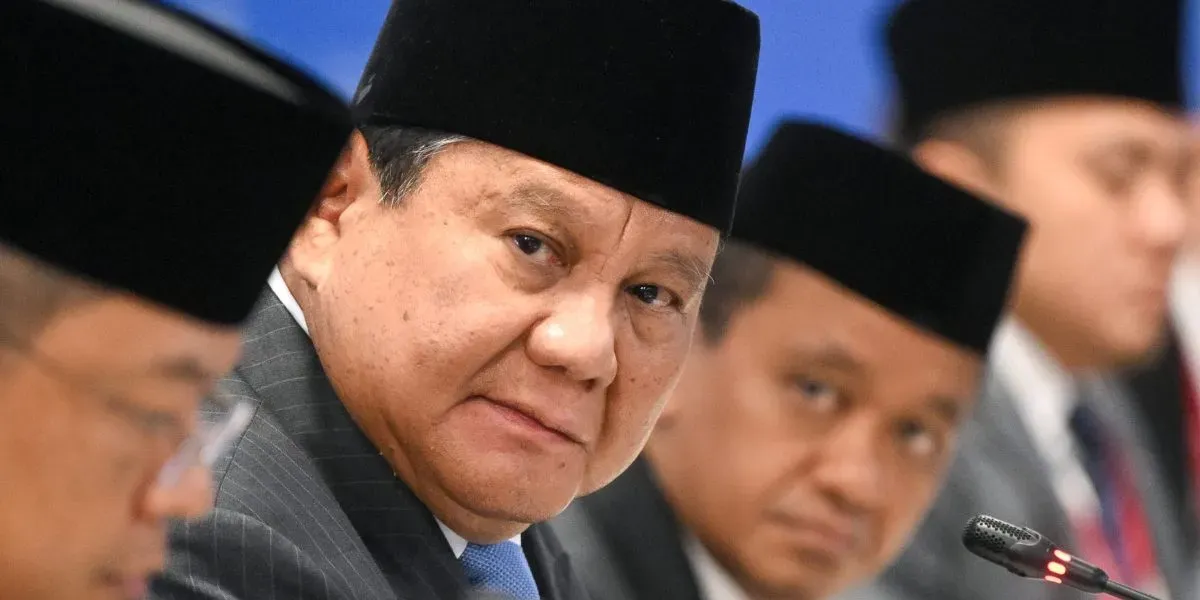
Indonesian President Prabowo Subianto has rejected the idea that his country will be intimidated by a proposed market status change from MSCI, a leading index provider. The downgrade would place Indonesia alongside Argentina, Nigeria, and Ukraine in "standalone status, effectively excluding it from major global and regional indexes.
In an address to his cabinet, Prabowo emphasized that Indonesia will not back down in the face of such pressure. He expressed confidence in the country's resilience, citing its strength, courage, and willingness to make sacrifices for its people. The President's defiant stance comes as investors await a final decision on Indonesia's status by the end of June 2027.
The proposed downgrade is part of MSCI's ongoing evaluation of Indonesia's market. On October 15, the index provider cited continued suspected coordinated trading behavior and lack of evidence of meaningful enforcement as reasons for considering the move. This change would have significant implications for investors who use MSCI's indexes to inform their investment decisions.
Indonesia has been under threat of a downgrade since January this year when MSCI first considered downgrading it to frontier status, one rung below its current emerging status. At that time, the potential impact was estimated at $13 billion in passive investment flows leaving the country. The proposed downgrade to standalone status would likely lead to even greater outflows.
The market status change is not the only challenge facing Indonesia's economy. Despite the government's efforts to address issues such as corruption and regulatory compliance, investors remain concerned about the country's ability to maintain a stable and transparent market environment.
The Jakarta Composite Index has plummeted by over 10% since MSCI announced its proposal to reclassify Indonesia's stock market. This significant decline is not an isolated incident, as the benchmark index has dropped nearly 40% for the year so far.
President Prabowo's approval rating has taken a hit, dropping to just 44.5%. A recent poll conducted by Saiful Mujani Research and Consulting found that public dissatisfaction with the state of the economy was the primary reason for this decline. This marks a significant drop from November, when Prabowo's approval rating stood at 81%.
One of President Prabowo's flagship social policies has come under scrutiny. Over six in ten Indonesians are unhappy with the country's free meal program, which aims to provide meals to those in need. Additionally, seventy-one percent of respondents doubted that his village cooperatives policy would succeed.
Wildfires in Indonesia have become a major concern, causing widespread haze and pollution in Southeast Asia. Singapore has threatened to prosecute companies responsible for the wildfires, further exacerbating tensions. President Prabowo recently acknowledged that foreign help may be necessary to control the fires.
At a cabinet meeting on Wednesday, President Prabowo responded to criticism by stating that Indonesia is a polite and patient nation." He emphasized that his country does not want to be insulted constantly, despite facing mounting pressure from investors and international partners.
Indonesia's President Prabowo has continued to assert his country's stance in the face of market turmoil triggered by a double downgrade from MSCI. The situation on the ground remains tense, with over 9,000 police officers deployed across Jakarta ahead of events marking the second anniversary of Prabowo's administration.
A diplomatic spat is unfolding as former trade minister Muhammad Lutfi has accused Singapore state investors Temasek and GIC of pressuring MSCI to downgrade Indonesia. According to Lutfi, this move was aimed at allowing foreign investors to acquire strategic assets at discounted prices. However, both entities have denied these allegations.
The controversy has prompted Indonesian market officials to intervene and mitigate the damage. Jeffrey Hendrik, president director of the Indonesia Stock Exchange (IDX), has rejected claims that MSCI's decision is influenced by external factors, emphasizing instead the independence of global index providers.
Facts based on reporting originally published by Fortune.
You may republish this story, in full or in part, if you credit News Central Site and link to it (licence CC BY 4.0). Photos are not included.