Geoffrey Holder Exhibition Showcases Artist's Work
A new exhibition at the Museum of Modern Art celebrates the artistic career of Geoffrey Holder, featuring over 60 paintings spanning eight decades.
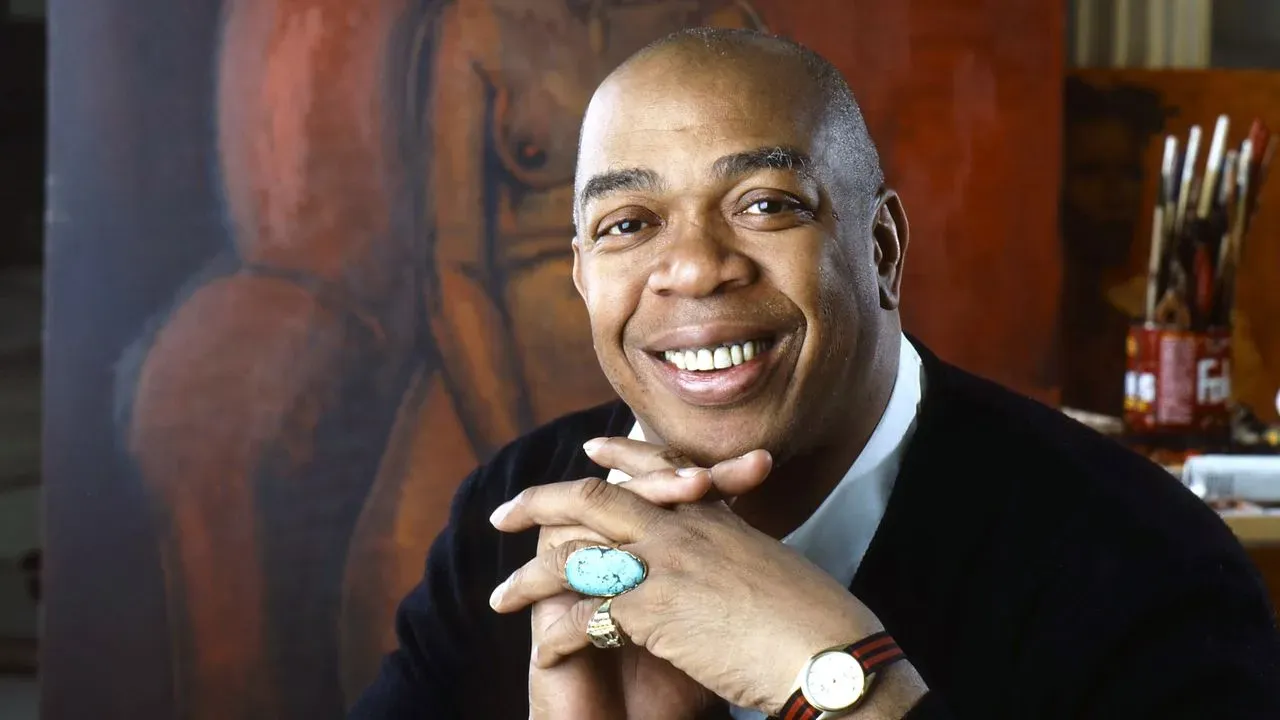
Geoffrey Holder's artistic talents defied categorization.
As a dancer, he was a principal performer at the Metropolitan Opera Ballet, a distinction that marked a significant milestone for Black artists in the field. His impressive career in dance led to numerous awards and accolades, including Tony Awards for directing and costume design on Broadway productions such as The Wiz.
Holder's versatility extended beyond the stage, with notable roles in films like Doctor Dolittle, Annie, and Live and Let Die, a Bond movie that showcased his global appeal. He also lent his distinctive voice to 7Up commercials throughout the 1970s and '80s, cementing his status as an international figure.
Despite these numerous accomplishments, Holder's work as a painter had long been overlooked, overshadowed by his more prominent pursuits in dance, film, and theater.
The exhibition showcases a remarkable collection of Holder's work, spanning eight decades and comprising over 60 pieces. This extensive display provides a unique opportunity to explore the artistic practice that formed the foundation of his diverse career in dance, film, and theater.
Holder's introduction to painting was influenced by his older brother, Boscoe, who was also a painter, designer, dancer, musician, and artist in his own right. By the age of 14, Holder had already gained recognition for his work with a formal exhibition in Trinidad. This early start laid the groundwork for his lifelong passion for art.
In addition to his paintings, Holder left behind an extensive archive of works, including more than 250 paintings, 300 collages, and numerous drawings, sculptures, and photographs. His son has spoken about how Holder funded his move to the United States in the 1950s by selling some of his artwork.
Holder's concept of "magical people" referred to individuals whose creative spirit and presence carried an unmistakable energy. This idea is central to a new show that celebrates Holder's art, which has been largely overshadowed by his work in other fields.
In reality, Holder saw these individuals as having a special quality, one that went beyond language and was characterized by confidence and a unique way of being in the world. He did not intend for this term to be used negatively or to imply that Black people were somehow magical by default.
The show itself is divided into five sections, each showcasing different aspects of Holder's work. These include Portraits, Epistles, The Sacred and the Profane, Genre, and Figure Studies, which are paired with sketches, footage, correspondence, and memorabilia that provide context for his art.
One painting stands out as particularly noteworthy: Portrait of Carmen (1980), a stylized depiction of a Black woman in a sleek black dress against a vibrant crimson background. This work reflects Holder's interest in the female form and his deep devotion to his wife, Carmen de Lavallade, who was an accomplished dancer, choreographer, and actress in her own right.
The painting is not only a testament to Holder's skill as an artist but also to his enduring love for his partner of 59 years.
The exhibition features several works that showcase Holder's fascination with biblical narratives. A series of paintings reinterpret these stories through his unique perspective, often blurring the lines between traditional depictions and modern interpretations. One notable example is a towering diptych, Adam and Eve (ca. 1990s), which combines oil, oil marker, and china marker on canvas to create a dense forest scene with two nude figures in the lower left corner.
Holder's son notes that his father's interest in biblical stories was not driven by religious convictions but rather a desire to explore deeper themes and meanings. This is evident in works such as Adam and Eve (2000–2005), which presents an intimate portrayal of the couple surrounded by lush greenery, highlighting the artist's focus on emotional connections over traditional representations.
The exhibition also includes John the Baptist and Jesus (undated), a painting that depicts two Black men standing together in cerulean water, sharing a tender moment as a crowd looks on. This work is characteristic of Holder's ability to bring new perspectives to familiar stories, often using bold colors and expressive brushstrokes to convey emotion.
Holder's use of color is particularly noteworthy in Woman in Yellow (1985), a portrait that marks the beginning of a recurring motif in his work. According to James, this theme was inspired by the artist's first encounter with de Lavallade wearing a yellow dress, and it would go on to feature prominently in many of his subsequent works.
The exhibition highlights a lesser-known aspect of Geoffrey Holder's artistic career, one that showcases his ability to convey complex emotions through color and composition.
Leo Holder reflects on the delayed recognition of his father's visual art practice, suggesting that it was overshadowed by his other creative pursuits during his lifetime. The multihyphenate's work in various fields often led to him being seen as a jack-of-all-trades rather than a serious painter.
The current interest in Holder's artwork is attributed to the changing cultural landscape, where polymathic individuals are now more widely accepted and celebrated, allowing for a reevaluation of his contributions to the art world.
Facts based on reporting originally published by Vogue.
You may republish this story, in full or in part, if you credit News Central Site and link to it (licence CC BY 4.0). Photos are not included.