Far-Right Extremists Cite Influence on Democratic Party's Victory
A series of livestreams and Telegram posts by Nick Fuentes claim he had a significant influence on the recent elections, touting it as the "Groyper Effect".
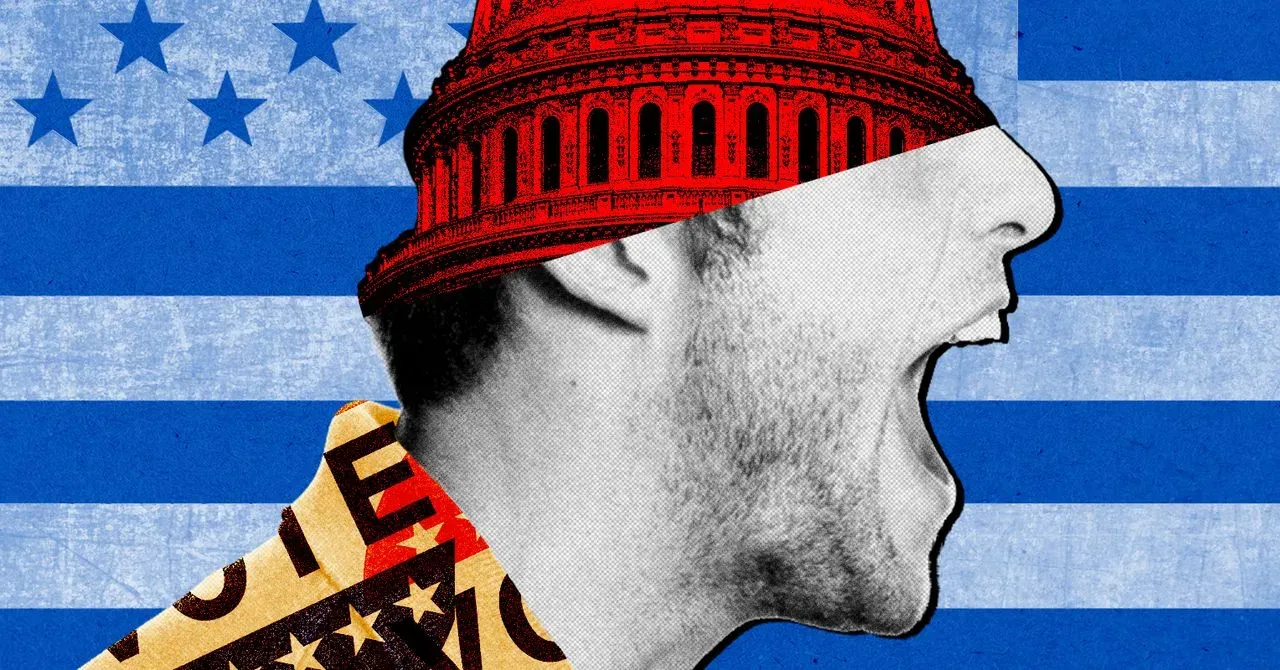
Far-right extremist Nick Fuentes is claiming credit for the Democratic party's victory in recent elections, citing his influence on voters as the "Groyper Effect.
Fuentes' followers, known as Groypers, have been credited with contributing to the Democratic sweep, with some estimates suggesting they may have played a role in over 12 million views of a post discussing their influence online.
In a series of livestreams and Telegram posts, Fuentes has touted his own success in shaping election outcomes, warning GOP leaders that it's our party now and urging them to cooperate with him and his allies on the far-right.
Fuentes' comments reflect a broader sentiment among far-right groups, who see the Democratic victory as an opportunity for their ideology to gain traction and claim a larger share of power.
As midterm elections come to a close, far-right extremist groups are seizing on the Democratic victory as an opportunity to expand their influence and recruit disaffected voters.
Their reasoning is that the shift towards more liberal policies will lead to a backlash among conservative voters who feel abandoned by the Republican party's perceived failure to prioritize traditional values. Some prominent figures in racist extremist movements have even declared the MAGA movement dead, claiming that the midterm results validate their previous criticisms of the Trump administration and open up new avenues for growth.
Despite some Republican extremists losing their elections last week, many others were successful in winning their seats. In fact, a recent study by the Institute for Research and Education on Human Rights found that 71 percent of far-right candidates running in statewide races emerged victorious.
The researchers tracked 476 races where at least one candidate was a member of a far-right Facebook group, and found that 338 of those candidates were ultimately successful.
In Florida's 10th District State House race, a 34-year-old citrus farmer named Marshall Rawson, who had previously attended the Unite the Right rally in Charlottesville in 2017, won against his Democrat opponent.
Several states have also passed ballot measures that align with far-right agendas. These include restrictions on transgender individuals, stricter voter identification laws, and anti-immigrant policies.
These measures were widely seen as a victory for far-right ideologies, with experts pointing out the potential consequences for certain groups. For instance, in Washington State, young girls will now be required to undergo genital exams or DNA tests before participating in youth sports.
The success of these ballot initiatives was celebrated by extremist groups, who viewed it as evidence that Americans were looking for a more radical approach than what the current GOP could offer.
The far-right extremist movement is seizing on recent ballot initiatives as evidence that Americans are seeking a more radical approach to politics.
Extremist groups claim that the Republican Party's vulnerability lies in its failure to mobilize and harness the power of its base, which they believe can be swayed towards their ideology.
Nationalists like Warren Balogh, who attended the Unite the Right rally in Charlottesville in 2017, are urging fellow extremists to infiltrate and take control of the GOP from within. In a Telegram post, Balogh wrote that it's time for nationalists to start mobilizing within their local Republican parties.
Meanwhile, other extremist groups like the Cape Fear Proud Boys have declared that these ballot initiatives signal an opportunity for the Republican Party to be transformed in their image, with one post on Telegram stating that this may be the best thing that has happened to the Republican party in a half-century".
Far-right extremist groups are setting their sights on January 3, when Congress is set to certify the midterm election results. This date has become a focal point for these groups as they seek to capitalize on the outcome of the elections and further their own agendas.
In Washington D.C., far-right activist Jake Lang is planning an event on January 3, with several speakers lined up, including Christian nationalist pastors. However, one of the listed speakers has already confirmed that they will not be attending, casting doubt on the overall organization and turnout for this event.
The plans made by Lang and his associates are part of a larger effort to exert influence over the Republican Party and shape its future direction in line with their own extremist ideologies, marking a concerning trend as the country navigates the aftermath of the midterm elections.
Facts based on reporting originally published by Wired.
You may republish this story, in full or in part, if you credit News Central Site and link to it (licence CC BY 4.0). Photos are not included.