Detroit to Host Fortune 500 Innovation Forum with Focus on Innovation
The city of Detroit is facing a challenge where students are being told about potential careers but lack practical experience to prepare them for their roles.
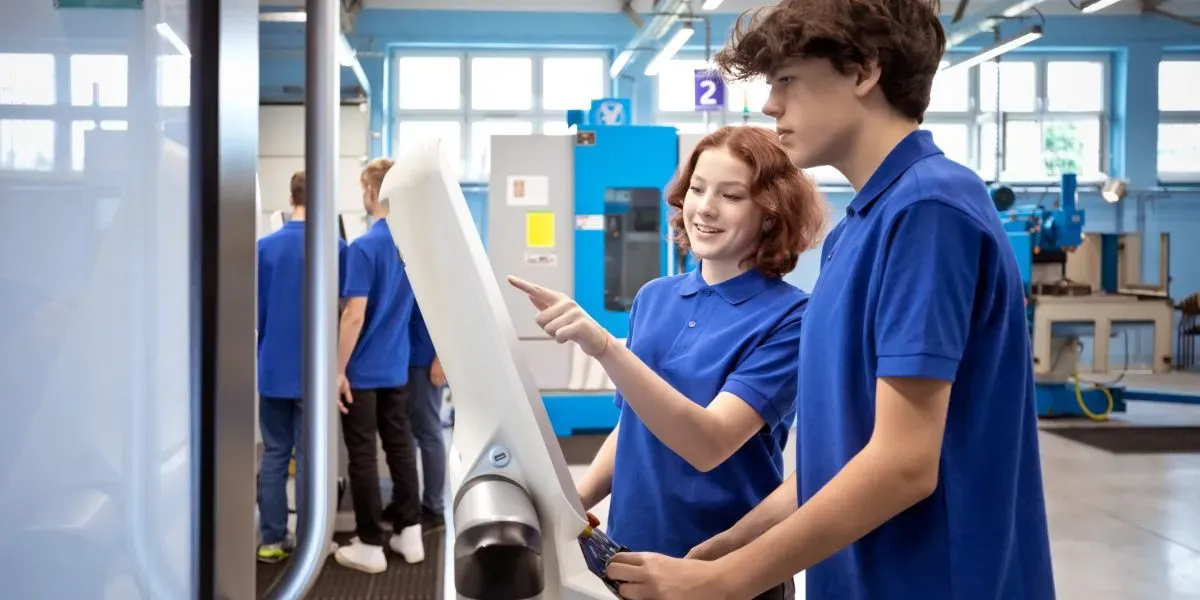
Detroit is set to host a gathering of influential leaders for the Fortune 500 Innovation Forum, where innovation and change will be top on the agenda. Meanwhile, in the city's classrooms, students are being told about careers that may be out of reach.
A survey conducted by Detroit Future City and The Skillman Foundation found that three-quarters of young Detroiters had interacted with guest speakers or professional mentors when discussing their future career paths. However, only a minority of these students had gained practical experience through internships or paid work opportunities. Just one-third reported receiving hands-on training.
The disparity between what students are told and what they actually do is striking. Despite the abundance of discussions about potential careers, Detroit's teenagers lack meaningful experiences to prepare them for their future roles.
A composite student named Jordan illustrates this issue. At 14, she was enthusiastic about sketching buildings and designing spaces, but no one suggested that her interests could be related to a career in architecture or design. It wasn't until later, almost by accident, that she discovered the possibilities available to her.
Students with diverse interests often find themselves unaware of the corresponding careers. For example, students who enjoyed performing were not introduced to physical therapy as an option until near graduation. Similarly, true crime enthusiasts had no idea that criminology could be a viable career path.
The country's workforce is struggling to find candidates with the right skills and experience, according to a recent survey by the U.S. Chamber of Commerce. The report found that 38% of hiring managers consider it easy to find candidates with suitable skills, while 37% say the same about relevant experience.
This gap between what employers need and what young people have to offer suggests a deeper issue at play. Many workforce programs focus on late-stage preparation, such as choosing a major or enrolling in training, without addressing the underlying assumptions that shape young people's career choices.
These assumptions are often formed early on, and they can be misleading. Young people like Jordan may think they know what careers exist and where they belong, but this can be far from the truth.
Research has shown that providing earlier exposure to different career paths can have a significant impact. A recent report surveyed nearly 200 Detroit youth and found that they want more opportunities to explore their options and connect school with the world beyond it.
Young people are not asking adults to make decisions for them; instead, they want to be able to see the possibilities and make informed choices about their futures. This requires making career exposure more visible and accessible from an early age.
Studies have also highlighted the importance of work-based learning experiences in helping students identify and develop skills for their future careers. In fact, 47% of students who did not participate in such programs cited a lack of awareness as a major reason, while 79% of those who did participate said it helped them make informed career choices.
In many cases, mere exposure to career options is not enough to spark meaningful change in young people's lives. This is particularly evident in Detroit, where an abundance of talk about careers exists but hands-on experience remains scarce.
Businesses can play a crucial role in bridging this gap by offering students direct access to workplace environments through various forms of work-based learning. These experiences allow students to test their interests, develop practical skills, and gain a deeper understanding of the requirements for different careers.
The benefits of apprenticeships are undeniable, as demonstrated by the U.S. Department of Labor's statistics. Each year, over 800,000 individuals participate in apprenticeship programs nationwide, with an impressive 93% of program completers retaining employment after graduation.
To effectively address the needs of young people, a collaborative effort is necessary among businesses, educators, workforce organizations, higher education institutions, philanthropic groups, and community partners. The ultimate goal should be to empower students by providing them with knowledge about their options, rather than steering them toward a single path.
Detroit Public Schools Community District's High School Redesign initiative aims to strengthen connections between education, career exploration, and life after graduation. Starting in the 2026-27 school year, this program will expand advising services, academic support, and college- and career-connected experiences across neighborhood high schools.
Businesses should start building talent pipelines earlier than waiting for students to graduate, by making themselves visible in classrooms, after-school programs, summer internships, middle schools, and other youth-focused initiatives.
Executives at Detroit's business community will be discussing innovation at a recent forum, but the city's students are already getting an earful about career opportunities. What they lack is hands-on experience to complement their learning, which businesses can provide through various programs and projects.
For the sake of protecting the identities of youth research participants, some details have been altered or combined into composite accounts, such as Jordan, who represents a blend of real focus group insights from the authors' studies.
Facts based on reporting originally published by Fortune.
You may republish this story, in full or in part, if you credit News Central Site and link to it (licence CC BY 4.0). Photos are not included.