Constantin Brancusi and Pablo Picasso's Artistic Approaches Differed Significantly
Brancusi's sculptures were restrained and consistent over the years, unlike Picasso's intensely autobiographical paintings.
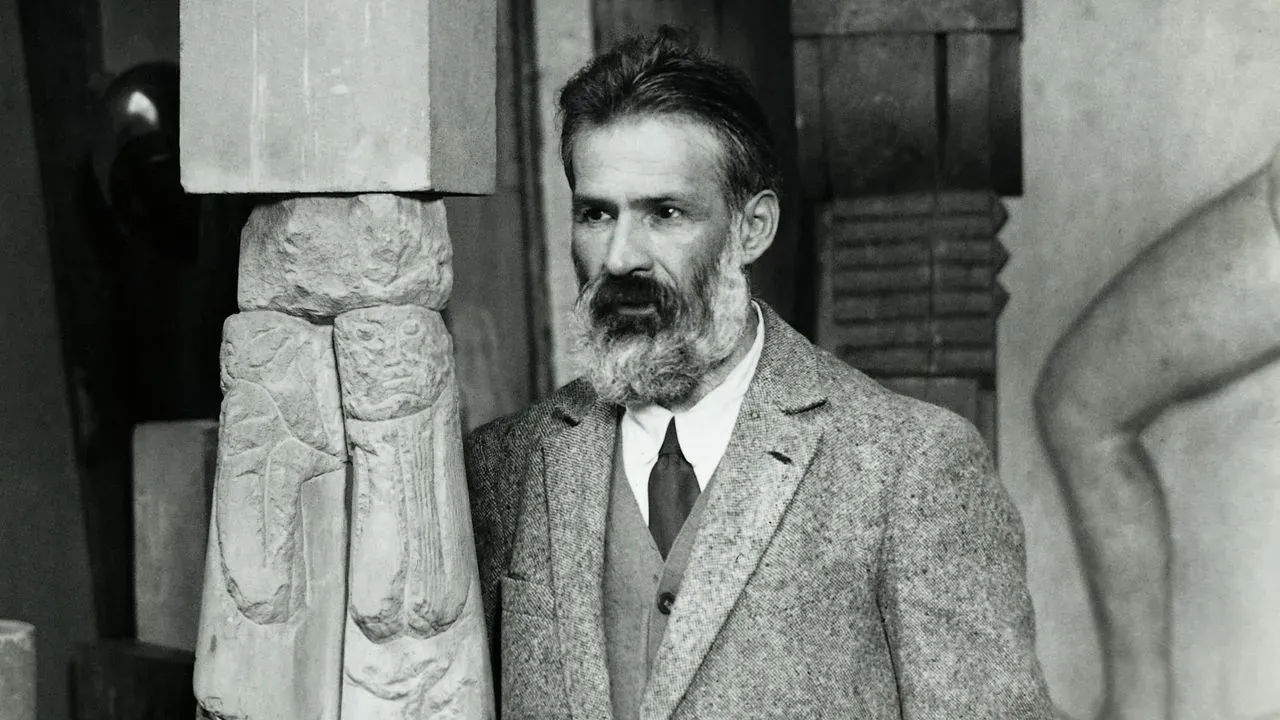
Constantin Brancusi and Pablo Picasso were two artists who settled in Paris in 1904, becoming integral parts of the city's artistic avant-garde. They would go on to become world-renowned artists, but their approaches to art could not have been more different.
While Picasso was known for transforming aggression and violence into sources of creative energy, Brancusi's sculptures were restrained even when they appeared to take flight. In fact, Brancusi's work remained remarkably consistent over the years, with his 1940 sculpture looking almost identical to one created in 1910.
In contrast to Picasso's intensely autobiographical paintings, it is difficult to find evidence of Brancusi's life in his work. This suggests that Brancusi was more interested in creating a reality beyond the self and the artist than in expressing personal experiences or emotions.
Brancusi's approach to art was also distinct from the societal expectations of the time, which measured success in terms of products becoming bigger and better each year. Instead of following this model, Brancusi's career defied easy categorization as a linear progression or development.
One notable example of Brancusi's unique approach is his series of Bird in Space sculptures, which he modeled, carved, and polished over 20 years. The subtle differences between the various versions are so slight that it is often difficult to determine their order of creation.
The consistency and subtlety of these sculptures suggest that they represent a single recurring moment, defined at its inception rather than evolving over time. This enigmatic quality has contributed to Brancusi's enduring appeal as an artist.
The stark contrast between two artistic giants is evident in their approaches to time and creativity. While Picasso's work bursts with energy, constantly evolving and pushing boundaries, Brancusi's oeuvre exudes a sense of serenity and timelessness.
Despite his success among American collectors, Brancusi never had a dealer or gallery in Paris, where he resided for the last 53 years of his life. This may have been due to his unorthodox approach to art, which often blurred the lines between different styles and periods.
Brancusi's style is characterized by its simplicity and fusion of elements from various cultures and ages. He believed that timelessness was key to creating art that transcended the boundaries of space and history. This philosophy is reflected in his use of clean surfaces and recurring images, such as eggs and embryos, which evoke a sense of universality.
In contrast, Picasso's work is marked by its unpredictability and willingness to shock. His style is constantly changing, often incorporating disjunctive imagery and compositions that challenge the viewer's expectations. For Picasso, the new was a force to be reckoned with, one that threatened to disrupt the status quo and render obsolete what came before.
Brancusi's philosophical inclinations are evident in his studies of Eastern religions and theosophy. He sought to synthesize different cultures and ages, creating art that was both timeless and universal. His sculptures often featured elements of fusion, such as the union of man and woman in his variations on the motif of the kiss.
In Brancusi's work, time is not a linear concept but rather a seamless, expansive moment where past, present, and future coexist. This view of time is reflected in his art, which often incorporates recurring images and motifs that transcend the boundaries of space and history.
Brancusi's artistic evolution was significantly influenced by his knowledge of non-Western and preindustrial art traditions. This exposure allowed him to adopt an inspired economy in his work, stripping away European conventions that many early modernists believed contributed to the devastation of World War I.
This approach to art-making was also reflective of the widespread avant-garde belief that it was possible to distill and simplify artistic forms, eliminating unnecessary elements and achieving a more authentic expression. By doing so, Brancusi aimed to create works that transcended cultural boundaries and spoke to universal truths.
One notable example of his ability to fuse disparate elements is his 1937-38 memorial in Tirgu-Jiu, Romania. This monument honors the civilians who resisted the German army in 1916 and showcases a unique synthesis of monumentality and intimacy, movement and prayer, grandeur and simplicity. Brancusi's work here has had a lasting impact on sculptors, influencing generations to come.
Throughout his career, Brancusi navigated a complex web of relationships with fellow artists. He was both an outsider and an insider, admired by notable figures such as Picasso and Matisse, yet maintaining a level of independence that set him apart from the mainstream. His connections extended beyond the art world, with friendships forged with writers like Ezra Pound and James Joyce.
Brancusi's personal life remained somewhat enigmatic, despite his close relationships with others. He never married and had a son in 1934 with Vera Moore, an English musician; however, he and his child never met. His relationships with young women were private and discreet, mirroring his reserved nature when it came to discussing his personal affairs.
Brancusi's unique position within the art world allowed him to maintain a sense of autonomy, even as he collaborated with others. He shared an admiration for non-Western cultures with many avant-garde artists, believing that exploring the mystery of form could lead to fundamental truths. Yet, despite his influence on modernist movements, Brancusi never fully aligned himself with any particular group or ideology.
Brancusi's living arrangements were remarkably stable considering his contemporaries, including Picasso, who frequently changed addresses.
He settled in Paris' Montparnasse neighborhood at 8 Impasse Ronsin in 1916 and remained there for over a decade before moving to number 11.
As Brancusi grew older and more frail, he became increasingly preoccupied with preserving his artistic legacy.
To this end, he devoted considerable energy to transforming his studio into an integral part of his work, crafting it as a sanctified space that reflected his unique vision.
The studio itself was a testament to Brancusi's multifaceted talents, featuring furniture and sculptures crafted from wood and stone alongside ghostly plaster works, including monumental versions of Endless Column and The Cock.
Brancusi's meticulous attention to detail extended even to the placement of objects within his studio, with Pontus Hulten noting that every item was carefully assigned a specific location.
The sculptures created by Constantin Brancusi are remarkable for their effortless appearance, despite the immense effort that goes into crafting them. Each line, edge, and surface is carefully considered to achieve a sense of rightness, making the material itself seem almost sculptural.
Brancusi's work embodies a unique balance between physicality and spirituality. His sculptures are deeply rooted in the world around us, yet they also transcend the material realm, speaking to something beyond the tangible. This dichotomy gives his art an otherworldly quality that continues to captivate audiences today.
The influence of Brancusi can be seen in the work of many artists who followed in his footsteps. The minimalist movement, for example, owes a debt to Brancusi's innovative use of serial imagery and his exploration of form and abstraction. Artists such as Carl Andre, Dan Flavin, and Henry Moore all drew inspiration from Brancusi's pioneering spirit.
The legacy of Brancusi can also be seen in the work of contemporary artists who continue to push the boundaries of sculpture. Scott Burton, for instance, was deeply influenced by Brancusi's challenge to traditional notions of spirituality and utility. Martin Puryear is another artist whose work reflects the enduring impact of Brancusi on modern art.
However, Brancusi's career also raises some intriguing questions. During World War II, he seemed to hit a creative plateau, producing little new work as he focused instead on his studio and its surroundings. This shift in focus has led some to wonder whether Brancusi's later work was motivated by a desire for refuge from the world around him.
The retrospective of Brancusi's work currently touring major museums offers a timely opportunity to reassess the artist's influence on modern art. By examining the ways in which his ideas have been taken up and reinterpreted by subsequent generations, we can gain a deeper understanding of the enduring appeal of Brancusi's vision.
As the art world grappled with the aftermath of World War II, a new aesthetic emerged that prized inelegance and unfinished forms over traditional notions of beauty.
This shift in taste was driven by a sense that it was irresponsible to become too enamored with contemplative objects in the face of such trauma. Brancusi's emphasis on form and timelessness began to be seen as a way of shielding oneself from the harsh realities of the world, rather than engaging with them head-on.
Critics began to view Brancusi's work through a postmodern lens, seeing it as a denial of the crisis of faith and experience that many artists felt was an inherent part of the human condition. This critique argued that Brancusi's optimism and yearning for synthesis were naive and out of touch with the brutal realities of the world.
Despite this, Brancusi's legacy continues to inspire new generations of artists, who are still capable of being provoked by his ecstatic simplicity and generating surprise and wonder through their own innovative works.
Facts based on reporting originally published by Vogue.
You may republish this story, in full or in part, if you credit News Central Site and link to it (licence CC BY 4.0). Photos are not included.